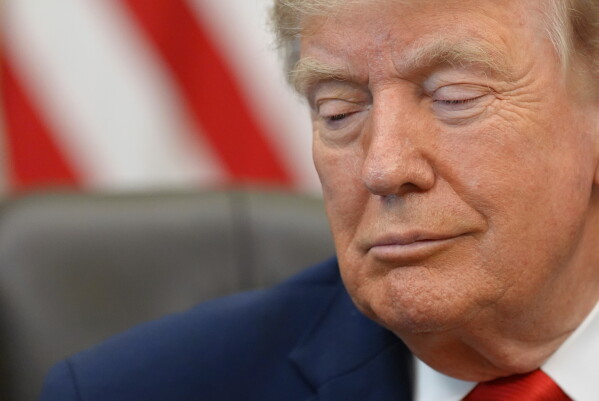
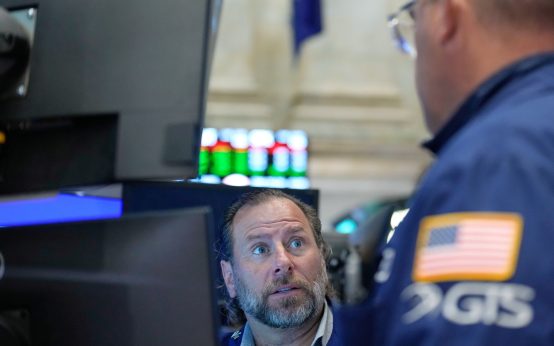
On Thursday, U.S. stocks experienced their strongest rally in two months, and oil prices dropped following President Donald Trump’s announcement to halt a bombing threat against Iran. This move sparked hopes for a potential agreement that might restore global oil flow. The S&P 500 saw an increase of 1.8%, rebounding from a recent decline. The Dow Jones Industrial Average soared by 929 points, or 1.9%, while the Nasdaq composite surged 2.5%.
Stocks climbed higher midday when Trump revealed, via social media, that discussions with Iran had reached high levels of Iranian leadership and received approval. A forthcoming announcement regarding the time and place of a signing was promised.
An agreement to end the conflict with Iran could reopen the Strait of Hormuz, allowing oil tankers to transport crude from the Persian Gulf to global markets. The price of a barrel of benchmark U.S. crude fell by 2.6% to $87.71, and Brent crude, the international standard, dropped 2.9% to $90.38, remaining above its pre-war price of roughly $70.
Rising oil prices due to the Iran conflict have significantly contributed to global inflation. A report on Thursday indicated that U.S. wholesale prices increased more than expected in May. The ripple effect is global, prompting the European Central Bank to be the first major central bank to raise interest rates in response. While higher rates are intended to curb inflation, they can also slow economic growth and lower investment returns, impacting stocks and cryptocurrencies.
The volatility of AI stocks has recently caused dramatic fluctuations in the U.S. stock market. Concerns linger about whether these stocks have become overvalued too quickly due to intense interest in AI. Volatile movements have seen rapid directional changes, with AI stocks rebounding before Trump’s statement. Marvell Technology’s stock rose 11.1% through a tumultuous period, with previous drops and surges creating notable fluctuations.
Chip-making companies experienced significant stock price increases, with Lam Research climbing 12.7% and KLA increasing 12.9%. Despite hefty spending announcements, often linked to AI investments, questioning the promised returns, Oracle faced an 8.5% drop even after reporting better-than-expected quarterly profits.
The S&P 500 gained 127.31 points to 7,394.30, the Dow Jones rose to 50,848.75, and the Nasdaq jumped to 25,809.66. In the bond market, Treasury yields fell sharply as declining oil prices reduced inflation pressures. The 10-year Treasury yield dropped from 4.55% to 4.45%, a significant change.
If oil prices continue to decrease, the Federal Reserve may not need to raise its key interest rate this year, contrary to prior expectations. Traders have adjusted their bets on a potential federal funds rate increase, with possibilities of a rate cut if inflation pressures drop sufficiently. Under new Fed Chair Kevin Warsh, and given Trump’s advocacy for lower rates, interest rate cuts are a possibility.
Smaller companies often benefit most from lower interest rates due to their borrowing needs for growth, seen as the Russell 2000 index of smaller U.S. stocks led the market with a 3% jump. Internationally, European indexes showed modest gains after mixed results in Asia, with London’s FTSE 100 rising 0.5% and Hong Kong’s Hang Seng falling 0.7%.
 U.S. Stocks Recover Amid Oil Price Cooldown
  Navigating Interest Rate Hikes: Where Savers Should Stash Their Cash
  Kevin Warsh’s Approach to Inflation Control
  Nike Stock Plunges as Company is Dropped from S&P 100
  Nike Faces Criticism from Investor Over Activist Stance
  Maximizing Returns: The Benefits of a 3-Year $100,000 CD Account