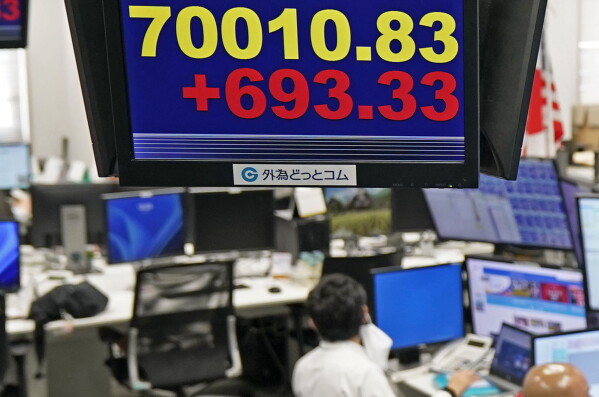
Impact of the Tentative Agreement on Global Oil Flow
The potential agreement to end the conflict in Iran and reopen the Strait of Hormuz presents hopeful news for the global economy. Yet, despite the decline in oil prices, uncertainties persist about when and how oil will start flowing through this crucial energy passageway.
The Strait of Hormuz: A Vital Oil Passage
Before hostilities, the Strait of Hormuz was responsible for transporting 20% of the world’s crude oil. Now, reestablishing this vital route will involve multiple steps, as hundreds of stranded ships in the Persian Gulf wait to pass through the narrow strait. Furthermore, Gulf oil producers, which had scaled down production, will require time to ramp up their operations.
According to analysts, shipping captains will need reassurance that it is safe to navigate and that threats from Iran have diminished. Consequently, a rapid return to pre-war oil prices, inflation, and energy flows is unlikely to occur for several weeks or months, pending the durability of the agreement.
Challenges in Restoring Oil Flow
Even if the Strait is completely open, logistics dictate a gradual process for tankers to enter, load, and set sail to Asia, their principal market. A round trip to Japan, for instance, may last 45 to 50 days. Ship operators, insurers, and owners may proceed cautiously, wary of the ongoing volatile environment.
Operationally, the sector is not rushing back…
Richard Meade from Lloyd’s List emphasizes prerequisites like mine clearance and secure transit lanes for safe navigation. Although ships are slowly exiting through an Iranian-regulated northern lane, others are bypassing with coordinated U.S. navigation in the south along Oman’s coast. More than 500 commercial vessels remain in the Persian Gulf, based on data from intelligence firm Kpler.
Amena Bakr of Kpler estimates that mine removal might take six months, vessel rotations two to three months, followed by another three months to restore production levels in certain countries.
Economic and Legal Factors
Open negotiation terms between the U.S. and Iran are uncertain, with Iran allegedly seeking fees from ships utilizing the strait. Conflicting declarations between parties obscure understanding of management and fee structures regarding the strait’s operational status.
Former President Trump mentioned a “toll free opening,” yet no formal confirmation exists. Paying tolls may pose legal challenges because of sanctions against the Iranian Revolutionary Guard Corps, potentially violating international freedom of navigation laws per the United Nations Convention on the Law of the Sea.
Oil-producing nations need time to recommence operations due to storage limitations resulting in production halts. Countries such as Saudi Arabia and the United Arab Emirates, with alternative export routes, might resume faster than others like Iraq, where complex field operations could delay recovery, as noted by Alan Gelder from Wood Mackenzie.
Long-Term Economic Effects
Economic evaluations project energy flow recovery to 80% of prewar levels by September. Although sentiment has improved, substantial logistical normalization and risk premium removal from crude prices will require time.
Neil Shearing from Capital Economics predicts sustained high inflation rates globally, even if oil flows normalize. In Germany, bank leader Joachim Nagel warns about inflationary pressures once temporary government measures, such as fuel tax reductions, end.
Germany, for example, has reduced fuel taxes temporarily, which lasts until June 30, impacting oil supply normalization timelines.
 The Threat of Melting Glaciers: A Call to Action
  Police Discover Ancient Roman Artifacts Off Sardinian Coast
  Urgent Need for Action in East Africa’s Food Crisis
  Suspected Plague Death in Siberia Sparks Health Measures
  G7 Nations Agree to Release 100 Million Barrels of Oil Amid Fuel Price Surge
  Co-Pilot Attempts Hijack on Flight to Tel Aviv