Japan vs. Schoolchildren: A Mesmeric Display
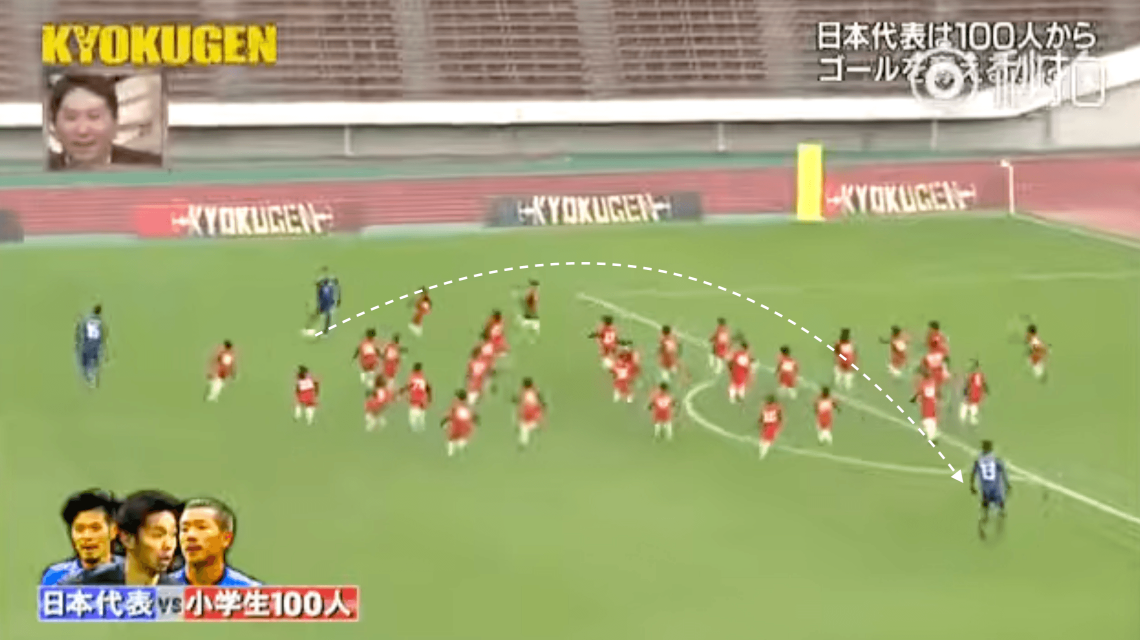
Years ago, a social media clip captured the intrigue of three Japan internationals — Hotaru Yamaguchi, Hiroshi Kiyotake, and Yosuke Ideguchi — facing 100 schoolchildren on a full-sized football pitch. The scene was whimsical, yet mesmeric. The internationals managed to pass the ball efficiently, defying the odds of interception by their numerous opponents.
Their success lay in how the children were drawn to the ball, leaving the opposite flank unguarded. By constantly switching play, the trio maneuvered around their opponents with ease. The schoolchildren lacked positional wisdom, making it simpler for the internationals to find space.
Japan’s Football Strategy: The 3-4-3 Formation
Currently, the Japanese national team employs a strategy reminiscent of this approach. They use a 3-4-3 formation that creates a front five when in possession. This results in unmarked players running into the box, ready for an unexpected switch of play. This strategy, when compared to facing 100 opponents, appears less daunting against just ten outfielders.
The wing-backs in Japan’s system are not typical “arriving” players like Daniel Munoz or Denzel Dumfries. Right-sided Ritsu Doan and left-sided Keito Nakamura can cut inside due to their reversed foot orientation. Nakamura’s goal against the Netherlands showcased his ability to shift and shoot from inside.
A Tactical Example: Play Against Sweden
An example from their match against Sweden highlights Japan’s tactical acumen. In this match, Daichi Kamada shifted to the left, executed a deep cross which Yukinari Sugawara attempted to meet. Although Sweden cleared the ball, Ao Tanaka instantly switched play back to Kamada, who volleyed but directed his effort at the goalkeeper. This emphasizes Japan’s ability to always have an unmarked player ready to exploit defensive gaps.
Upcoming Challenge: Brazil
Japan’s upcoming match against Brazil offers a tactical opportunity. Brazil’s full-backs pose a vulnerability. Right-back Danilo’s age and mobility are notable, while left-back Douglas Santos lacks top-class performance history. Japan aims to bypass Brazil’s aerial strength in central defense and exploit gaps out wide.
Historically, teams facing Japan have reinforced their defensive lines. During their match against the Netherlands, Frenkie de Jong filled this gap, allowing the full-backs to manage Japan’s tactical maneuvers. Brazil’s response remains unclear; whether Casemiro or Rayan will adjust to this tactic is uncertain. Coach Carlo Ancelotti’s approach to this challenge will be pivotal.
A Significant Clash
This match is more than a tournament fixture; it resonates within the broader World Cup context. Historically dominated by Western Europe and South America, the World Cup could welcome a new force if Japan, noted for their technical and cohesive play, defeats Brazil. Japan’s infrastructure and tactical prowess are impressive, yet they have never won a knockout game in this tournament.
Defeating Brazil, a historical powerhouse, would signal a major shift and validate Japan’s tactical strategies. Their method seems well-suited for this significant challenge, potentially redefining global football dynamics.
 Nick Saban’s Comments on ESPN Spark Debate Over College Sports Regulations
  Freddy’s American Adventure: From Soccer to College Football
  Brock Purdy’s Impressive Start in the 2026 NFL Season
  The Value of Retaining Miles McBride for the Knicks
  Penguins Make History with Dominant Season Opener
  Sonny Gray Expresses Frustration After Game Against Yankees