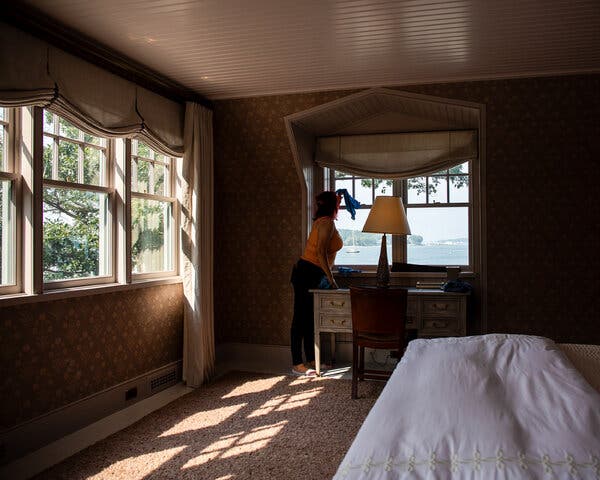
The Hamptons, located at the southeastern end of Long Island, presents a striking contrast between its inhabitants. Early May finds the wealthiest residents absent, as most are in New York City. Yet, the area remains busy, with rush hour traffic and people readying the homes for their owners.
This region comprises two distinct groups: the affluent homeowners and the workers keeping their properties pristine. Residents seldom stay long, while workers are ever-present but rarely feel at home. Both groups traverse the same streets and homes, yet their interactions are minimal. Workers, who clean the expansive glass panes of oceanfront properties, ensure they leave before the residents return to enjoy the unobstructed views.
In Southampton, weekdays see day laborers gathering for work near a 7-Eleven. The weekends, once they depart, reveal patches of dirt marking where the grass has worn away underfoot. Meanwhile, as city dwellers head east for relaxation, the main thoroughfare out of the Hamptons is congested. Known locally as the “trade parade,” this road fills with vehicles representing landscaping, construction, and cleaning services.
 Reviving Conventional Wisdom: Tracking Political Figures and Forces
  Aaron Sorkin’s New Film Sparks Debate on Free Speech and Tech Regulation
  Accountability Across Boundaries
  Reflecting on a Career at Fox News
  Accountability in Politics: A Call for Reform
  Candy Thompson’s Journey From Feminism Back to Christianity