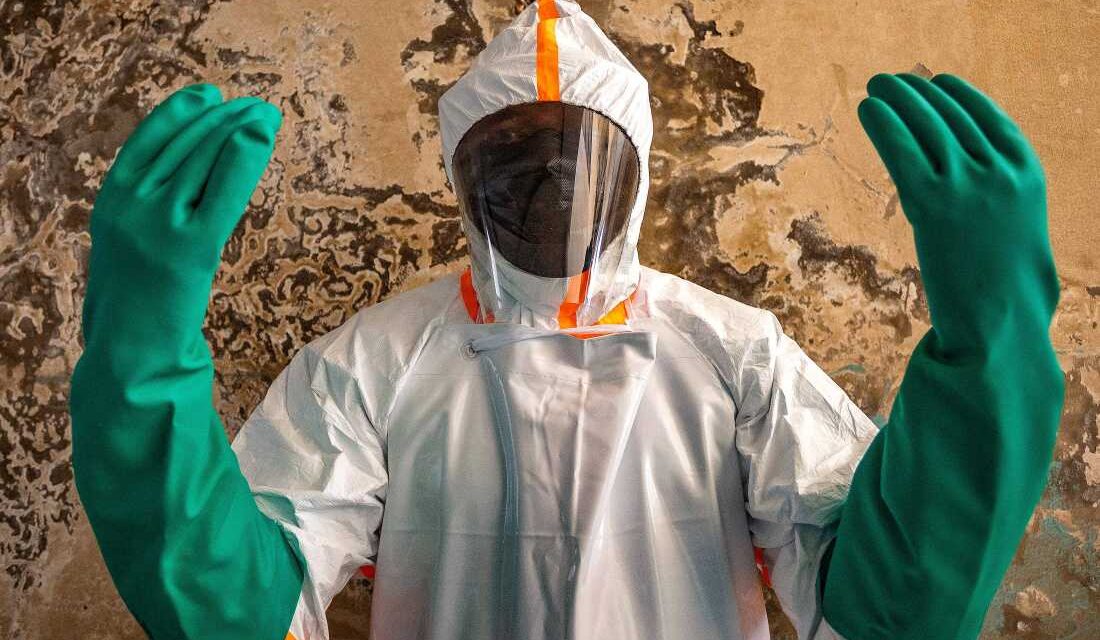
In Bunia, Democratic Republic of Congo, nurse Moise Bulabantu faces immense stress over the fear of contracting Ebola. Assigned to an Ebola-affected area in eastern DRC, Bulabantu is at a heightened risk of illness. Official declarations of the outbreak started on May 15, putting him in constant contact with affected individuals.
Despite being the sole state health worker for his 40,000-person community, Bulabantu operates with insufficient protective gear. His clinic, situated in a poor suburb of Bunia, consists of a few rooms and offers minimal isolation for potential Ebola cases. The clinic’s facilities include foam mattresses without sheets and a single small entrance.
Daily, Bulabantu addresses about 15 reported cases with symptoms like fever and vomiting. Typically, two or three cases test positive. “We’ve really had a lot of cases,” notes Bulabantu, showing signs of fatigue.
Currently, CARE, an international NGO, provides support. Nevertheless, the lack of protective gear persists for him and his colleagues across Ituri, which is the epicenter of the outbreak, accounting for over 91% of confirmed cases based on Congolese health ministry data.
As of June 30, there were more than 1,307 confirmed cases and 377 deaths. Factors like entrenched violence from armed groups exacerbate health efforts, while logistical issues and the expansive spread of the virus complicate supply chains. Ebola presence spans 22 out of 36 health zones in the province and neighboring provinces.
Uganda, sharing a border with Ituri, has registered 19 cases. Equipment shortages stem from the disposability of certain gear, necessitating ongoing resupply. Aid coordination with Congolese authorities poses additional challenges.
Health workers face lethal risks; 17 have died since the outbreak’s start, with 75 total infections among them, according to WHO. Shannon Hamilton of Samaritan’s Purse highlights that close contact spreads the disease, often affecting caregivers.
Nyankunde hospital, 20 miles southeast of Bunia, struggles with PPE shortages, risking both patient and staff safety. Despite improvements, isolation remains an issue. Head doctor Désiré Duabu reports eight infections among medical staff, with one fatality—a medical student. “It takes a lot of courage to care for the sick,” says Duabu. “But of course, we do it.”
 British Police Arrest Man Suspected of Terror Plot
  Activists Push for Nationwide Ban on Child Marriage in the U.S.
  Investigation into Alleged Incident at Cornell University
  Rising Drone Threats Highlight Vulnerabilities in Moldova’s Airspace Defense
  Bolivia Faces Security Test Amid Unrest
  Incident on FlyDubai Flight Raises Security Concerns