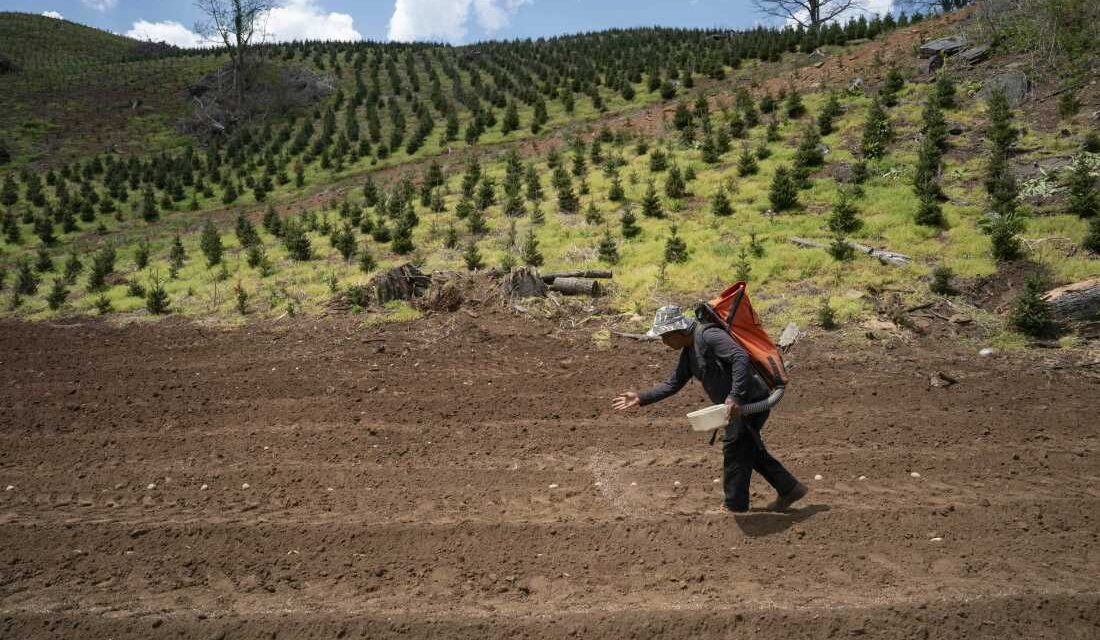
A worker spreads fertilizer after planting potatoes at Bluff View Farms in North Carolina amidst rising fertilizer prices. These price increases, driven by the conflict in Iran, add pressure to farms dealing with issues like severe weather, tariffs, high fuel, and labor costs.
When the conflict with Iran began, concerns arose globally about oil shipment slowdowns; however, fertilizer exports also faced setbacks. Prior to the conflict, about one-third of the world’s fertilizer shipped by sea passed through the Strait of Hormuz, according to UN Trade and Development. This crucial waterway has become a shipping bottleneck recently. With the strait’s closure, fertilizer shipments from the Persian Gulf decreased, causing worldwide price hikes and affecting numerous importing countries.
The conflict also resulted in a global natural gas shortage, an essential component for nitrogen fertilizer production. U.S. farmers faced higher fertilizer prices and limited supplies just as they were planning their planting seasons. These costs do not directly translate to major impacts on consumer retail prices for fruits and vegetables. Chris Barrett, a Cornell University professor of agricultural economics, notes that food price inflation usually stems from numerous factors along the supply chain, such as labor shortages and high fuel costs.
U.S. Farmers Rethink Planting Strategies
The Fertilizer Institute states about one-third of fertilizer used by U.S. farmers is imported, affecting them significantly despite little direct import through the strait. Christopher Glen, TFI’s Vice President of Public Affairs, emphasized the global nature of the fertilizer market in explaining this impact. A survey by the American Farm Bureau Federation in April indicated that 70% of respondents couldn’t afford all necessary fertilizer this season. Corn and wheat producers, who rely heavily on fertilizer, face substantial cost impacts. Half of the National Corn Growers Association’s surveyed farmers planned not to apply full fertilizer amounts due to costs and availability issues.
Some farmers were less affected due to early purchases, but concerns linger for future crops. Corn growers expressed more anxiety about their 2027 crops than this year’s. Rising costs prompt some to switch to less fertilizer-reliant crops like soybeans. USDA data shows farmers plan to plant 95.3 million acres of corn this year, down from 98.8 million last year, while soybean planting is expected to rise to 85.4 million acres from 81.2 million.
Grocery Prices Unlikely to See Large Increases
Higher fertilizer prices may lead to smaller harvests, potentially causing modest retail price increases. A TD Economics analysis estimates a 2-5% production drop in North America could lead to modest food inflation impacts by 2027. Farmers largely bear the cost of fertilizer shortages. The USDA reports 12 cents of every consumer dollar spent on food goes to farms, with the rest covering transportation, processing, and retailing. USDA statistics reveal that U.S. farms allocated about 7% of their budgets to fertilizer and soil conditioners in 2024.
Rob Vos, a senior research fellow at the International Food Policy Research Institute, suggests farmers have limited bargaining power with wholesalers to raise crop prices in response to increasing costs. Factors beyond fertilizer, such as tariffs, extreme weather, and labor and fuel prices, pose more significant risks to food prices. In less developed regions of Africa and Asia, the fertilizer shortage could have severe consequences. Countries heavily dependent on Gulf-sourced fertilizer include Sudan, Sri Lanka, Tanzania, and Somalia.
Fertilizer Industry Recovery and Adaptation
Fertilizer prices have started decreasing recently after the U.S. and Iran agreed to reopen the Strait of Hormuz. The Trump administration also moved to reduce fertilizer costs for American farmers by suspending certain duties on phosphate imports. However, a full recovery will take time. Vos estimates it could take weeks or months for manufacturing plants to resume previous productions levels, potentially affecting U.S. farmers’ autumn crop planting plans.
Farmers are exploring alternatives to safeguard against supply chain disruptions, including manure, compost, and cover crops. Barrett notes it’s similar to increased interest in electric vehicles as gasoline and diesel prices rise, with more farmers seeking varied soil nutrient replenishment methods alongside rising fertilizer prices.
 The Threat of Melting Glaciers: A Call to Action
  Tennessee Prison Chief Resigns After Botched Execution
  White House Announces Medicare-Linked Payments for Seniors
  Collapse of Hawai’i’s Hōlei Sea Arch Amidst Storms
  Northwestern Debuts New Ryan Field with Victory Over Penn State
  Concerns Over Contaminants in U.S. Cat Foods