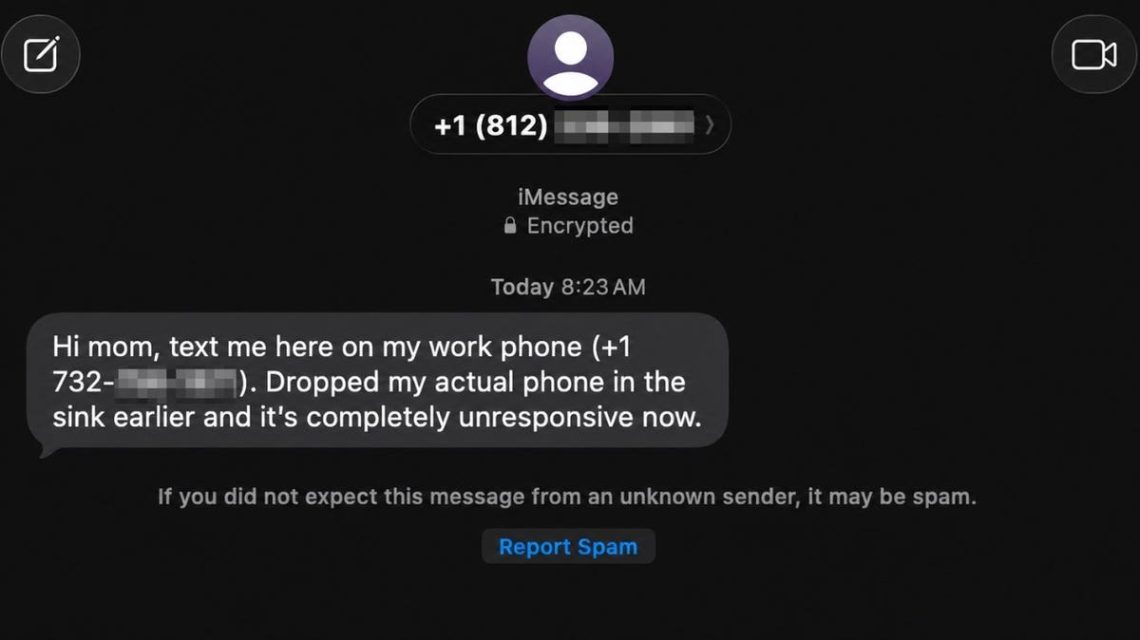
Scammers are continuing to find clever ways to deceive people, with the ‘Hi Mom’ text scam being an example that targets parents by appearing personal and urgent. This message begins with a simple claim: “Hi mom, text me here on my work phone. Dropped my actual phone in the sink earlier and it’s completely unresponsive now.” It intentionally comes from an unknown number, then instructs you to continue texting another number, creating an illusion of a real family situation.
Why the Scam Appears Convincing
Several factors make this scam believable:
- The scenario of a child using a work phone is plausible.
- Accidentally dropping phones is common.
- The initial message is brief, creating a sense of urgency that feels real.
Scammers know parents react swiftly when a child seems to need help. They don’t need a flawless story, just a small gap to exploit.
The Anatomy of the ‘Hi Mom’ Text
The scammer crafts each element of the message to seem believable:
- “Hi mom”: Avoids using names, making the message applicable to numerous people, and instantly personal if the reader is a mother.
- “Text me here”: Keeps the conversation on the scammer’s terms within text messages, allowing them to craft responses based on yours.
- “On my work phone”: Provides a reason for an unfamiliar number and preemptively answers questions about it.
- “Dropped my actual phone in the sink”: A relatable accident, rendering the story credible.
- “Earlier”: Implies the issue is recent, although avoids verifiable specifics.
- “Completely unresponsive now”: Discourages attempts to call the original phone.
Potential Outcomes of Responding
The initial message may not seem threatening, but it can lead to more significant scams involving requests for money or account information. Some scammers might ask for security codes, pretending they’re necessary for resolving issues. Sharing these codes can allow access to your bank or email accounts.
Protecting Against the Scam
Take proactive measures to avoid falling victim:
- Do not reply: Avoid confirming your number’s activity, which might lead to more scams.
- Call directly: Use trusted numbers in your contacts.
- Ask personal questions: Verify the sender by questioning something only they would know.
- Avoid sending money: Pause before transferring funds, particularly using fast and irreversible methods.
- Never share verification codes: Maintain your privacy; a real family member should not need these.
- Install antivirus software: Protect devices from malicious links or scams.
- Use data removal services: Minimize your information online. Such services reduce but may not eliminate exposure.
- Report and block: On iPhones, report messages as spam or junk. On Android, block and report the sender.
If You’ve Already Responded
If you’ve engaged with the scammer, prioritize these actions:
- Stop communication immediately.
- Capture screenshots of messages for records.
- Contact the real family member using a trusted method.
- Change passwords for any affected accounts using a password manager.
- Alert your bank or payment app if money was sent.
Conclusion
The ‘Hi Mom’ scam preys on the familiarity and urgency of family dynamics. A brief pause by verifying a message or calling your real family member can protect your financial and digital security.