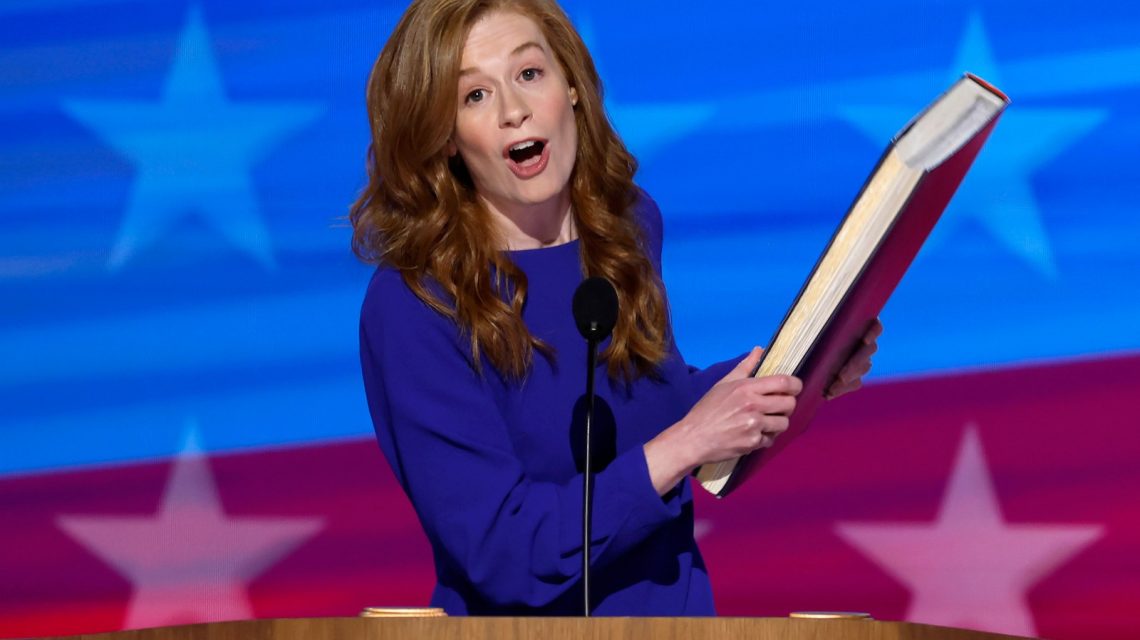
Michigan’s Senate race took a significant turn when Democratic state Senator Mallory McMorrow suspended her campaign one month prior to the August primary, influencing the dynamics of the political field. This development initiates a direct clash between progressive contender Abdul El-Sayed and establishment-endorsed Representative Haley Stevens in a contest critical for determining control of the U.S. Senate.
The Democratic party is placing increased focus on Michigan, viewing it as a key seat in their effort to reclaim the Senate majority this fall. The competition is seen as a definitive test of whether the party’s progressive faction can leverage recent primary victories into triumph in a state that President Donald Trump carried in 2024.
McMorrow announced her campaign suspension in a video statement, ensuring her support for the eventual Democratic nominee without immediately endorsing any remaining candidate. The Senate seat is being vacated due to Democratic Senator Gary Peters’ decision to retire at the end of his term. The winner of the Democratic primary will likely face former Representative Mike Rogers, the probable Republican nominee, in what is anticipated to be a highly competitive Senate race.
A Two-Way Race Emerges
With McMorrow’s departure, the Democratic primary scheduled for August 4 now features Stevens and El-Sayed as the main contenders. Stevens, a four-term congresswoman, enjoys backing from notable Democratic establishment figures like Senate Minority Leader Chuck Schumer. Conversely, El-Sayed receives support from progressive leaders, including Senator Bernie Sanders and Representative Alexandria Ocasio-Cortez.
This political contention serves as a proxy battle regarding the Democratic Party’s future trajectory. Stevens’ supporters argue her centrist positioning is optimal for defeating Rogers in November. Meanwhile, El-Sayed’s proponents assert that progressive nominees can bolster voter enthusiasm and secure statewide victories in competitive regions.
Why This Race Matters Nationally
Michigan is pivotal among Democrats’ essential Senate battlegrounds of 2026. With Republicans having a 53-47 Senate majority, retaining the seat vacated by Peters is imperative for Democrats seeking control of the chamber.
The race has evolved into a broader ideological clash within the Democratic Party. Stevens aligns with mainstream Democrats backed by the party establishment, while El-Sayed is embraced by progressives led by Sanders and Ocasio-Cortez. Successful primaries by progressives in New York and Colorado have fueled debates regarding Democrats’ strategic positioning, whether leaning further left or supporting traditional candidates in competitive states. Michigan stands as a prominent test in this ideological discussion ahead of the 2026 midterms.
Recent polls revealed El-Sayed gaining popularity, potentially transforming the prospects in the Democratic primary. A Quantus Insights poll reflected El-Sayed leading with 41 percent support among Democratic primary voters against Stevens’ 35.6 percent and McMorrow’s 7.5 percent. El-Sayed’s surge was further amplified by Ocasio-Cortez’s endorsement, which she described as ‘existential’ for Democratic strategy.
A Test for Ocasio-Cortez and Progressives
The Michigan Senate race also tests Ocasio-Cortez’s expanding influence within the Democratic Party. Supporting El-Sayed since his 2018 gubernatorial campaign, her recent endorsement adds further weight to the race. Sanders’s endorsement of El-Sayed strengthens support from two of the most prominent figures within the party’s left wing.
Proponents argue El-Sayed might exemplify that progressive candidates can compete successfully in swing states, rather than merely in safe Democratic districts. Critics maintain concerns regarding whether candidates associated with Sanders and Ocasio-Cortez would be the best choice against Mike Rogers in a general election.
The outcome of the August primary will have implications beyond Michigan, influencing ongoing debates regarding the Democratic Party’s strategic direction following the 2024 elections.
Outside Spending Looms Large
Despite the absence of explicit reasons for her campaign suspension, reports pointed to a significant factor: outside spending. Politico reported roughly $32 million in external funding favoring Stevens, fortifying her status as a leading mainstream Democratic contender. Millions were spent even before McMorrow aired her initial television advertisement.
El-Sayed criticized these circumstances, suggesting Democrats must not let ‘the establishment’ dictate the party’s nominee. Stevens acknowledged McMorrow’s contributions while expressing readiness to collaborate in the future.
What Happens Next?
McMorrow’s exit refines the primary into a direct dual between Stevens and El-Sayed. An impending televised debate between the two candidates raises anticipation as McMorrow’s supporters may become a pivotal voting group that both campaigns will target leading up to the August primary.
The victor will engage in a general election predicted to be among the most financially demanding and significant Senate contests of the 2026 midterms. With Republicans maintaining a 53-47 Senate majority, Democrats perceive Michigan as a seat crucial for regaining Senate control.
 The Trump Team’s Challenge to the Military Leadership
  Maryland First State to Restrict Electronic Pricing in Grocery Stores
  Activists Push for Nationwide Ban on Child Marriage in the U.S.
  Democratic Hopes and Historical Warnings in 2026 Senate Race
  Republicans Face Challenges Amidst Cost of Living Concerns
  A Different Kind of Fall for Congress This Year