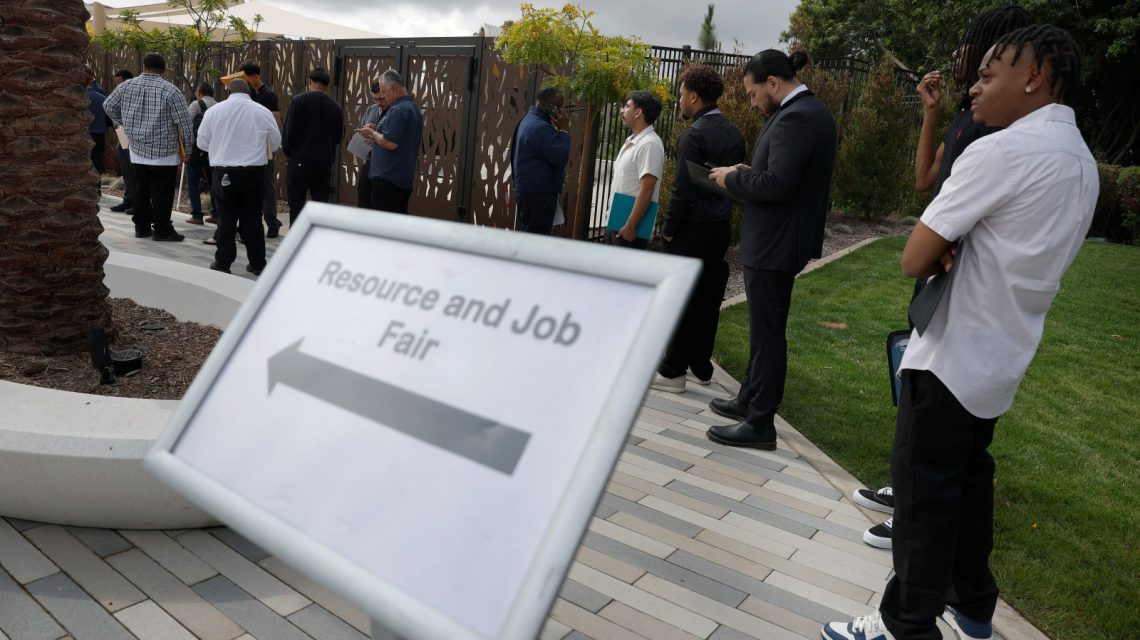
Virginia workers facing unemployment can expect larger checks due to a new state law that took effect on July 5. Governor Abigail Spanberger signed legislation approved by the Virginia General Assembly, which raised both the minimum and maximum weekly unemployment benefits. Newly filed claims will see the maximum benefit rise from $430 to $478, and the minimum benefit increase from $112 to $160.
These changes apply to new claims submitted on or after July 5. The Virginia Employment Commission (VEC) states the intention is to offer more financial support as workers seek new employment and stabilize household finances during joblessness. This comes when the U.S. labor market shows stability amidst pockets of economic uncertainty caused by factors like artificial intelligence, changing consumer demands, and government spending shifts.
Virginia’s Unemployment Rate
Virginia’s labor market has proven healthier than many others in the nation. According to Virginia Works, the state’s seasonally adjusted unemployment rate held steady at 3.8 percent in May, equal to 4,490,601 individuals. The labor force participation rate dropped slightly to 63.3 percent, while the national unemployment rate was 4.3 percent in May.
The gradual increase from previous lows reflects a nationwide cooling in the labor market. Virginia benefits from a diverse economy supported by sectors such as government employment, defense contracting, healthcare, education, and technology. Economists often link unemployment rates between 3 and 4 percent with healthy labor markets, although certain sectors show weakness.
Challenges like federal workforce reductions and tech-sector restructuring have contributed to modest rises in unemployment. Despite historically low rates, those losing jobs in high-cost urban areas face financial pressure. Supporters argue that benefits haven’t kept pace with inflation or living expenses.
To qualify for the new maximum weekly benefit of $478, workers must have earned at least $18,900.01 across two quarters during the base period used for calculations.
Comparing States’ Unemployment Benefits
Virginia’s increase improves its national standing, though it trails states with more generous programs. Newsweek’s analysis highlights dramatic variations based on workers’ locations. Maximum weekly benefits surpass $1,000 in some states, while others offer less than $300.
Washington state’s maximum benefits are over $1,100. Massachusetts also tops the list, with benefits exceeding $1,000 per week for up to 30 weeks. States such as Minnesota, New Jersey, and Oregon offer comparatively generous benefits. On the other hand, Mississippi provides the lowest maximum benefit nationwide, with Florida, Alabama, and Louisiana ranking low overall.
Before the recent increase, Virginia’s maximum weekly benefit ranked in the lower half of states. The increase to $478 raises its position, though it remains below levels in northeastern and western states.
The differences reflect America’s decentralized unemployment insurance system. While unemployment insurance involves federal-state partnerships, individual states largely dictate benefit formulas, payment levels, and eligibility criteria. This leads to significant variations in financial support among states.
Understanding the National Unemployment Rate
The Bureau of Labor Statistics calculates the unemployment rate monthly, representing the percentage of people in the labor force who are unemployed but actively seeking work. Retirees, students not seeking jobs, or those who have voluntarily exited the workforce aren’t counted.
Economists see the unemployment rate as a vital labor market indicator. Lower rates imply strong worker demand and a healthy economy. Rising unemployment may indicate economic weakness. The national rate was 4.3 percent in May, higher than post-pandemic recovery lows but below recessionary levels.
Unemployment peaked at nearly 15 percent during the COVID-19 shutdowns in 2020 and reached 10 percent in the Great Recession. Virginia’s current rate of 3.8 percent ranks it among states outperforming the national average.
Layoffs Trends: 2026 vs. 2025
Despite corporate layoff headlines, job-cut announcements nationwide have decreased significantly in 2026 compared to 2025. Challenger, Gray & Christmas data shows U.S. employers announced 443,604 job cuts in the first six months of 2026, marking a 40 percent drop from the 744,308 announced in 2025.
June witnessed 45,849 job cuts, down 53 percent from May and 4 percent less than June 2025. While layoffs stay elevated in specific sectors, the broader labor market hasn’t experienced the widespread decline some economists feared.
Technology leads in layoff announcements, with 139,156 job cuts by June, 83 percent more than the first half of 2025. These reductions link to artificial intelligence adoption and corporate restructuring around emerging technologies. Outside tech, labor market conditions are more stable.
The relatively low unemployment and industry-specific restructuring explain why Virginia lawmakers strengthened unemployment benefits. While most workers remain employed, those jobless face longer transitions and higher living costs.
For Virginians with these challenges, the state’s expanded unemployment benefits offer more financial cushioning during job searches.
 Rahm Emanuel Advises Against Impeaching Trump and Calls for Ethics Reforms
  Rahm Emanuel Discusses Potential Presidential Run and Jewish Identity
  JD Vance’s Influence Grows as 2028 Speculations Arise
  Laura Ingraham Criticizes Democratic Policies on ICE and Immigration
  Jay Clayton Appointed as White House AI Czar
  Debate Over Democratic Socialism Intensifies Within Democratic Party