Netanyahu’s Stance on U.S.-Israel Alliance
Israeli Prime Minister Benjamin Netanyahu emphasized the strong alliance between the United States and Israel in his discussion with Jacqui Heinrich. He stressed the shared values and goals, particularly concerning Iran’s nuclear ambitions. Netanyahu also voiced concerns about rising antisemitic sentiments among young Americans. He underscored the historical solidarity between the two nations.
Rahm Emanuel’s Critique
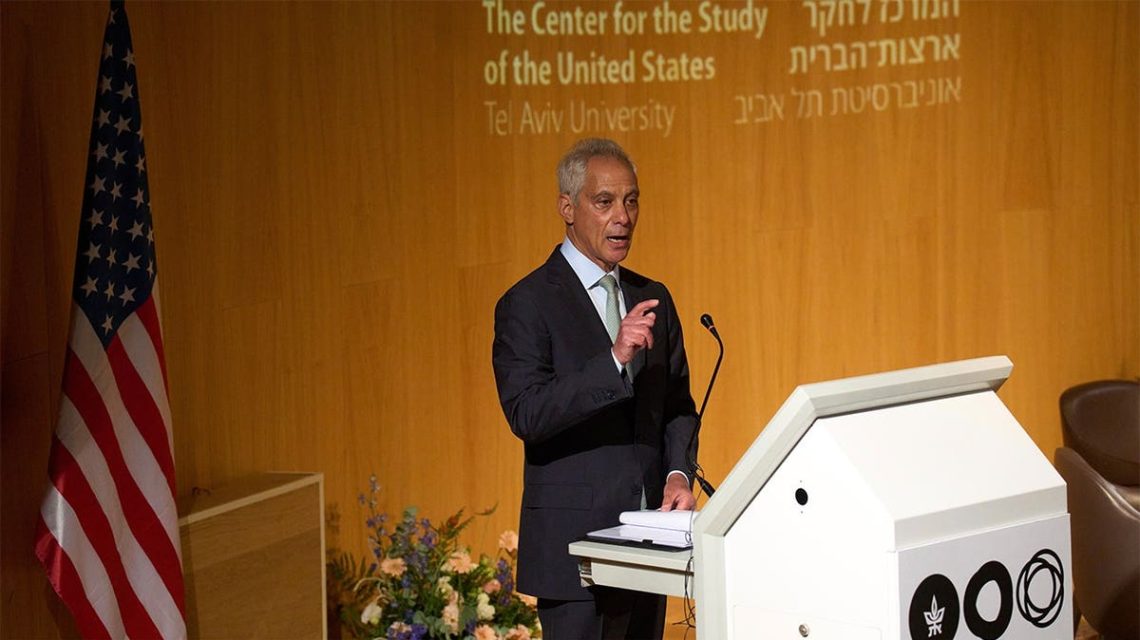
Rahm Emanuel, a potential Democratic presidential candidate, offered a contrasting view of the U.S.-Israel relationship. Speaking in Tel Aviv, Emanuel called for changes, stating that the relationship must adapt to survive. He criticized the unconditional support given to Israel by the U.S., saying it has allowed Netanyahu to ignore American concerns without consequences.
Emanuel warned that America’s silence has negatively impacted Israel’s domestic politics. He pointed out that Israel’s actions in Gaza have led to global condemnation and decreasing support for the country, particularly in Europe, Israel’s largest economic partner.
Political Divisions in the U.S.
Within the Democratic Party, opinions are divided over Israel’s military actions in Gaza. Many left-wing politicians accuse Israel of committing genocide and call for halting U.S. military aid. An Associated Press-NORC poll revealed that about half of Democrats believe Israel’s actions qualify as genocide. Moreover, 58% think the U.S. is overly supportive of Israel.
While most Republicans still support Israel, there is growing unease in the MAGA/America First camp, although the majority do not believe Israel has committed genocide.
Emanuel’s Proposals
Emanuel proposed changing the approach to Middle East peace. He suggested replacing the two-state solution with a 23-state solution, in which the 21 Arab nations would establish a governing authority acknowledging the Jewish connection to the land. He argued this would be a significant achievement for Israel and a setback for Iran.
He also recommended sanctions against Israelis attacking Palestinians, and businesses supporting illegal settlements. Emanuel proposed ending U.S. defense subsidies, advocating for standard financial terms for arms purchases similar to other allies.
Conclusion
Emanuel’s speech aimed to bridge the gap between extremism and realism. He denied the feasibility of a ‘greater Israel’ or a Palestinian state ‘from the river to the sea,’ labeling these ideas as fanatical fantasies leading to endless conflict.
Netanyahu, previously critical of Emanuel, had yet to respond to the speech.
 Republicans Withdraw Financial Support from North Carolina Senate Campaign
  Defense Secretary Ensures Military Votes Are Counted
  The Trump Team’s Challenge to the Military Leadership
  Maryland First State to Restrict Electronic Pricing in Grocery Stores
  British Police Arrest Man Suspected of Terror Plot
  Activists Push for Nationwide Ban on Child Marriage in the U.S.