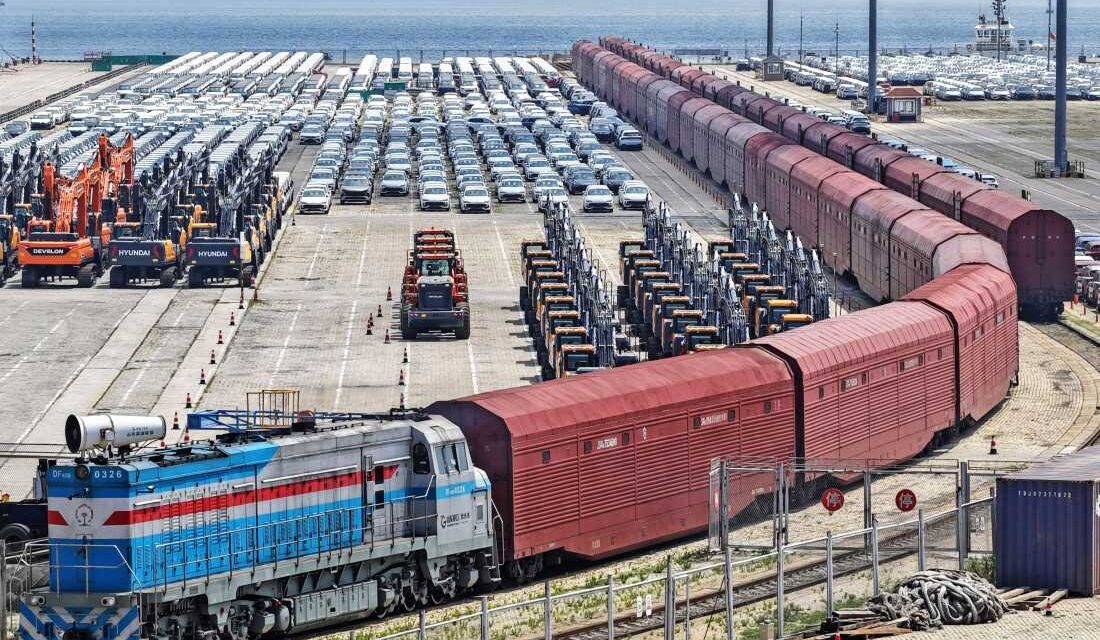
HONG KONG — China’s economic growth decelerated sharply, reaching an annualized pace of 4.3% in the second quarter of 2026. This represents the weakest growth in over three years, as reported by the government on Wednesday. The official figures did not meet forecasts and marked a decline from the robust 5% growth seen in the first quarter. Despite an increase in exports fueled by the rise in artificial intelligence and strong global demand for Chinese electric vehicles, the economy struggled to maintain momentum.
China largely maintained stability despite global economic impacts stemming from the Iran war. Rising energy prices contributed to global inflation. Nonetheless, exports surged by 17.6% in the first half of the year compared to the previous year, and grew by 27% in June, according to customs data. However, domestic spending and investment failed to keep pace, limiting manufacturing’s impact on the economy struggling to recover post-COVID-19 lockdowns.
Chief economist Lynn Song at ING Bank noted that the April-June quarter experienced the slowest growth since the fourth quarter of 2022, impacted by lockdowns. Some economists express concern that China’s economy faces increasing imbalance. While heavy investments favor frontier technologies like AI, computer chips, and robotics, lower-value manufacturing and job-supporting industries are lagging.
China recorded a $1.2 trillion global trade surplus last year, sparking complaints from global policymakers regarding trade imbalances driven by extensive state subsidies. These contributed to an oversupply of manufactured goods intended for export. Industrial output grew by 5.4% in the first half compared to the same period the previous year. However, the rise of AI and robotics has generated concerns about job creation.
Despite China’s reliance on exports to drive growth, families have reduced large purchases due to uncertainties in property markets, jobs, and wages. Eswar Prasad, Professor of Economics and Trade Policy at Cornell University, stressed that with confidence weak, boosting domestic demand remains challenging.
Mao Shengyong, Deputy Head of China’s National Bureau of Statistics, highlighted the imbalance of strong supply against weak demand. As China emphasizes high-tech manufacturing and aspires for ‘higher-quality economic growth,’ it aims to foster a robust domestic market and support employment stability.
In response to weaker economic areas, investment in fixed assets fell by 5.7% year-on-year, while retail sales rose slightly by 1.3%. Housing prices continued to decline. Wei Li, Head of Multi-Asset Investments at BNP Paribas Securities (China), described the economy as undergoing a ‘significant transition.’ Chinese leaders set an annual growth target of 4.5% to 5% for 2026, lower than the previous year’s 5% target. Economic growth for the first half of the year stood at 4.7%. The International Monetary Fund recently adjusted China’s annual growth forecast, estimating a 4.6% expansion in 2026 and projecting 4.1% growth in 2027.