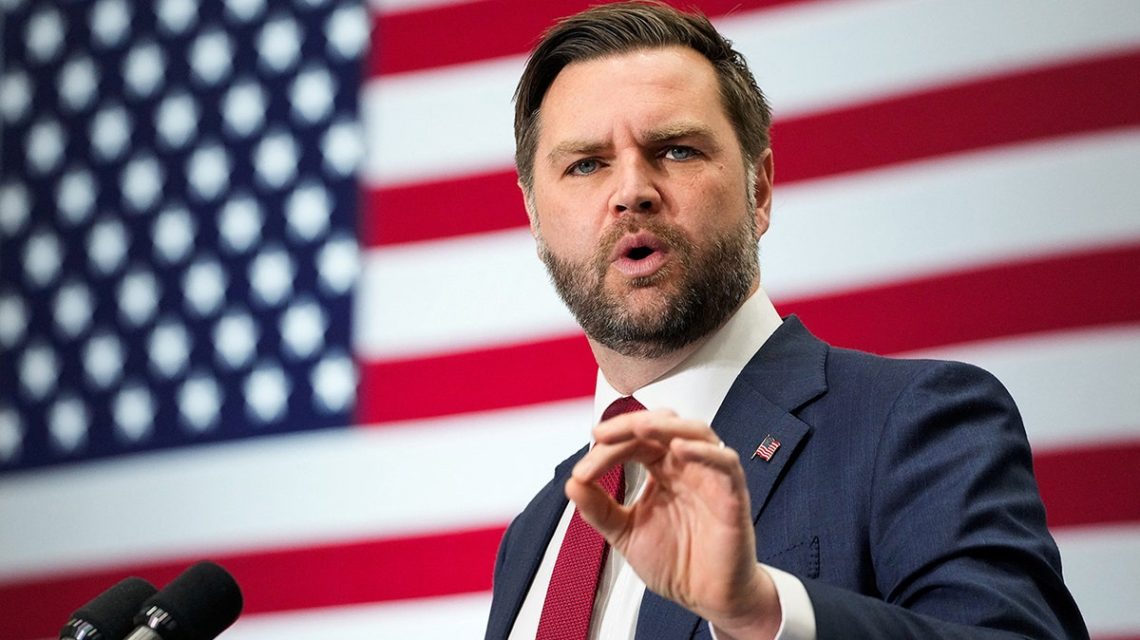
Vice President JD Vance, in a discussion with podcaster Joe Rogan on Wednesday, expressed concerns about the efforts to negotiate an agreement with Iran to prevent war and a potential refugee crisis. Vance pointed out that a significant segment of the Republican Party is actively attempting to derail these negotiations.
Vance highlighted the hawkish elements within American politics. These individuals have criticized the deal and, according to Vance, attempted to disrupt it. He questioned their approach, asking, ‘What is your proposal? What is your actual argument?’
The situation in the Strait of Hormuz represents a significant risk, Vance noted. Iran possesses the capability to disrupt 25% of the global energy supply using inexpensive drones, which are difficult to intercept. This detail underscores the precarious nature of the current geopolitical landscape.
Vance cited the example of Libya, warning against a similar outcome in Iran. After the U.S. ousted Moammar Gadhafi, Libya descended into chaos, resulting in a refugee crisis and increased terrorism.
Vance argued against the notion of using U.S. military might for regime change in Iran. ‘Sending a ground invasion of 150,000 troops is basically saying that the U.S. military should do the job for the Iranian people,’ he explained, noting that such actions no longer align with American policy goals.
He expressed concerns about the possibility of a ‘Libya outcome’ in Iran. When Gadhafi was overthrown, the consequences were severe. Libya became a failed state, leading to a refugee crisis and subsequent issues with terrorism. Vance warned that similar destabilization in Iran could provoke similar consequences.
The vice president emphasized the importance of national interest, questioning how a flood of millions of desperate people and the spread of terrorist activities would benefit the United States. ‘We’ve run this experiment before,’ Vance stated, underscoring his point with historical references.
Reflecting on past events, Rogan mentioned that the fall of Gaddafi contributed to a global migrant crisis that affected Europe in the 2010s. Vance concurred, citing Syria as another instance of failed Middle Eastern policy that led to significant turmoil.
Vance stressed the need for caution, highlighting the moral implications of interventionist policies that have historically caused civilian casualties, refugee crises, and terrorism spikes.
Discussing internal disagreements, Vance noted that the ‘hawkish’ faction of the Trump coalition often criticized both Trump and himself when their views diverged. He disagreed with their attacks on efforts to negotiate, seeing them as misguided.
The recent memorandum of understanding included an agreement that the U.S. would enable neighboring Gulf countries to invest $300 billion in Iran if commitments were honored. However, Vance accused certain Republicans of misleadingly claiming the U.S. would provide these funds directly.
Vance commented that while Americans support military action for clear goals, there is little appetite for the open-ended conflicts of recent history, reflecting a shift in public sentiment.
 The Trump Team’s Challenge to the Military Leadership
  Maryland First State to Restrict Electronic Pricing in Grocery Stores
  Activists Push for Nationwide Ban on Child Marriage in the U.S.
  Democratic Hopes and Historical Warnings in 2026 Senate Race
  Republicans Face Challenges Amidst Cost of Living Concerns
  A Different Kind of Fall for Congress This Year