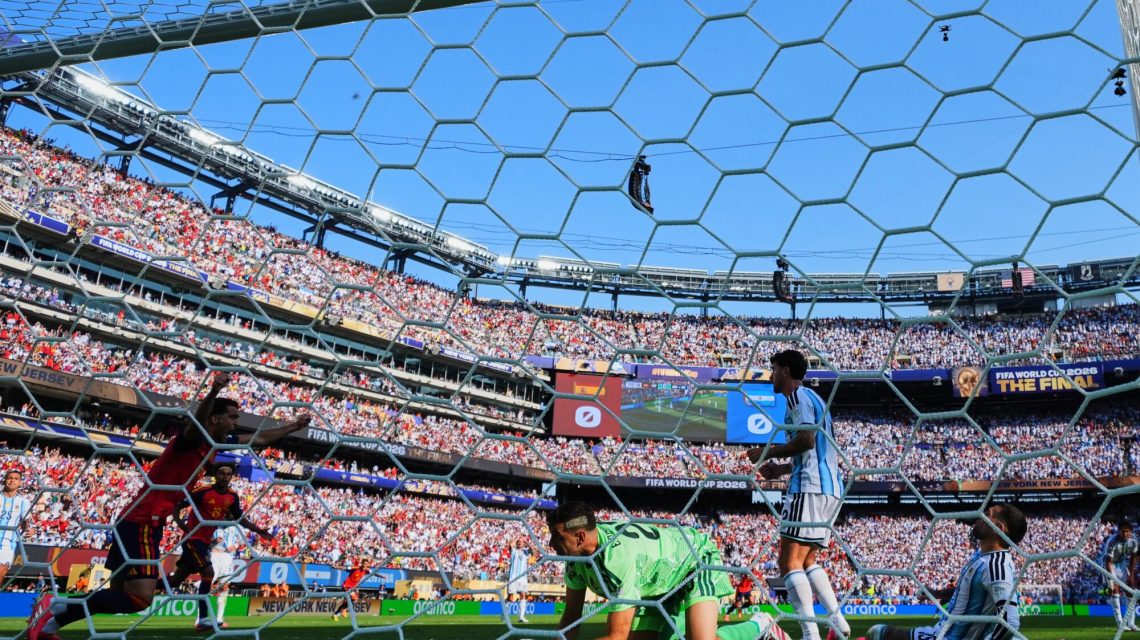
The FIFA World Cup hosted by the United States, Mexico, and Canada concluded with Spain triumphing over Argentina 1-0 in extra time. FIFA president Gianni Infantino praised the event as the greatest human social and cultural spectacle ever, indicating that the tournament exceeded expectations.
Attendance reached unprecedented levels, exceeding 6.8 million spectators, averaging over 65,000 per game. The estimated global television and digital audience was over 5 billion, with 1.8 billion anticipated to view the final.
Financially, the tournament projected $13 billion in revenue for its four-year cycle, becoming the first sporting event to exceed $10 billion. Ticket prices for the final soared, with some surpassing $32,500, reflecting the event’s high demand.
“By all means this World Cup has exceeded all expectations,” said Gianni Infantino.
The logistics of the 39-day tournament, spread across three countries, unfolded smoothly despite initial concerns. The expansion to 48 teams and 104 matches allowed for numerous unexpected outcomes and captivating performances.
Among the surprises was Cape Verde, holding a scoreless draw against Spain and challenging Argentina to extra time. Norway, with star striker Erling Haaland, reached the quarterfinals, captivating fans with viral celebrations. Canada and Egypt secured historic wins, advancing to the Round of 16.
Lionel Messi further cemented his legacy, playing in his third World Cup final and setting records for games, assists, and goal contributions. However, the tournament also faced political and technological challenges.
The political dimension of the World Cup was evident, particularly with the U.S. denying visas to the Iranian delegation and relocating Iran’s base camp. Iran’s team played all its matches in the U.S., enduring visa restrictions yet remaining undefeated in the group stage.
Technological interventions through the video assistant referee (VAR) system influenced match outcomes, leading to criticism over its impact on the game’s drama and judgment.
A significant decision involving U.S. player Folarin Balogun drew attention. After receiving a red card, Balogun’s suspension was overturned following President Trump’s intervention. The controversy affected the U.S. team’s performance against Belgium.
Despite criticism, Infantino’s presidency remains strong, with substantial endorsements for reelection following the tournament’s financial success. Spain’s victory was one highlight, but FIFA itself emerged as a major winner in this historic event.
 British Police Arrest Man Suspected of Terror Plot
  Nick Saban’s Comments on ESPN Spark Debate Over College Sports Regulations
  Activists Push for Nationwide Ban on Child Marriage in the U.S.
  Freddy’s American Adventure: From Soccer to College Football
  Investigation into Alleged Incident at Cornell University
  Rising Drone Threats Highlight Vulnerabilities in Moldova’s Airspace Defense