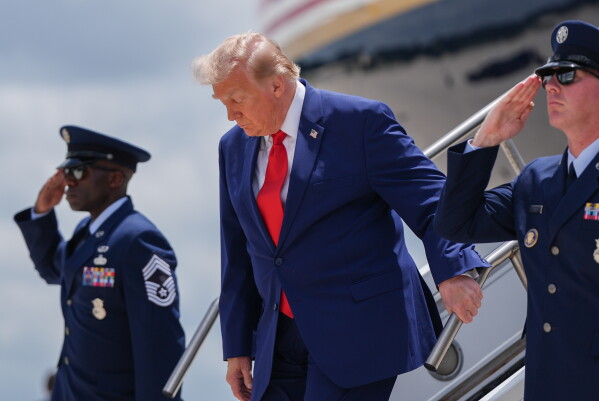
President Donald Trump promoted the “Abraham Accords” during his Middle East visit on Monday. These accords, established in 2020, have expanded diplomatic ties between Israel and several Arab nations.
The term “Abraham Accords” carries deep religious and cultural significance. Abraham is a biblical patriarch revered in Christianity, Islam, and Judaism, religions encompassing over half of the world’s population. He is viewed as a unifying figure because his legacy is shared by followers of these faiths, though some groups dispute who are his true heirs.
Bruce Feiler, author of “Abraham: A Journey to the Heart of Three Faiths,” noted, “Everybody has tried to claim Abraham as their own, but in fact Abraham belongs to everybody.” He added that throughout history, many claim their perspective is the singular one that matters.
Feiler emphasized the importance of sharing Abraham’s legacy, land, and stories among different faith groups.
The Abraham Accords as a Template
The Abraham Accords involve diplomatic and commercial agreements between Israel and the United Arab Emirates, Bahrain, Sudan, and Morocco, brokered by the U.S. during Trump’s first term. These accords may pave the way for future discussions with other majority-Muslim countries.
From the Bible to the Headlines
Abraham is introduced in the Book of Genesis in the Hebrew Bible. He begins as a childless man, with God’s promise of a large nation stemming from him. His journey leads to the region around modern-day Israel and Palestinian territories.
Abraham first fathers Ishmael with Hagar, his enslaved wife. Later, Sarah, his primary wife, despite being elderly, gives birth to Isaac. Ishmael and Hagar are initially banished, but Ishmael later returns to help bury Abraham after his death.
An essential biblical story revolves around God testing Abraham by asking him to sacrifice Isaac. Abraham complies but is stopped by an angel, indicating that Abraham has passed a test of faith. Isaac and Jacob become Jewish ancestors based on Genesis.
Christianity sees Abraham as a symbol of faith, while Islamic and Jewish narratives depict Abraham destroying his father’s idols, choosing to worship one God.
Muslim traditions spotlight Ismail (Ishmael) at the story’s center, honoring him as an ancestor of the Prophet Muhammad. Ismail is believed to be offered on a rock under the Dome of the Rock in Jerusalem.
Abraham as a Dividing and Unifying Figure
Throughout history, Christianity, Judaism, and Islam have asserted themselves as Abraham’s true heirs. This claim led to events such as crusades and terror attacks.
Conversely, Abraham is a central figure in diplomatic initiatives like the accords arranged by the predominantly Christian United States between Israel and majority-Muslim Arab states.
After the 9/11 attacks, then-President George W. Bush highlighted Islam’s roots to Abraham, differentiating mainstream Muslims from extremists.
The term “Abrahamic faiths” promotes inter-religious dialogue. The UAE established the Abrahamic Family House, featuring a church, mosque, and synagogue. In the U.S., some prefer “Abrahamic” over “Judeo-Christian,” striving for more inclusivity.
Efforts for unity continue, despite religious tensions. Antisemitism has risen amid ongoing Middle East conflict, alongside increasing anti-Muslim sentiment in New York’s political scene.
The Importance of Context
During his speech to the Israeli Knesset, Trump focused on Jewish tradition surrounding Abraham, referencing “God of Abraham, Isaac, and Jacob.” He preferred the Hebrew pronunciation “Avraham Accords.” Yet, he also acknowledged Arab and Muslim leaders involved in the agreements.
This may seem contradictory, given Trump’s 2015 call to ban Muslims from entering the U.S. post-terror attack. His administration has targeted foreign students and Palestinian advocates. Nonetheless, Feiler argued this reflects the historical tension around Abraham’s story.
Abraham’s narrative encompasses dynamics between family, neighbors, and larger groups, confronting us with relations and rivalries.
Feiler concluded, “We want it all for ourselves, but we keep being reminded that we can only live alongside the other.”
The Associated Press’ religion coverage is supported by The Conversation US, funded by Lilly Endowment Inc. The AP controls all content.
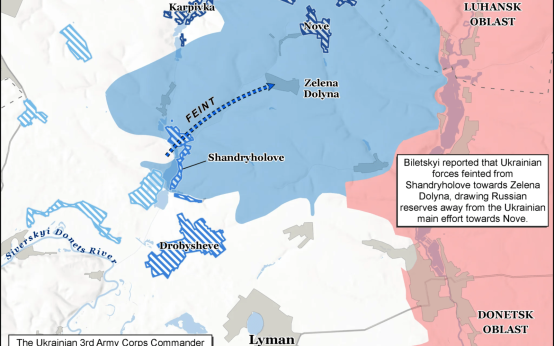 Ukraine Converts APCs to Explosive Devices in Donetsk Offensive
 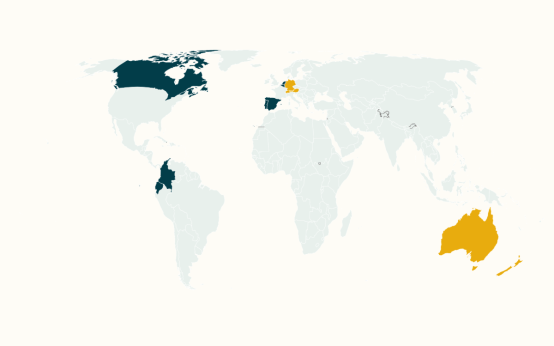 Dutch Review Board’s Euthanasia Ruling and International Debate
 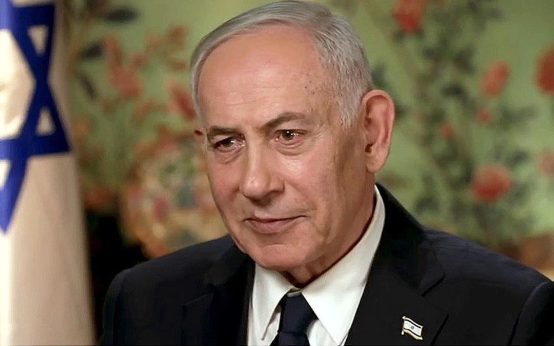 Israeli PM Commends Heroic Actions in Flight Emergency
  Rabbi and Jewish Leaders Criticize Adam Brody for ‘Genocide’ Comment
  Flydubai’s Emergency Landing Highlights Cockpit Security
  Former Israeli PM Naftali Bennett Commends Passengers and Crew for In-Flight Heroism