
On Saturday, at the Maine Democratic Party’s special state nominating convention, Troy Jackson will officially replace Graham Platner as the nominee for a U.S. Senate seat. This change marks the end of a tumultuous period for the party, which nearly compromised its efforts to challenge Republican Senator Susan Collins and aim for congressional control.
Earlier, Platner withdrew from the race on July 8 following accusations of sexual misconduct. This opened the doors to a competitive race, culminating in Jackson’s rise in less than four weeks. Though Jackson is well-known in Maine’s political scene, having served intermittently in the state legislature since 2002, including roles as Democratic leader and Senate president, he does not possess the star quality that surrounded Platner, raising doubts about his chances to displace Collins.
Platner’s earlier campaign enjoyed momentum due to his organizing skills and ability to connect with Maine’s working-class population. These attributes had helped him overlook past issues and forge a path toward overturning the Senate seat. Fortunately, Jackson also embodies these qualities, perhaps even more so. Jason Shedlock, a labor leader and statehouse candidate, vouched for Jackson’s reputation saying, “In Maine labor circles, the gold standard is Troy Jackson.” According to Shedlock, Jackson has been a symbol of labor in Maine and is unmatched in the political arena.
Jackson’s political journey began in 1998 with a logging blockade on the Maine-Canada border, protesting Canadian workers perceived as encroaching on local jobs. Initially a Republican due to George H.W. Bush’s connection to Kennebunkport, Jackson shifted political affiliations after a narrow loss in 2000 as a Republican. By 2002, he ran as an independent and won, eventually aligning with the Democrats.
Jackson has emphasized that his political awakening was fueled by economic struggles in the logging industry and governmental indifference to workers’ pleas for help. “That made me so pissed off that I started paying attention,” he told Newsweek, highlighting the importance of engagement with political processes.
Jackson aims to mobilize the ‘outsider’ population in November to unseat Collins. According to the Independent Voter Project, the composition of Maine’s electorate stands at 34 percent Democrats, 32 percent independents, and 30 percent Republicans. Jackson’s potential lies in tapping into these dynamics, as Collins has consistently won despite Democratic presidential victories in the state.
Platner managed to invigorate a diverse voter base by leveraging his varied life experiences, appeal to common folks, and strong speaking abilities. Jackson, while possessing the first two traits, falls short of Platner’s oratory prowess. Still, Jackson’s focus on worker-centric policies has gained endorsements from prominent figures such as Representative Ro Khanna and Senator Bernie Sanders, with whom he shares some history.
Despite his legislative achievements in labor rights, Jackson has faced resistance from Maine’s party leadership, exemplified by vetoes from Governor Janet Mills on key bills. Andy O’Brien, former Democratic lawmaker and current communications director for the Maine AFL-CIO, noted, “Maine passed more pro-labor laws in those few years than we did in the past 40 years, but that was really thanks to Troy Jackson.” This dedication to labor rights sometimes led to high-profile disagreements with Mills.
Jackson’s campaign aligns with Platner in terms of labor and union endorsements. However, he lacks backing from the Maine People’s Alliance (MPA), which represents progressive interests. Jackson asserts the need for economic focus over identity politics, advocating for practicality in addressing immediate needs like housing.
Voter turnout in November will be crucial for both parties. With equal Democrat and Republican turnout, it is possible for Jackson to secure nearly half the independent vote and still win. Despite Collins’ financial resources, Jackson’s cross-party appeal might attract part of Collins’ base.
While Jackson may lack Platner’s speech-making skills, his commitment to speaking out on economic issues may resonate with voters. He stated, “Democrats are fighting for the [working class]. They’re fighting for them every day, but you don’t hear them talking about it because we don’t talk about our priorities to the extent that we need to. We just need to get back to economics.”
 Trump’s 2024 Campaign Targets Young Men Through Cryptocurrency
  Trump’s White House Visitor Center Proposal Gains Bipartisan Support
  State Department Simplifies Passport Process with Online Applications
 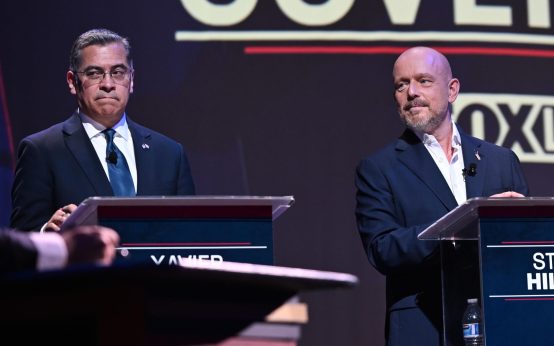 Becerra and Hilton Clash in California Gubernatorial Debate
  California Voters to Decide on $7.5 Billion State Research Fund
 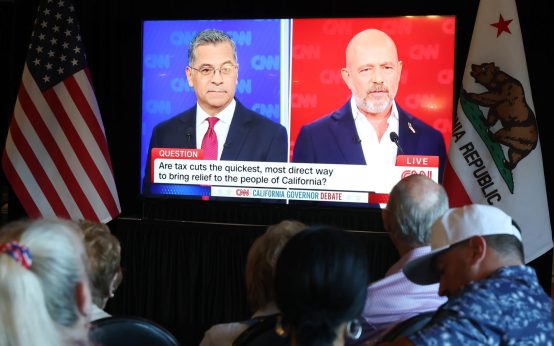 Highlights from the California Gubernatorial Debate: Becerra vs. Hilton