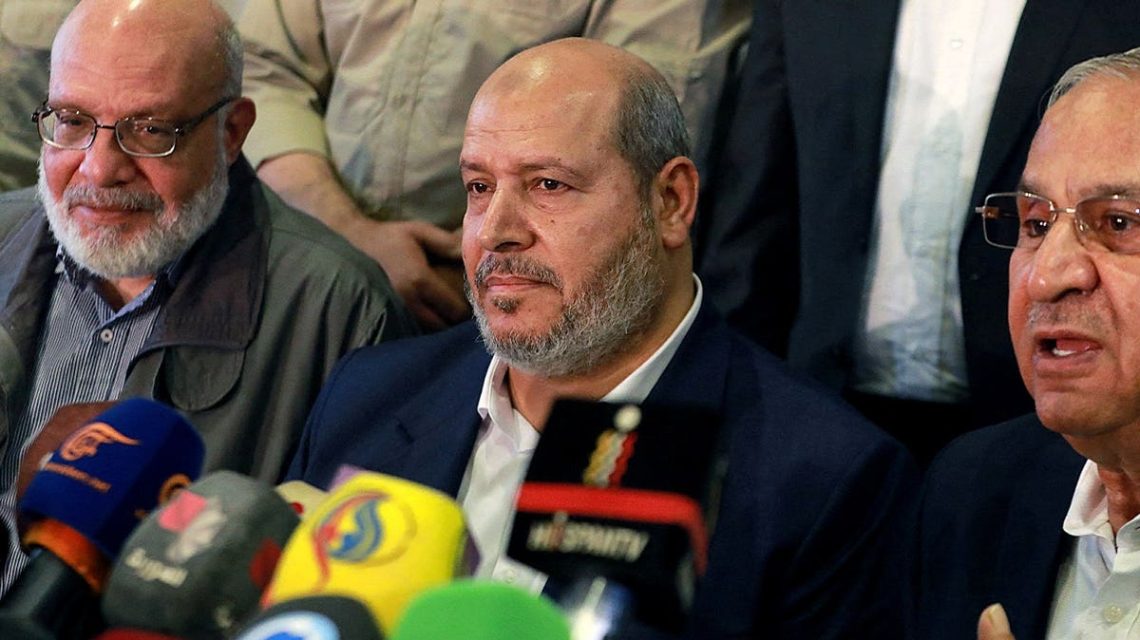
The recent election of Khalil al-Hayya as the political leader of Hamas has generated significant discussion among both residents and regional experts. This decision comes after a protracted secret election. Jaser AbuMousa, a senior fellow at the Middle East Institute, shared his perspective on this development.
Al-Hayya, a long-time negotiator for Hamas, assumes leadership amid heightened tensions and ongoing conflict with Israel. The election of al-Hayya signifies that Hamas is unlikely to shift its current strategies and policies. AbuMousa emphasized that even with new leadership, the organization is expected to continue with familiar tactics, focusing on negotiations and prisoner exchanges without significant moderation.
“Expect more of the same,” AbuMousa commented, highlighting al-Hayya as a “chief negotiator and institutional survivor.” He insisted that despite talks of abandonment of the Gaza government’s control, the changing leadership will not drastically alter Hamas’s course.
Al-Hayya has survived numerous assassination attempts, including an incident in Qatar in September 2025, where an Israeli strike targeted a building housing a Hamas delegation. Such resilience appears to bolster al-Hayya’s standing within the organization.
AbuMousa explained that this leadership transition reflects a focus on organizational survival, armed continuity, and maintaining ties with Iranian allies, rather than pursuing new political directions.
The expert suggested that within Hamas, surviving assassination attempts serves as a credential. Al-Hayya’s leadership is expected to follow previous traditions: minimizing public appearances and communicating through intermediaries to prevent any single attack from crippling the leadership.
The loss of al-Hayya’s family members in Israeli operations further complicates the leadership dynamics. AbuMousa noted that while al-Hayya’s personal grief is sincere, his losses also serve as political leverage within Hamas, allowing him to operate with reduced criticism.
Replacing Yahya Sinwar, who was killed by Israeli forces in late 2024, al-Hayya’s appointment reflects a preference for continuity over change. Al-Hayya’s loyalty to both Iran and the military wing has been maintained, suggesting that Hamas aims to sustain its current armed stance.
AbuMousa cautioned against interpreting the election as support from Gaza’s population. The leadership council, not the general public, conducted the vote. Many residents reportedly blame Hamas for the recent conflicts’ consequences.
Analysts anticipate a governance model similar to Hezbollah’s, wherein Hamas retains its weapons and security roles but remains less visible in government functions. Despite internal elections, Gazans have not participated in a general vote since 2006.
 British Police Arrest Man Suspected of Terror Plot
  Activists Push for Nationwide Ban on Child Marriage in the U.S.
  Investigation into Alleged Incident at Cornell University
  Rising Drone Threats Highlight Vulnerabilities in Moldova’s Airspace Defense
  Bolivia Faces Security Test Amid Unrest
  Incident on FlyDubai Flight Raises Security Concerns