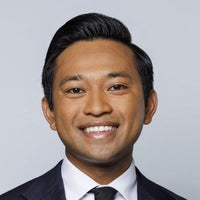
In Southfield, Michigan, Democratic Senate candidates Abdul El-Sayed and Representative Haley Stevens exchanged sharp words during their final televised debate before a critical primary. The debate centered on topics like campaign funding, race tone, and electability issues.
Outside Funding
El-Sayed criticized Stevens for receiving significant financial support from outside groups, particularly highlighting tens of millions from organizations linked to the American Israel Public Affairs Committee (AIPAC). He referenced her vote against reducing $3.3 billion in military aid to Israel, declaring it a misuse of tax dollars. Stevens defended her stance, supporting a two-state solution to the Israeli-Palestinian conflict and noting her criticism of Israeli Prime Minister Netanyahu.
Stevens also pointed to a super PAC backing El-Sayed, “Fighting for Michigan PAC,” funded partly by his father-in-law, Jukaku Tayeb. She argued that outside funding influences both campaigns and called for campaign finance reform. Fighting for Michigan has spent $2.3 million supporting El-Sayed, while AIPAC’s super PAC, the United Democracy Project, spent over $19.9 million for Stevens.
Electability
The Democratic primary victor will likely face former Republican Representative Mike Rogers, who has aligned closely with President Trump. Rogers addressed supporters alongside Trump in Milford, Michigan.
Stevens and her allies argue that El-Sayed’s progressive stances pose electoral risks. Endorsed by figures like Senators Bernie Sanders and Elizabeth Warren, El-Sayed rejects the socialist label. He asserts a belief in fair capitalism and criticizes monopolies.
In contrast, Stevens is supported by moderates like Senator Gary Peters and Governor Gretchen Whitmer. She stressed the need for dedicated representation, contrasting El-Sayed’s approach to her vision of effective, practical work.
Rhetoric and Campaign Tone
El-Sayed faced questions about his intense rhetoric, notably likening a victory to a message against incumbents. He emphasized telling supporters to avoid personal attacks, while blaming the tone on super PAC ads supporting Stevens.
Stevens addressed accusations of El-Sayed’s disrespect toward women in politics, highlighted by ads that pointed to past comments. El-Sayed defended his record, emphasizing his upbringing and respect for strong women, contesting any portrayal as misleading.
Financial Disclosures
Recent financial disclosures revealed El-Sayed’s ownership of rental properties in India and the UAE, attributed to his wife. Stevens accused El-Sayed of lacking financial transparency, highlighting $300,000 labeled as “other” income.
El-Sayed responded by dismissing the claims as distractions and asserting his disclosure compliance. He attributed focus on foreign properties to prejudiced narratives.
The debate highlighted significant divides within the party, with both candidates presenting distinct visions and approaches to governance.
 The Trump Team’s Challenge to the Military Leadership
  Maryland First State to Restrict Electronic Pricing in Grocery Stores
  Activists Push for Nationwide Ban on Child Marriage in the U.S.
  Democratic Hopes and Historical Warnings in 2026 Senate Race
  Republicans Face Challenges Amidst Cost of Living Concerns
  A Different Kind of Fall for Congress This Year