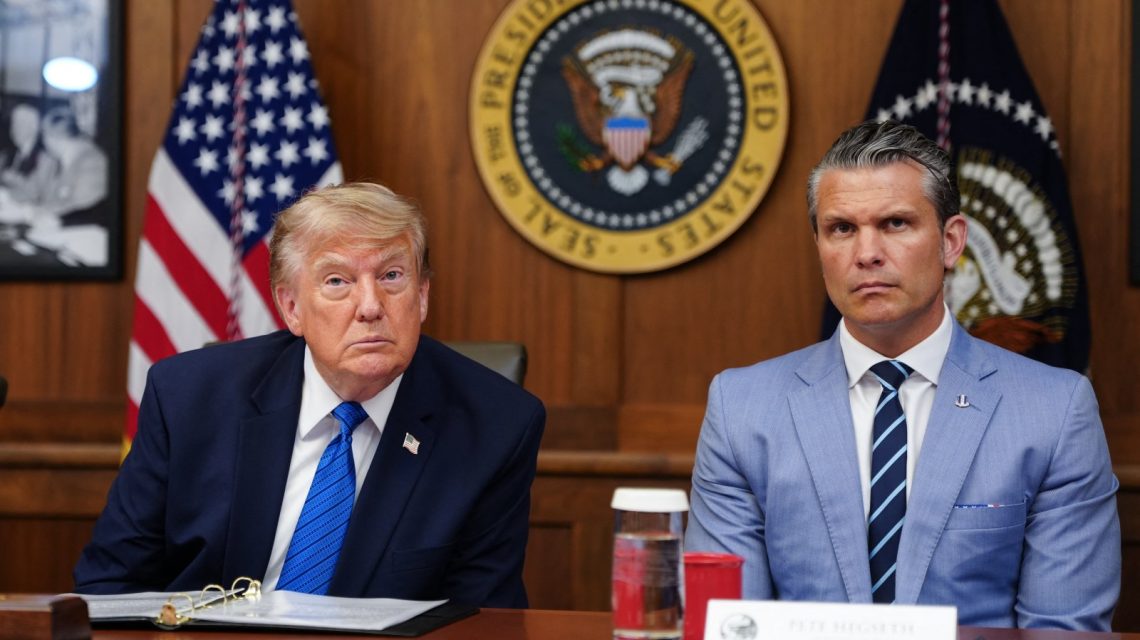
Defense Secretary Pete Hegseth is under scrutiny from Republicans on Capitol Hill as his public approval declines. Recent polling from Marquette Law School highlights unfavorable perceptions due to his management of the Iran war.
The Marquette poll reveals Hegseth’s favorability among U.S. adults has dropped significantly. His current net favorability rating ties with Trump for the lowest among administration figures, at minus 22 points. Only 23 percent view him favorably compared to 45 percent unfavorably. Additionally, 32 percent of respondents have not heard enough about Hegseth to form an opinion.
North Carolina Senator Thom Tillis expressed his loss of confidence in Hegseth, pointing to the forced retirement of senior military leaders and micromanagement at the Pentagon. Maine Senator Susan Collins finds the departure of senior officials “deeply troubling.” Similarly, West Virginia Senator Shelley Moore Capito and Iowa Senator Joni Ernst have expressed concerns over public patience with the ongoing conflict.
A previous Marquette poll from May showed better support among Republicans, with a net favorability of plus 36 points. Despite this, Hegseth ranked lowest among the four Republican figures tested. The Republican enthusiasm for voting also shows a decline, with 30 percent of Republicans expressing enthusiasm, down from 36 percent in May.
Munitions Shortages and Further Concerns
Criticism of Hegseth increased after a Washington Post report indicated Trump’s frustration over the war led to a confrontation at Camp David. Trump reportedly questioned Hegseth about misleading information on munitions shortages affecting U.S. military capabilities against Iran.
The report suggested Hegseth blamed Deputy Defense Secretary Stephen Feinberg for the shortages and failure to inform Trump. Shortages in long-range missiles and interceptors have limited large-scale strikes on Iran.
The White House strongly denies the report, dubbing it “fake news,” and expresses confidence in Hegseth. Pentagon spokesperson Sean Parnell affirmed Hegseth did not mislead anyone about munitions and did not blame Feinberg. Trump has publicly disputed the shortage claims on Truth Social.
Despite tension, Hegseth’s position seemed stable after successes like the capture of former Venezuelan leader Nicolas Maduro. Previous controversies like Signalgate didn’t affect Trump’s support for him.
Continued Republican Criticism
The dispute has fueled Republican criticism of Hegseth’s management of the Iran war, now in its sixth month. Senator Tillis had raised concerns about Hegseth’s leadership and treatment of military leaders earlier in May.
Tillis was critical of impulsive decision-making by Hegseth, suggesting a need for experienced professionals rather than “yes-men.” Concerns arose over rumors General Chris Donahue could be sidelined as part of Pentagon restructuring.
Military resources have been heavily utilized since February 28 when the war began. The Post reported extensive use of cruise missiles, interceptors, and tactical ballistic missiles in the conflict’s initial phase.
Hegseth, Feinberg, and Joint Chiefs Chairman General Dan Caine requested $67 billion in additional funding for stockpile replenishment. This request awaits Senate Republican action.
 The Trump Team’s Challenge to the Military Leadership
  Maryland First State to Restrict Electronic Pricing in Grocery Stores
  Activists Push for Nationwide Ban on Child Marriage in the U.S.
  Democratic Hopes and Historical Warnings in 2026 Senate Race
  Republicans Face Challenges Amidst Cost of Living Concerns
  A Different Kind of Fall for Congress This Year