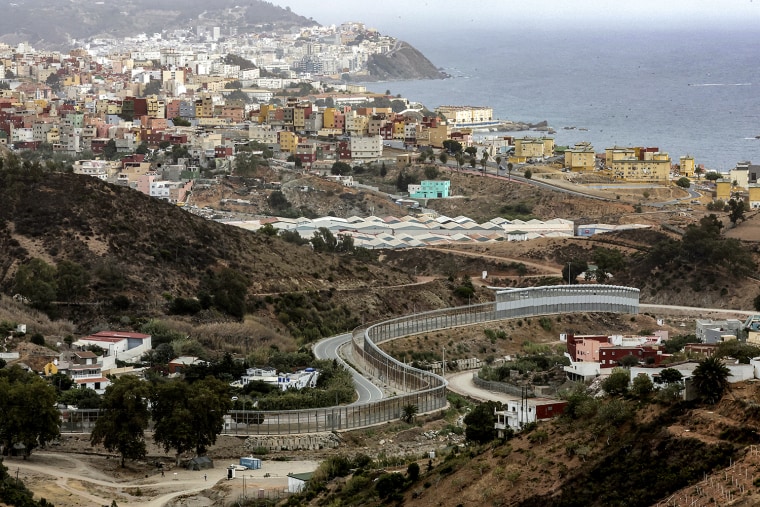
On August 10, 2026, a significant migration event occurred as tens of thousands of migrants crossed from Morocco into Ceuta, an autonomous Spanish territory in North Africa. This sudden influx overwhelmed local authorities and infrastructure, testing the European Union’s (E.U.) new Pact on Migration and Asylum.
The Migration Surge
The crossing, occurring between July 30 and 31, highlighted vulnerabilities in Europe’s migration system. Quick restoration of control has fueled debate on whether the E.U. system is functioning effectively. Criticism emerged from Washington and European capitals. The U.S. State Department accused the Spanish government of facilitating mass illegal migration into Europe. At the E.U. level, Denmark and Italy spearheaded criticism with a letter from 22 member states, demanding coordinated border measures and blaming Spain for attracting undocumented migrants. Far-right parties in Europe seized the opportunity to criticize Spain and the broader migration policy.
Details of the Crossing
About 72,000 migrants crossed into Ceuta, primarily by sea. Many died from drowning or stampedes. Ceuta, home to 84,000 people, has seen migration waves before, but this incident’s scale was unprecedented. Spain’s interior minister reported the figures, though some estimates suggest 50,000 to 60,000 entrants. In 2021, Ceuta saw a surge of 12,000 migrants over two days.
Causes Behind the Surge
No single cause explains the border surge. Some point to a recent Spanish Supreme Court ruling. Migrants arriving in Ceuta and Melilla by sea could not be immediately returned through the expedited “hot returns” process. Instead, they were entitled to Spain’s regular deportation proceedings. Rita Fernández, a migration expert, noted that misinformation spread online motivated many to journey. Rumors suggested a lack of deportation for those reaching Ceuta. Although authorities reported that trafficking networks were involved, many migrants attributed their action to online misinformation.
Critics blamed Spain’s liberal migration policies under Prime Minister Pedro Sánchez. In April 2026, a regularization program allowed over 1 million undocumented migrants to apply for residency and work permits. E.U. member states have generally implemented stricter migration measures, but Spain’s approach diverged. This divergence sparked criticism from countries with tougher migration stances like Denmark and Italy, who accused Spain of failing to secure the E.U.’s only African border.
Spain’s Response
Spain responded by deploying armed forces and police to Ceuta, using water cannons, tear gas, and facilitating returns to Morocco. As the influx concluded, a 1,640-foot floating sea barrier was installed to deter similar events. Spain’s government approved $29 million to support unaccompanied minors in Ceuta’s overwhelmed reception centers. Prime Minister Sánchez reaffirmed the importance of their migration policies and held smuggler-induced misinformation responsible for the incident.
Broader Implications for Europe
The Ceuta situation serves as a test for the E.U.’s new Pact on Migration and Asylum. Some member states opted for unilateral Schengen suspensions rather than employing the pact’s mechanisms, indicating potential delays in trust-building. Migration remains a contentious issue in European politics, intensified by sudden surges.
The E.U. convened an emergency meeting on August 4. During this meeting, ministers discussed improving situational awareness and considering early warning systems and social media monitoring. E.U. migration chief Magnus Brunner emphasized member countries’ solidarity with Spain and warned against divisive debates on illegal migration.
Frontex reported a decrease in irregular E.U. border crossings by 40% in early 2026 compared to 2025. Charles A. Kupchan, an expert on European affairs, viewed Ceuta as a temporary breach. He acknowledged existing gaps needing attention but argued that Spain’s swift response indicated a functioning system. He noted the need for improved border control but rejected the notion of a systemic crisis.
 Bolivia Faces Security Test Amid Unrest
  Incident on FlyDubai Flight Raises Security Concerns
  Journalist Gershkovich Discusses Wrongful Detention and Release in Russian Prisoner Swap
  Pakistan Airstrikes in Afghanistan: Civilian Casualties Reported
  Ukraine Converts APCs to Explosive Devices in Donetsk Offensive
  Dutch Review Board’s Euthanasia Ruling and International Debate