Tons of aid from regional partners began arriving in Colombia as efforts to find survivors intensified following a powerful earthquake that devastated the region. The disaster left the new Colombian president, Abelardo de la Espriella, and his government grappling with response challenges as civil society mobilized to provide aid to the most affected communities. On Wednesday, de la Espriella confirmed that the earthquake, which measured 7.4 in magnitude and struck the west of the country, claimed at least 265 lives. Nearly 500 people were reported missing, although civilian databases suggested the number exceeded 4,100. In total, more than 25,800 families experienced significant impacts. President de la Espriella stated, “Our efforts are focused on the disappeared,” emphasizing the urgency as teams continued searching through debris in heavily impacted cities like Cali, Pereira, Manizales, and Quibdo.
The importance of timely rescue efforts was highlighted by aid agencies, who stated that the first 48 to 72 hours are crucial for recovering survivors, though this window can be extended if victims have access to food and water. Alejandro Eder, the mayor of Cali, reported that rescue workers were finding evidence of people alive under the rubble and emphasized, “The next 20 hours are the most critical to find and rescue people alive.”
In Pereira, rescuers successfully freed Daniela Largo alive after a complex 12-hour operation, where crews created an opening to free her trapped arm while a doctor provided IV fluids for stabilization. As she was carried to an ambulance, firefighters acknowledged the achievement and the crowd showed support.
In another situation, a man was retrieved lifeless from rubble wrapped in a white blanket, mourning the loss amidst the devastation. In the affected coffee-growing region, authorities converted sports arenas, schools, and other public buildings into shelters to aid thousands of displaced Colombians. Ebert Jonathan Morales, a resident of Cali, remarked on his family’s loss, “My house was completely destroyed. We can’t live there.”
In cities like Pereira and Cali, many families resorted to sleeping in parks due to fears of aftershocks or damage to their homes. Colombia’s geological service reported 130 aftershocks following the main quake. Edith Penagos, who was staying with her son in a tent in Pereira, said, “We have the most important things: a roof over our heads, food, water, and, in my case, medical care.”
Rodrigo León Loya, a seismologist and geosciences professor, noted that while the likelihood of another similar earthquake is low, Colombia remains prone to seismic activity due to numerous active fault lines.
Responding to the earthquake’s impact has been complicated by existing issues of poverty and civil unrest, leading to decades of forced displacement. In Choco, the quake’s epicenter, challenges intensified due to lost cell service and remote communities only accessible by river. Giovanni Rizzo from the Norwegian Refugee Council emphasized, “This earthquake compounds an already severe humanitarian situation.”
Humanitarian efforts were aided by local aid workers already present for conflict response, allowing them to quickly redirect focus towards disaster relief, said María José Torres, the U.N. resident coordinator in Colombia. “Our ability to be there, present with the people, has increased exponentially,” Torres stated.
Global aid continues to support Colombia amid the crisis. The U.S. disaster response teams arrived, offering over $15 million in assistance. Mexico contributed military aircraft transporting 19.5 tons of food and security personnel, with plans for further aid. Salvadoran President Nayib Bukele offered additional resources, and Pope Leo XIV expressed solidarity with Colombia while praying for affected individuals.
Efforts to help those impacted by the earthquake are ongoing and crucial to the recovery process.
 British Police Arrest Man Suspected of Terror Plot
  Activists Push for Nationwide Ban on Child Marriage in the U.S.
  Investigation into Alleged Incident at Cornell University
  Rising Drone Threats Highlight Vulnerabilities in Moldova’s Airspace Defense
  Bolivia Faces Security Test Amid Unrest
 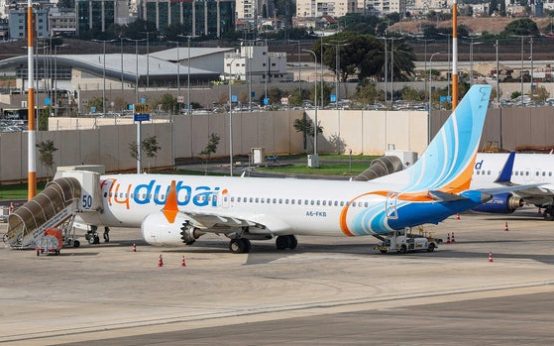 Incident on FlyDubai Flight Raises Security Concerns