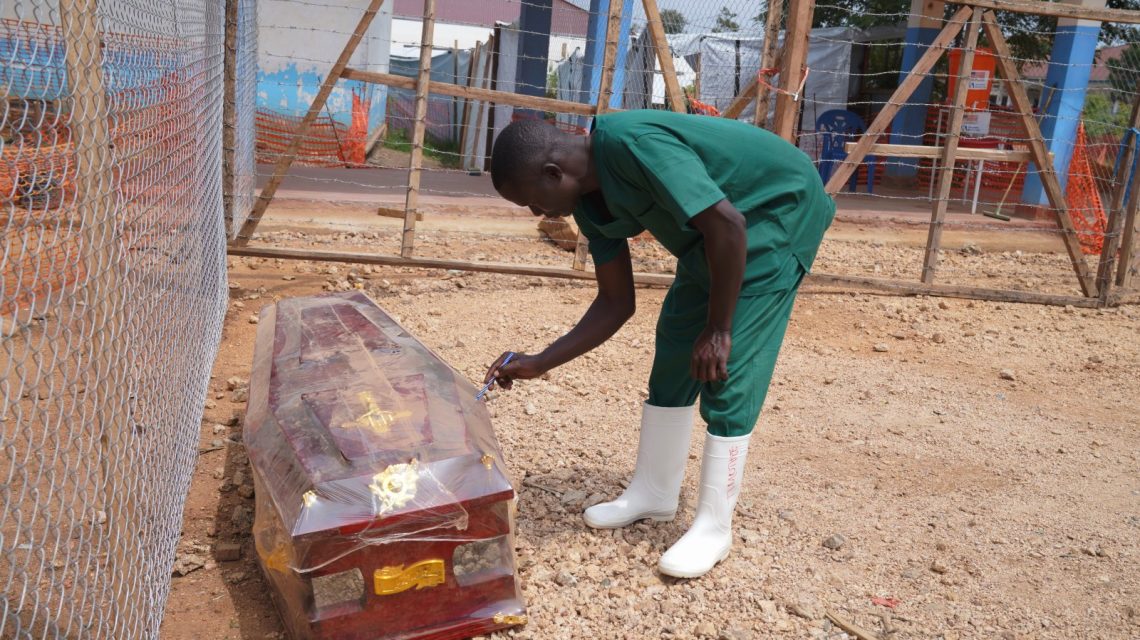
A rapidly growing Ebola outbreak in the Democratic Republic of Congo has claimed over 2,000 lives. This marks the second-largest outbreak of the disease on record, according to international health authorities.
The Outbreak and Its Origins
Triggered by the Bundibugyo strain of the Ebola virus, the outbreak has expanded across various provinces in Congo, reaching into neighboring Uganda. This expansion has prompted a significant international response. The Centers for Disease Control and Prevention (CDC) reports that the epidemic surpassed 1,000 confirmed cases within 40 days of response activation. This is much quicker compared to Congo’s major 2018 Ebola outbreak, which took approximately 235 days to reach the same number of cases.
Complications in the Region
The outbreak is affecting a region burdened with humanitarian issues, population displacement, and substantial cross-border traffic. These factors complicate efforts to contain the deadly virus. The World Health Organization (WHO) has noted the outbreak occurs in a “challenging context”. Health officials are increasing surveillance, contact tracing, and readiness activities in both Congo and Uganda.
Risks for Health Workers
American aid workers, missionaries, doctors, and humanitarian personnel operating in the affected areas face higher risks of exposure. They often come into contact with infected patients, their family members, or contaminated environments. The CDC reports that a U.S. citizen working for a humanitarian organization in Congo contracted the Bundibugyo strain in July and was evacuated to Germany for treatment.
Concerns over the Bundibugyo Species
Health officials express particular concern due to the outbreak being caused by the Bundibugyo species of Ebola, for which no approved vaccine or specific treatment exists. Supportive medical care can help improve outcomes. However, the lack of targeted countermeasures makes containment efforts critical. The CDC has described this surge as spreading “substantially faster than previous Ebola outbreaks,” with deaths rising quickly over the summer.
Latest Statistics and Impact
According to the European Centre for Disease Prevention and Control’s (ECDC) assessment as of August 10, Congo reported a total of 4,449 confirmed Ebola cases and 2,061 deaths.
The agency stated that 716 patients were hospitalized in isolation, affecting 53 health zones across five provinces. The outbreak has severely impacted the provinces of Ituri, North Kivu, South Kivu, Haut-Uele, and Tshopo. Uganda also reported linked cases but declared its outbreak over on July 28 after no further infections. This Ebola epidemic is one of the most serious since the devastating West African one of 2014-2016. The CDC confirms it as the second-largest recorded outbreak.
Ebola’s Risk to the U.S.
The CDC reassures that no Ebola cases relating to the current Congo outbreak have been confirmed in the United States. The risk to Americans remains low. Even if an infected traveler were diagnosed in the U.S., the threat of wider spread would remain minimal due to robust public-health infrastructure, infection-control measures, and contact-tracing capabilities. Unlike COVID-19 or influenza, Ebola does not spread through airborne transmission. Instead, it requires direct contact with the blood or bodily fluids of an infected person or contaminated materials. Health agencies keep monitoring the situation, as multiple countries, including some in Europe, have dealt with imported cases needing medical evacuation and specialized treatment.
Official Responses
The CDC has activated response efforts, collaborating with international partners on surveillance, laboratory testing, infection prevention, and contact tracing. The U.S. government has allocated hundreds of millions of dollars in additional resources to assist in outbreak response and preparedness in Central and East Africa. Health officials stress that Americans should stay informed about the outbreak but avoid panic. The CDC’s assessment continues to label the risk for the U.S. public and travelers as low, even as authorities strive to halt the virus’s spread in African regions impacted.
 Understanding Inflammation: Myths and Facts
  Calm Parenting: Strategies to Manage Stress
  Trump’s Executive Order to Combat Mosquitoes and Ticks in D.C.
  Overcoming Weight Loss Challenges: Brain Health and GLP-1 Medications
  Supporting Children’s Mental Health at Home: Practical Steps for Parents
  Abdul El-Sayed’s Strategy to Attract Health-Conscious Voters in Michigan