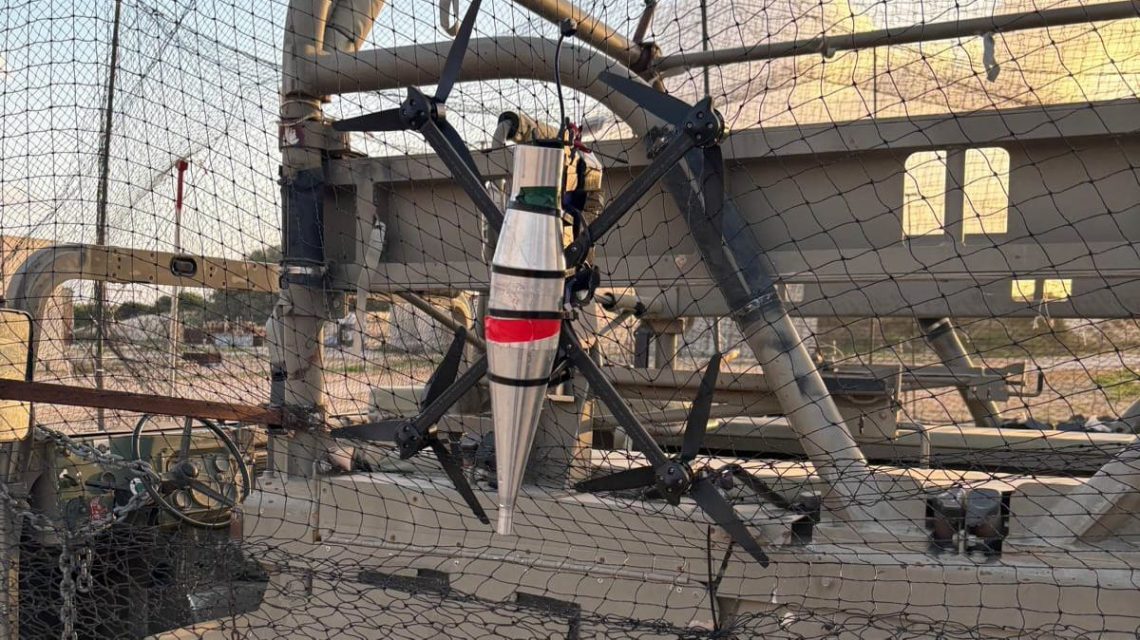
Hezbollah has adopted new drone tactics, applying pressure on Israel and the United States in the ongoing Middle East crisis. Recent developments in technology have enhanced Hezbollah’s military capabilities. The use of fiber-optic first-person view (FPV) drones marks a significant shift for Hezbollah, first emerging in March during renewed hostilities following the U.S.-Israeli conflict against Iran.
Data from the Armed Conflict and Location Event Data (ACLED) monitor reveals that these drones have been used in 21% of Hezbollah’s attacks in the past five months, causing casualties among Israeli forces in over half of 33 recorded incidents. Suicide drones accounted for 24% of attacks, a substantial increase from 6% in late 2024, coinciding with intensified fighting post-cross-border invasion by Israel.
“FPV drones have helped Hezbollah apply military pressure on Israeli forces,” said Nasser Khdour, ACLED’s Middle East assistant research manager. “They maintain psychological pressure on northern Israeli communities, exhaust air defenses, and distract air forces.”
In response to the threat, Israel has adapted its tactics. An IDF official noted the introduction of wire mesh nets to counter explosive drones, covering an area equivalent to 20 soccer fields, with more on the way. This represents Hezbollah’s ongoing attempts to innovate against Israel’s technological advantages.
Historically, Hezbollah has employed advanced weaponry against Israel’s superior military. During the 2006 war, Kornet missiles targeted Israeli Merkava tanks. In 2015, Hezbollah countered with twin Kornet launchers against Israel’s vehicle defenses.
Recent confrontations saw Hezbollah leverage Iranian Almas-1 anti-tank guided missiles, utilizing fiber optics to “fire and forget.” Despite the technological advances, Hezbollah struggled against Israeli incursions backed by drones.
Defense analyst Hamze Attar observed, “Hezbollah believed they could repel the Israeli ground invasion. But the Israelis destroyed most of Hezbollah’s arsenal, pushing them north.” The group’s reliance on outdated weapons left operators vulnerable, prompting adaptations based on the Ukraine conflict.
“Hezbollah has embraced technology, focusing on drones to gain a qualitative edge over Israel. Fiber optic technology allows operation without radio signature,” a source told Middle East Eye. “Youth familiar with gaming find the tools easy to operate.”
This tactical shift aligns with Hezbollah’s strategic direction as clashes continue. The group’s ability to alter battlefield dynamics points to broader implications for Israel, particularly regarding attrition and movement constraints.
The evolving conflict poses diplomatic challenges for leaders like Israeli Prime Minister Benjamin Netanyahu and U.S. President Donald Trump as they seek electoral gains. Trump’s initial ceasefire efforts with Iran saw demands to end the Israeli-Hezbollah conflict, while attempts at diplomatic solutions have seen delays and accusations of violations.
Efforts to separate Lebanon’s issues from the broader Iran-Israel conflict have met resistance. Hezbollah maintains influence due to its connections with Iran, complicating diplomatic efforts.
Despite new agreements, clashes persist. Hezbollah maintains its stance on resistance as long as occupation continues, expressing commitment to oppose Israeli actions.
As U.S.-brokered talks proceed, conflict on the ground endures. Recent IDF artillery strikes highlight ongoing tensions, with Iran’s support for Hezbollah influencing regional dynamics.
Khdour emphasized the broader implications, noting potential lessons for other groups seeking attrition tactics across fronts like Gaza and the West Bank.
 British Police Arrest Man Suspected of Terror Plot
  Activists Push for Nationwide Ban on Child Marriage in the U.S.
  Investigation into Alleged Incident at Cornell University
  Rising Drone Threats Highlight Vulnerabilities in Moldova’s Airspace Defense
  Bolivia Faces Security Test Amid Unrest
  Incident on FlyDubai Flight Raises Security Concerns