Kabul, Afghanistan (AP) — Taliban leaders and other officials gathered on Saturday in Afghanistan’s Loya Jirga assembly hall to mark the fifth anniversary of their return to power. They claimed to have brought stability and an end to conflict after decades of turmoil. However, a senior United Nations official warned of a severe human rights crisis in the country, where girls over 12 are denied education.
The Taliban seized control on August 15, 2021, as U.S. and NATO forces withdrew after a costly two-decade war. The retreat sparked chaos at Kabul’s airport as desperate crowds tried to flee the country. Shortly after taking power, the Taliban government imposed a ban on education for girls beyond sixth grade and later prohibited higher education for women, despite initial promises to allow women access to education, jobs, and public participation.
Women have also been barred from public spaces like gyms and parks, participating in sports, and traveling long distances without a male guardian.
Celebrating the ‘Liberation’ from U.S. Forces
At the Loya Jirga, senior officials, foreign representatives, and thousands of citizens gathered to hear speeches commemorating Afghanistan’s ‘liberation’ from U.S. forces.
Deputy government spokesperson Hamdula Fitrat prayed for protection from occupation, aggression, wars, and insecurity, hoping for peace and prosperity under the sharia-based government.
Abdul Salam Hanafi, Deputy Prime Minister for administrative affairs, claimed the Taliban government ended a half-century era of external interventions and internal conflicts, restoring security.
Hanafi stated that as many as 300 Afghan youths were martyred or killed daily; 300 sisters became widows; multiple children were orphaned; 300 mothers mourned. He credited the Islamic Emirate of Afghanistan for eradicating this tragedy.
No women attended the ceremony.
Call for Increased International Contacts
Five years on, the Taliban government remains internationally isolated, with Russia being the only country to formally recognize it.
Foreign Minister Amir Khan Muttaqi urged countries engaged with the government to continue doing so and advised others to reconsider establishing contacts.
He encouraged moving toward mutual interaction policies.
Celebrations Under Tight Security Measures
In Kabul, men carried Taliban flags in squares and chanted slogans in support of the government. Vehicle convoys sparked traffic jams. Security was tight, with increased Taliban forces’ presence and numerous checkpoints on a main road leading to the Loya Jirga.
Celebrations also took place across Afghanistan’s provinces, with Taliban flags and posters glorifying the Taliban’s return to power exhibited along major roads and markets.
UN Warns of Worsening Human Rights Crisis
Richard Bennett, UN special rapporteur on human rights in Afghanistan, sent a video message stating that the country faces a profound human rights crisis.
Bennett challenged the notion of genuine peace, noting a constant deterioration in human rights, especially for women and girls.
His mandate declared the system akin to the gender-based crime against humanity of persecution.
The crisis extends beyond gender discrimination; arbitrary detentions, torture, extrajudicial executions, corporal punishment, enforced disappearances, freedom of expression restrictions, journalist and human rights defender attacks, ethnic and religious minority persecution, LGBT+ discrimination, and reduced civic space are documented across Afghanistan.
Bennett warned the international community against ‘normalizing’ Taliban policies, cautioning that legitimizing this discrimination signals to victims that their suffering is negotiable.
In an interview with The Associated Press, Taliban government Deputy Minister for Broadcasting at the Information and Culture Ministry, Molvi Hayatula Mahajar Farahi, noted the government’s delivery of security, infrastructure, and jobs over five years despite ‘challenges and difficulties.’
2.4 Million Girls Excluded from Secondary Education
When questioned, Farahi did not address the issue of girls’ and women’s education but claimed university investments exceeded past levels.
UNESCO estimates 2.4 million girls miss out on secondary education.
The UN’s World Food Program reported critical levels of child malnutrition in a third of Afghanistan’s provinces, expected to worsen due to funding shortfalls.
UN Women indicated Afghan women and girls face the world’s harshest constraints, with bans harming Afghanistan’s future as teacher, doctor, nurse, and midwife shortages threaten the nation’s social and economic foundations.
___
Fraser reported from Ankara, Turkey.
 British Police Arrest Man Suspected of Terror Plot
 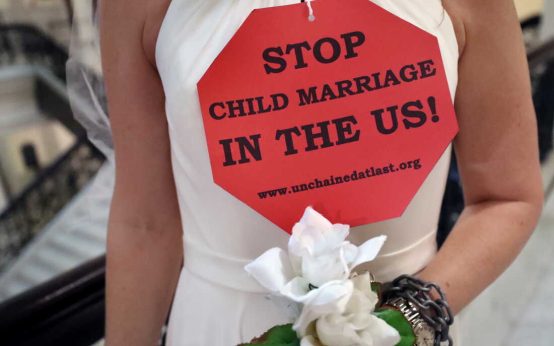 Activists Push for Nationwide Ban on Child Marriage in the U.S.
  Investigation into Alleged Incident at Cornell University
  Rising Drone Threats Highlight Vulnerabilities in Moldova’s Airspace Defense
  Bolivia Faces Security Test Amid Unrest
 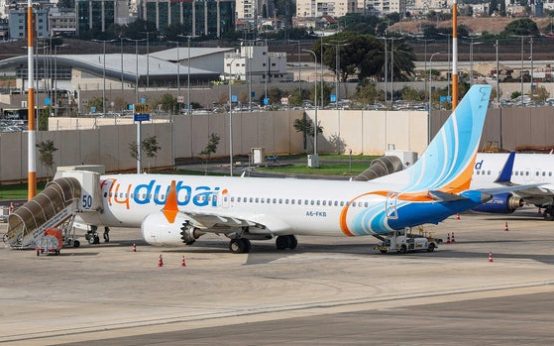 Incident on FlyDubai Flight Raises Security Concerns