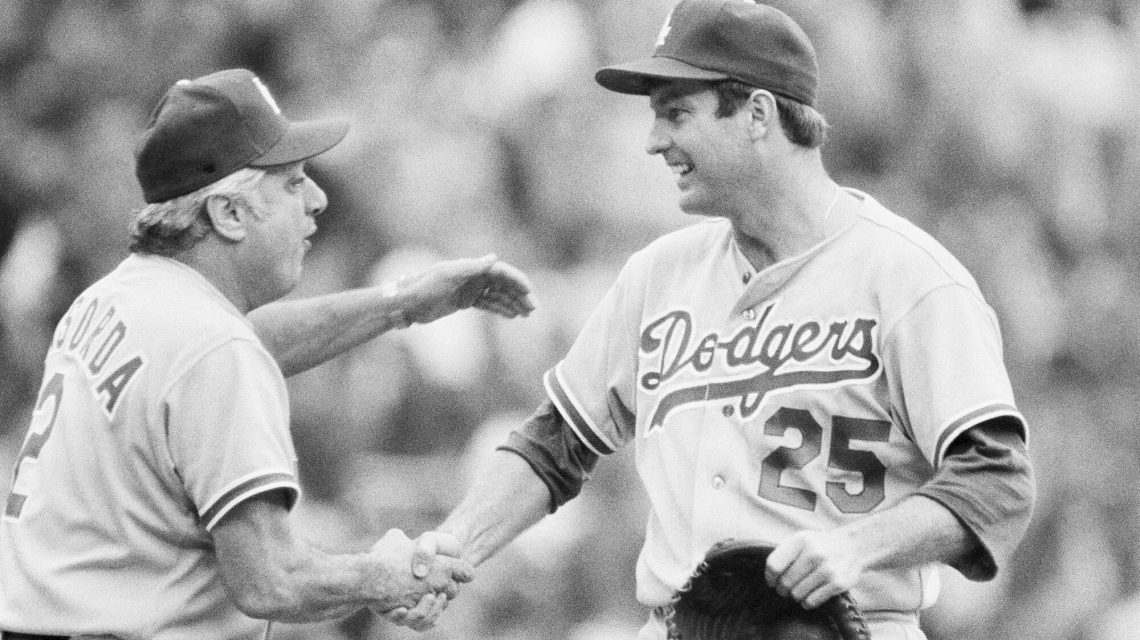
The medical community recognizes surgeries like Belsey fundoplication, Heineke-Mikulicz pyloroplasty, and Keller’s excision arthroplasty. Yet, among these, Tommy John surgery stands out for its unique impact on baseball. Known medically as ulnar collateral ligament reconstruction, it carries the name of Dodgers pitcher Tommy John, whose career seemed over in 1974 due to a ligament rupture in his left elbow. This condition had ended many pitchers’ careers prematurely.
However, an innovative surgery not only saved John’s career but also revived those of countless others over the past five decades. Players such as Tom Candiotti, John Smoltz, and Shohei Ohtani have benefitted from it. Tommy John, more renowned for this surgery than his playing stats, passed away recently at age 83. The Dodgers mourned his loss, acknowledging his exceptional contribution on and off the field.
John’s career encompassed 124 wins across 12 seasons with three teams before surgery. Post-surgery, he amassed 164 more victories in 14 seasons with four teams, almost matching Sandy Koufax’s career wins. He retired at age 46 with a 288-231 record and a 3.34 ERA.
John credited Dr. Frank Jobe for his continued pitching career. “Dr. Jobe made it so I could throw a baseball again,” he remarked. Post-surgery, he consistently played without missing a start, even occasionally pitching from the bullpen. With the Dodgers, John achieved his best records, significantly contributing to World Series appearances.
Origin of the Surgery
John joined the Dodgers in 1971, bringing an 84-91 record and a solid curveball. Red Adams, the pitching coach, emphasized the importance of precision over speed, and John adapted, going 11-5 the following season. Consequently, John met orthopedist Frank Jobe, amidst a chance elbow injury involving bone chips. Post-surgery, 1974 saw John throw a life-altering pitch to the Montreal Expos’ Hal Breeden, leading to severe elbow pain.
I heard this thudding sound in my elbow, then I felt a sharp pain.
This incident led to the rupture of his medial ulnar collateral ligament. Despite initial rest recommendations, healing seemed elusive, prompting Jobe to propose a tendon graft surgery. John faced a tough choice: forego baseball forever or attempt an unproven surgery with slim odds.
On September 25, 1974, Jobe performed the surgery, using a tendon from John’s right arm to stabilize the left elbow. Follow-up surgery addressed nerve damage. Rehab required strict adherence, including taping fingers for grip and throwing practice.
By summer 1975, John regained full hand use, playing in an exhibition game by late September, culminating in a full return for the 1976 season. Going 10-10 in 1976, John dispelled doubts in 1977 with a 20-win season. He shone in the postseason, securing the Dodgers a pennant with a standout performance against the Phillies.
A New Career Chapter
Post-Dodgers, John joined the Yankees as a free agent, continuing his success. He notched 21 wins in 1979 and 22 in 1980, helping reach the 1981 World Series against the Dodgers. Despite a controversial management decision in Game 6, John’s earlier achievements for the Yankees included significant victories.
Throughout his two Yankees stints, separated by four seasons with the Angels, John compiled a 91-60 record. Yet, he famously made an error-ridden play in 1988.
Post-retirement, John engaged in broadcasting and minor league managing. A strong advocate for suicide prevention after losing a son, he also cautioned against young pitchers’ arm overuse. Despite his reservations about the ubiquity of the surgery bearing his name, it remains integral in sports medicine.
Orthopedic surgeons like Dr. Neal ElAttrache uphold the surgery’s legacy, which originally stemmed from Jobe’s trailblazing work. ElAttrache credits the procedure’s foundation to Jobe’s patient-first ethos, performing the surgery extensively over his career, including notably for Ohtani.
Tommy John leaves behind a lasting legacy in both baseball and medicine, survived by his wife Cheryl and children Tommy, Travis, and Tamara. A private memorial in Florida will commemorate his impactful life.
 Nick Saban’s Comments on ESPN Spark Debate Over College Sports Regulations
  Freddy’s American Adventure: From Soccer to College Football
  Brock Purdy’s Impressive Start in the 2026 NFL Season
  The Value of Retaining Miles McBride for the Knicks
  Penguins Make History with Dominant Season Opener
  Sonny Gray Expresses Frustration After Game Against Yankees