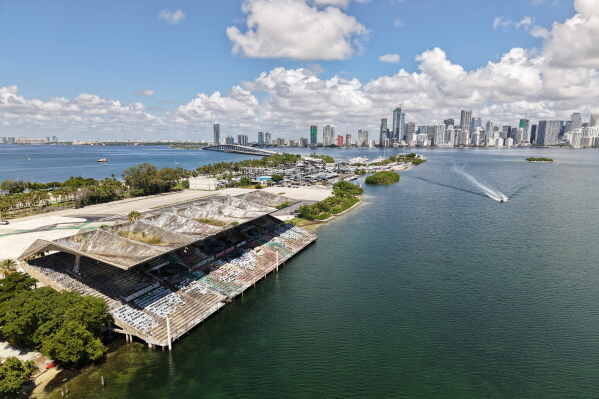
The Miami Marine Stadium, a celebrated example of midcentury Brutalist architecture, first opened in 1963. Known for its expansive cantilevered roof and picturesque view of the city, it was originally built as the nation’s exclusive powerboat racing venue. A cultural landmark, the stadium featured in Elvis Presley’s 1967 film “Clambake” and hosted concerts by artists like Gloria Estefan and the late Jimmy Buffett, who famously performed on a movable floating stage. But it closed in 1992 after Hurricane Andrew inflicted severe damage, leaving the 6,500-seat venue neglected. Today, it stands fenced off and adorned in graffiti, despite being listed on the U.S. National Register of Historic Places.
On Tuesday, voters in Miami will decide whether to allow the city to collaborate with a private company to restore the stadium, located on Virginia Key across from downtown Miami, to its former splendor. The site, facing Biscayne Bay, remains a significant attribute of the Miami skyline.
President Richard Nixon and Sammy Davis Jr. once graced the venue during a 1972 campaign rally aimed at supporting Nixon’s reelection. The stadium was a gathering place for Easter sunrise services and celebrations of Our Lady of Charity, revered by Cuban communities in Miami. Miami Commissioner Damian Pardo remarked, “It encapsulates a period in Miami that’s incredibly unique.”
“It’s really a place that connects with Miami at a very deep and personal level.”
Hilario Candela, the Cuban refugee who designed the structure in his late 20s, contributed significantly to Miami’s architecture. He led efforts to restore the marine stadium until his death in 2022. In 2018, the stadium earned a place on the National Register of Historic Places. Then-Secretary of State Ken Detzner praised it as “one of Florida’s most unique architectural and historical resources.”
Just a year before his passing in 2023, Jimmy Buffett penned a letter urging Miami officials to preserve the stadium, which he affectionately called a “little cathedral of musical fun.” Buffett’s daughter continues his advocacy through Restore Miami Marine Stadium, a group co-founded by Donald Worth, who launched the restoration campaign in 2008. Worth stated, “The architecture gives it the wow, the history gives it its soul.”
No pressure, but voters have a huge decision
Breakwater Hospitality Group’s co-founder, Emi Guerra, is involved with the firm selected to partner with the city. Guerra emphasizes the stadium’s unique view and proximity to Biscayne Bay as potential assets for turning the venue into an attraction comparable to Denver’s Red Rocks Amphitheatre. He acknowledges voter skepticism but assures that this project is not about developing more condos. The city aims to maintain full ownership while letting a management company oversee operations to realize the city’s vision.
Local group leader Ernesto Cuesta supports preserving the historical site but worries about noise and traffic implications for nearby residents and wildlife. He favors a park with more green areas over a major event space.
Renovation plans include integrating modern amenities and ensuring access for all. Project architect Richard Heisenbottle, known for restoring Miami landmarks, is committed to honoring the stadium’s original design. He notes that the use of galvanized steel rebar during initial construction has kept the structure robust over the decades.
Completed restoration plans have been approved by Miami city officials. Commissioner Pardo notes that past difficulties in reopening the stadium originated from the city’s lack of capacity to manage a large-scale venue. The current referendum would permit the city to form a management agreement with a private company.
The proposed development would turn the stadium’s large parking area into a flex park, offering public recreational facilities and an events space. Events held there would generate revenue to fund repairs and upgrades, while the company receives a management fee. Although the project’s total cost hasn’t been finalized, Pardo assures that it will not fall on taxpayers. “It’s the right time to finally do this,” he stated.
 Historical Events in Chicago on October 1st
  Patrick McEnroe Advocates for Collegiate Athletic Reform
  Push for Reparations Faces Challenges and Calls for Strict Eligibility
  Texas Man Arrested for Threatening State Capitol Attack
  The Key Debate Between Xavier Becerra and Steve Hilton: What You Need to Know
  Physicians Urge Senate to Reject FDA Nominee