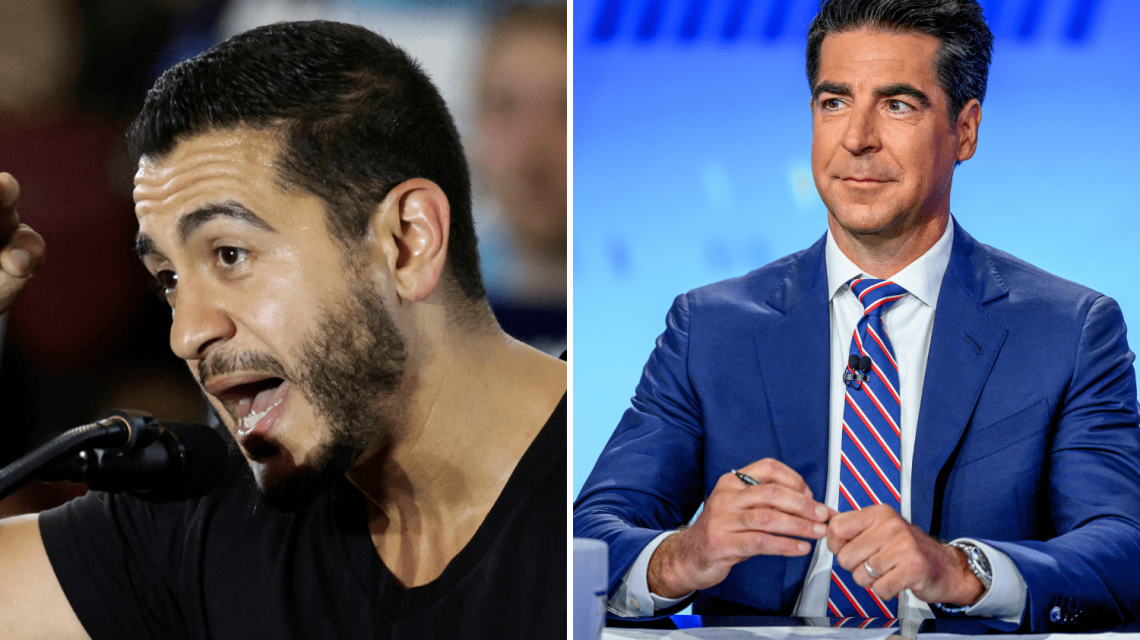
Abdul El-Sayed, the Democratic nominee for the U.S. Senate seat in Michigan, recently engaged in a contentious interview with Fox News host Jesse Watters. The discussion covered a range of topics, including transgender athletes, immigration, health care, and the economy. The conversation highlighted an ongoing debate about the Democratic party’s focus—whether to address cost-of-living concerns or engage in cultural issues often emphasized by Republicans in recent elections.
El-Sayed’s surprising primary victory earlier this month has made him a prominent figure in the 2026 midterms. With polls indicating a tightly contested race against Republican Mike Rogers in a pivotal battleground state, his appearance on Jesse Watters Primetime reveals critical arguments likely to define the campaign’s final months.
Focusing on Voter Concerns
One of the sharpest exchanges occurred when El-Sayed accused Watters of prioritizing culture-war topics over significant day-to-day economic concerns. “You have not asked me one time about the issues that people actually care about in Michigan,” El-Sayed remarked, emphasizing health care costs, gas prices, and groceries as major voter issues. Throughout the interview, he continuously redirected the conversation towards economic issues and health care policy.
Transgender Athletes Debate
The debate took a turn when Watters questioned whether transgender women should compete in women’s sports. El-Sayed responded by stating that decisions about sports participation should fall to athletic governing bodies rather than politicians. “I’m running for U.S. Senate, Jesse,” he said, underscoring his focus on tackling the health care crisis and the influence of Big Pharma.
Rejecting the ‘Culture War’
El-Sayed repeatedly suggested Watters was revisiting conservative talking points rather than discussing substantive policy proposals. “You’re doing the greatest hits, Jesse,” he noted, further stating he was “not here to fight a culture war.” This sentiment echoes his campaign trail arguments that Democrats should concentrate on economic issues, steering away from debates that dominate cable news coverage.
Medical Decisions for Minors
A widely shared exchange emerged when Watters asked about gender-related medical decisions for minors. As a physician, El-Sayed compared these decisions to circumcision, asserting that medical choices concerning minors are typically made by families and doctors without political interference. “It’s a problem that you think you get to decide what happens between a parent, a doctor, and a patient,” he told Watters. These decisions should remain within the purview of parents, doctors, and patients, aligning with his broader view that politicians should prioritize issues like health care costs and the economy over personal medical choices.
Religion and Government
In another notable moment, Watters questioned El-Sayed about efforts to ban courts from considering Sharia law in some states. El-Sayed, a Muslim, pushed back by noting the U.S. Constitution already governs the legal system, and about 1 percent of the U.S. population is Muslim. He argued this debate serves as a distraction from crucial issues like health care costs and the economy.
“When people preemptively pass laws to ban something that’s not happening, you’re targeting a small community because they’re different,” El-Sayed said, spotlighting the insignificance of such debates on daily life in Michigan.
Michigan’s Senate Race Polls
Recent polling confirms the competitive nature of Michigan’s Senate race. An AARP Michigan survey found El-Sayed narrowly leading Rogers 48 to 47 percent among likely voters statewide, with 5 percent undecided. Ages impacted voter preferences, with El-Sayed leading among those under 50 and Rogers performing better among voters aged 50 and above. Affordability, Social Security, and health care emerged as top concerns among voters.
Other polls show varied results. A Susquehanna Polling and Research survey from August 11-17 placed El-Sayed ahead at 46 percent to Rogers’ 39 percent, with 9 percent undecided. Inflation and the economy were highlighted as top voter issues, followed by health care. Conversely, a Fox News poll shortly after the primary indicated Rogers leading El-Sayed 51 percent to 47 percent among registered voters.
These surveys collectively suggest neither candidate has gained a definitive advantage in what is emerging as one of the nation’s key Senate contests, with the chamber’s control potentially at stake.
Contact Newsweek editors on this story: John Fitzpatrick and Shakeema Edwards.
 Upcoming Congressional Elections: Key Districts to Watch
  President Trump’s Pre-Midterm Interview on Key Issues
  Trump’s 2024 Reelection and Evolving Voter Dynamics
  Defense Secretary Emerges as Key Player in the Trump Administration
  Hegseth’s Vision for the Military: Balancing Tradition and Innovation
  Significant Funding Boosts Ken Paxton’s Texas Senate Campaign Amid Tight Race