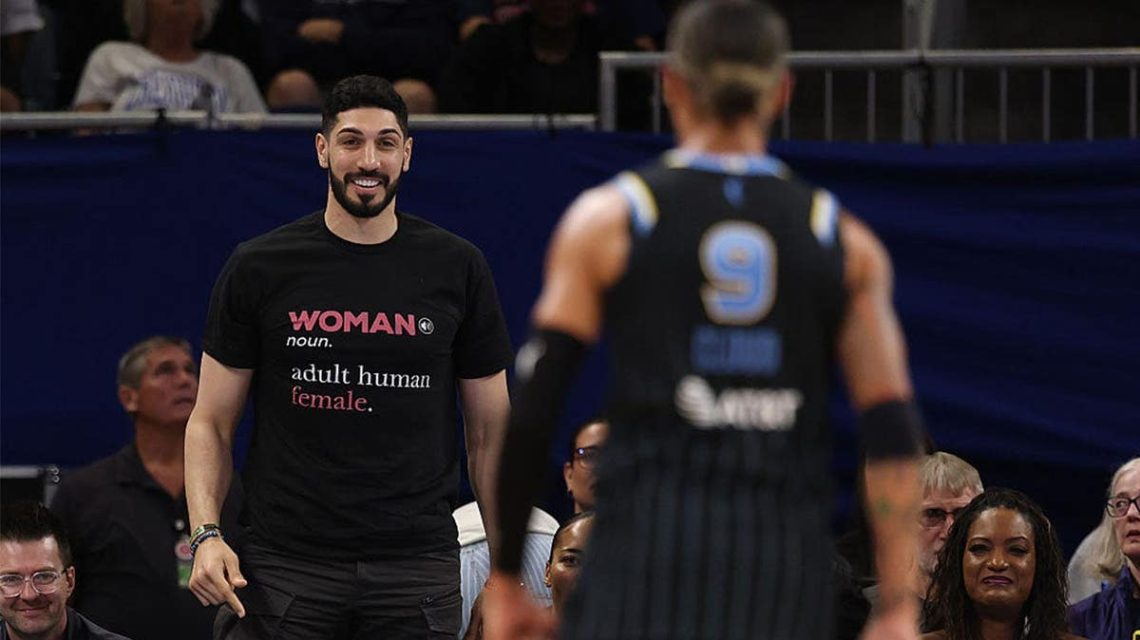
Chicago Sky principal owner Michael Alter recently gave an exclusive interview discussing the team’s decision to eject and subsequently ban Enes Kanter Freedom from Wintrust Arena. During the interview, Alter made a striking analogy, comparing the decision to eject Freedom without a warning to not issuing a warning for shooting a gun before punishment is enacted.
Alter had announced that Kanter was banned following his ejection from a game against the Indiana Fever, as the team deemed his actions a potential threat. Alter detailed the incident, stating that the situation escalated when Freedom made a move towards the court. This movement led to immediate intervention by various security personnel present, including league, arena, and police security.
Enes Kanter Freedom responded to the owner’s statements, arguing through a letter to the WNBA that he deserved a warning before his removal. However, the WNBA’s fan code specifies no requirement for such a warning. Alter explained that no warning was given due to the perceived threat level, comparing it to severe actions such as firing a gun.
Footage depicted Freedom stepping towards the court before security stopped him. Meanwhile, Alter addressed the initiation of confrontations during the game; it allegedly began when Freedom cheered for an opposing player, leading to interactions with Chicago Sky’s Natasha Cloud. Although a direct conversation between Alter and the involved parties did not occur, accounts from nearby spectators suggested Freedom initiated verbal exchanges.
These accounts described basketball-related trash talk directed at Cloud, ultimately escalating into a heated exchange. Cloud allegedly shouted back as Freedom used gestures toward her. Alter, acknowledging no audio evidence to support these claims, cited different perspectives from spectators, including one who did not hear Freedom initiate the exchange. Consequently, Freedom’s statement denying any initiation was labeled false by Alter.
Regarding Cloud’s role in the confrontation, Alter stated that her actions did not impact Freedom’s accountability. Freedom’s prior notice of attendance was discussed, with a text from Freedom’s manager to Sky’s general manager described as a forewarning, rather than a friendlier acknowledgment. Alter viewed the wording as indicative of potential disturbance.
Despite the advance notice, Alter emphasized that Freedom was allowed entry and no special conditions were placed on him. Alter argued that familiarity with the wording in the text served as a signal that trouble might follow. Nonetheless, Freedom was not barred from attending.
Alter reflected on the situation, expressing a regret for not informing the players beforehand about Freedom’s attendance. He indicated that with more preparation time, the situation could possibly have been differently managed, though Freedom’s entry was not restricted.
The controversy continues to be debated, with discrepancies between intended communication and interpretations remaining unsettled.
 Nick Saban’s Comments on ESPN Spark Debate Over College Sports Regulations
  Freddy’s American Adventure: From Soccer to College Football
 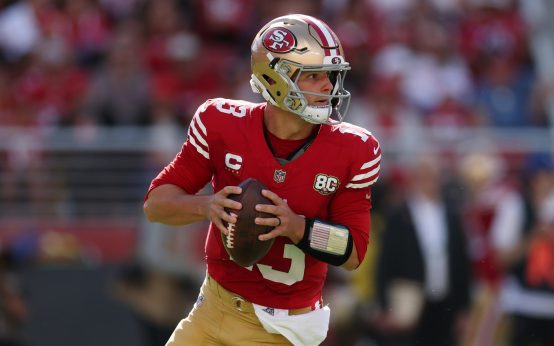 Brock Purdy’s Impressive Start in the 2026 NFL Season
  The Value of Retaining Miles McBride for the Knicks
  Penguins Make History with Dominant Season Opener
  Sonny Gray Expresses Frustration After Game Against Yankees