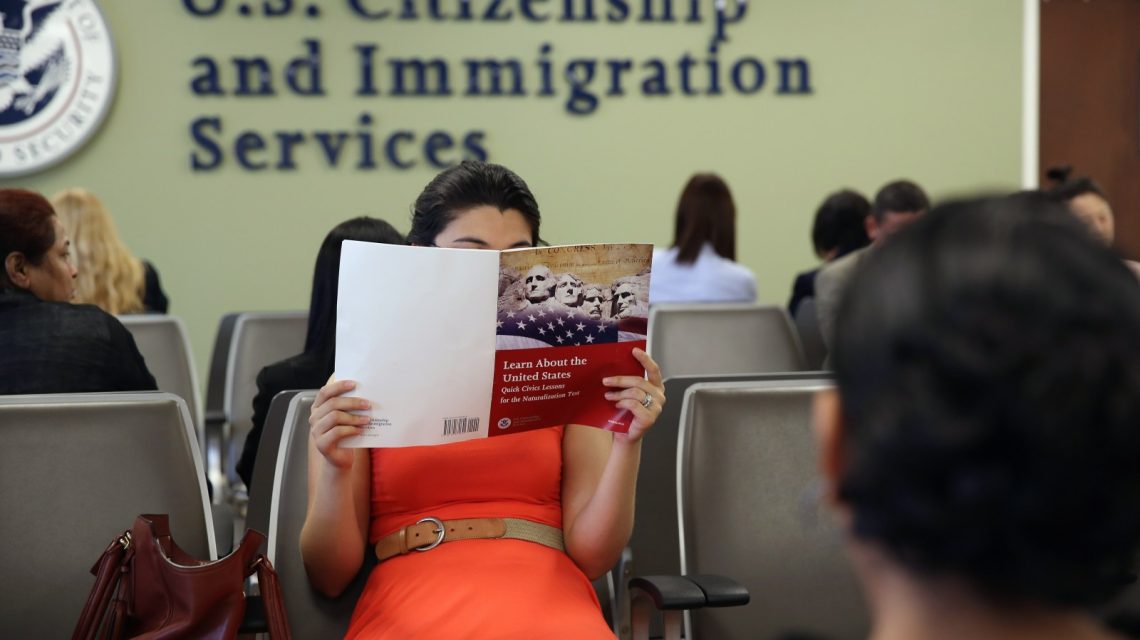
The U.S. Citizenship and Immigration Services (USCIS) has taken a significant step by procuring body-worn cameras. This marks a new direction for an agency traditionally focused on processing immigration benefits. The Trump administration is expanding its investigative and enforcement capabilities.
Federal procurement records reveal USCIS awarded a contract worth $159,675 to Axon. The agreement includes body-worn cameras, related equipment, storage, and training. It runs from September 1 through August 31, 2027, with operations in Maryland.
USCIS’s Expanding Role
The camera purchase is part of USCIS’s move beyond immigration benefit processing into law enforcement. This agency intends to recruit and train special agents with authority to arrest, carry firearms, and execute search warrants. They will focus on immigration fraud, national security threats, and other immigration law violations. This shift adds enforcement powers to an agency known for processing green cards, citizenship, and other immigration benefits.
Former officials comment on the change. Douglas S. Pierce, once a USCIS supervisor, noted, “To my knowledge, USCIS has not previously purchased or used body-worn cameras.”
“The agency evaluates tools and training that help employees do their jobs effectively while supporting accountability, transparency, and public and workforce safety,” stated USCIS Spokesman Zach Kahler.
However, the records do not specify how many cameras were purchased or how they will be used.
Potential Uses and Implications
Pierce suggested the cameras could be used by Fraud Detection and National Security Directorate officers during inspections or investigations. USCIS is assuming roles similar to other federal law enforcement agencies.
In September 2025, USCIS announced plans for special agents with law enforcement authority. The agency believes this initiative will boost its capabilities in handling immigration fraud and national security issues. More than 700 ‘Homeland Defenders’ have been recruited, trained in immigration law and national security, and are now part of the workforce. The Homeland Defender position differs from the special agent role and remains unarmed.
USCIS recently renewed a policy allowing neighborhood investigations in the naturalization process. Officers may collect information beyond government databases to determine citizenship eligibility.
Adam Klein, co-founder of Globali.ai, pointed out that USCIS was originally designed to focus on public-facing immigration services, not enforcement. “USCIS is adding special agents with law-enforcement authorities,” he observed.
Questions About Implementation
Pierce noted the contract’s size suggests a limited rollout, possibly a pilot program. The equipment’s purpose and deployment remain unclear. Key questions include how many cameras are purchased, what offices will receive them, and whether more purchases are planned.
The procurement records establish that USCIS has obtained body-worn cameras. Their exact role in USCIS’s evolving mission is still uncertain.
 California Bans Child Marriage, Protecting Minors
  U.S. States Extend Gas Tax Waivers Amid Rising Fuel Costs Due to Iran Conflict
  Historical Events in Chicago on October 1st
  Patrick McEnroe Advocates for Collegiate Athletic Reform
  Push for Reparations Faces Challenges and Calls for Strict Eligibility
  Texas Man Arrested for Threatening State Capitol Attack