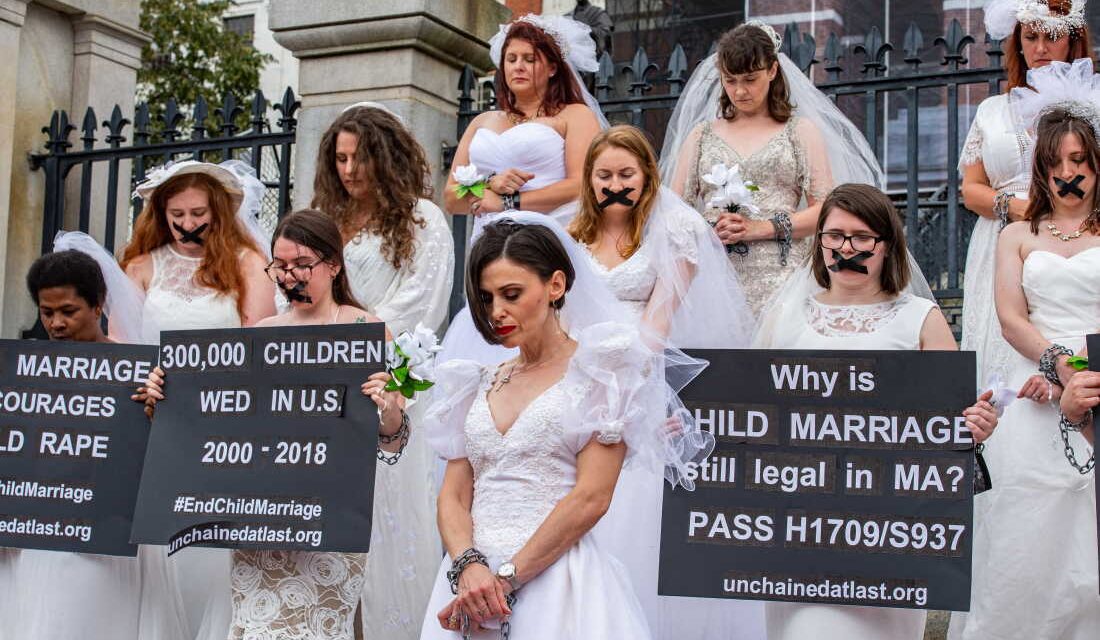
Advocates and child marriage survivors gathered in Boston to demand an end to child marriage. Currently, over two dozen U.S. states allow marriage under 18 in certain circumstances. A proposed bill in Congress seeks a nationwide ban.
The United Nations labels child marriage a “human rights violation,” citing numerous concerns for child brides, including early pregnancy, social isolation, interrupted education, limited career opportunities, and domestic violence risk. Annually, approximately 12 million girls become child brides, according to U.N. estimates. The U.N. aims to end child marriage by 2030.
In July, a bill introduced by U.S. legislators and a resolution adopted by the U.N. General Assembly designated November 27 as the International Day to End Child, Early and Forced Marriage.
“In 34 states, including Wisconsin, child marriage is legal. Many of these marriages involve young girls and adult men. It’s time to end this predatory practice.” — U.S. Rep. Gwen Moore
The bill introduced by U.S. Rep. Gwen Moore and Senators Dick Durbin, Brian Schatz, and Kirsten Gillibrand, targets a federal law that mandates a minimum marriage age of 18, motivating states to follow suit. Between 2000 and 2021, child marriage records show over 314,000 minors legally married in the U.S., most underage girls marrying adult men.
Unchained At Last, a nonprofit organization, estimates over 66,000 marriages involved minors at ages where sexual relations would be deemed criminal, with exemptions shielding adult spouses from prosecution. Married minors face legal hurdles in hiring attorneys, filing for divorce, or obtaining protection from abuse.
Casey Carter Swegman, director of public policy at the Tahirih Justice Center, states that a child’s consent may not reflect free choice, especially when familial pressure is involved. Addressing child marriage demands awareness of the implications of consent under duress.
Some critics question the bill’s provisions and caution against unintended consequences. Fraidy Reiss from Unchained At Last criticizes sections providing study grants instead of outright bans, expressing concern over federal funding encouraging examination of human rights violations.
Opposition exists in states like Oklahoma and Missouri, where Republican lawmakers argue such bans infringe on parental authority and civilian liberties.
Globally, countries like Sierra Leone, Colombia, and Bolivia have enacted stringent laws banning child marriage without exceptions. However, enforcement remains a challenge due to cultural factors and societal norms.
Changing community attitudes is crucial alongside legislation. Renu Singh from Young Lives India emphasizes the need for communities to cease regarding early marriage as protective or beneficial. She notes complex social dynamics, including dowry customs, contributing to child marriages across income groups.
Singh argues that legal frameworks help establish child marriage as unacceptable but lasting change requires shifts in societal acceptance and norms.
Bhuwan Ribhu, founder of Just Rights for Children, highlights the importance of global initiatives addressing child marriage, advocating for recognition of the crime internationally through platforms such as the designated U.N. day.
As efforts continue globally, the campaign for stronger laws in the U.S. contributes to increasing international awareness and political attention on child marriage.
 Bolivia Faces Security Test Amid Unrest
  Judge Dismisses Case Against Former Olympian Over Lincoln Memorial Incident
  Incident on FlyDubai Flight Raises Security Concerns
  Minnesota Family Files Civil Rights Lawsuit Over ICE Agent Shooting
  Journalist Gershkovich Discusses Wrongful Detention and Release in Russian Prisoner Swap
  Pakistan Airstrikes in Afghanistan: Civilian Casualties Reported