James Fallows, a journalist and former Carter White House speechwriter, shares his insights on the lasting impact of the 9/11 attacks as the 25th anniversary approaches. Historical moments like these mark significant turning points, yet the direction history takes remains uncertain.
On December 7, 1941, the attack on Pearl Harbor brought an end to U.S. isolation and marked the beginning of permanent global engagement. Similarly, September 11, 2001, seemed to change everything. Now, 25 years later, it’s crucial to evaluate what changes were hoped to be enduring but weren’t, and identify those that future generations may push to reverse.
During the worst times, people’s best qualities often emerge. France’s Le Monde newspaper captured this sentiment with the headline, “We are all Americans,” after the attacks. For the first time in NATO’s history, all member nations voted to defend a stricken ally.
In the United States, citizens celebrated first responders and brave individuals who acted during the crisis. President George W. Bush, initially caught off guard by the attack, visited Washington’s Islamic Center days later. He stressed that while the attackers were Muslim, Islam was not the enemy, saying, “In our anger and emotion, our fellow Americans must treat each other with respect.”
Many of these unifying feelings soon diminished. Additionally, several fundamental shifts in America post-9/11 have not received proper scrutiny. Before 9/11, entities like the Department of Homeland Security, TSA, and ICE were either non-existent or operated with less overreach.
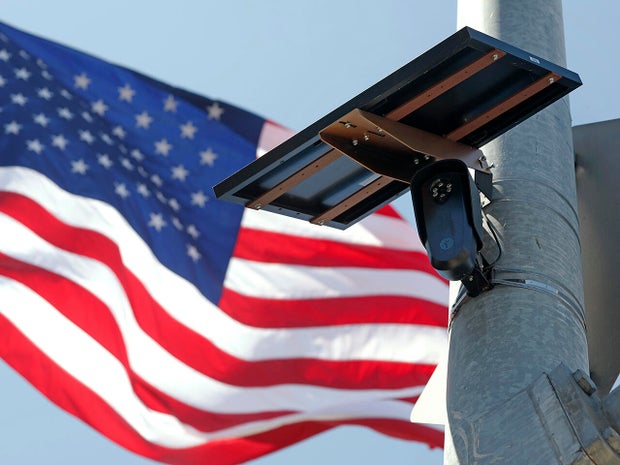
A camera from Flock Safety stands on a light pole in Burbank, California, on August 3, 2026. Critics of Flock’s automated license plate reader cameras, placed in over 120,000 sites across 49 states, cite concerns regarding mass surveillance and collecting motorists’ location data.
The Patriot Act and the modern surveillance state were nearly nonexistent prior to 9/11. Law enforcement agencies didn’t wear military-style combat gear; at that time, there was no Iraq War or “forever wars,” which evolved post-9/11. These transformations were often bipartisan and incremental, yet their effects changed the nation’s daily life and civic culture significantly.
The U.S. experienced other historical pivots that turned negatively: backlash against Reconstruction in the late 1800s reduced civil rights after the Civil War; in the 1920s and 1930s, the nation shut its doors as Nazis and fascists gained power abroad.
Reflecting on these events, there is hope that 25 years from now, the United States will more seriously consider who it is and the future it aims to create.
Articles related to remembering 9/11 include: remembering where tragedy left its marks; Andrew Card on the moments that changed everything; Robert De Niro’s contributions to Lower Manhattan’s revival after 9/11; Gander’s role in providing safety during crises; “Come From Away” as an artistic transformation of tragedy to light.
For further reading, explore James Fallows’ offerings on Breaking the News via Substack.
 Dutch Review Board’s Euthanasia Ruling and International Debate
  Israeli PM Commends Heroic Actions in Flight Emergency
  Rabbi and Jewish Leaders Criticize Adam Brody for ‘Genocide’ Comment
  Flydubai’s Emergency Landing Highlights Cockpit Security
  Former Israeli PM Naftali Bennett Commends Passengers and Crew for In-Flight Heroism
  Diplomatic Complexities Unfold at U.S. National Archives Visit