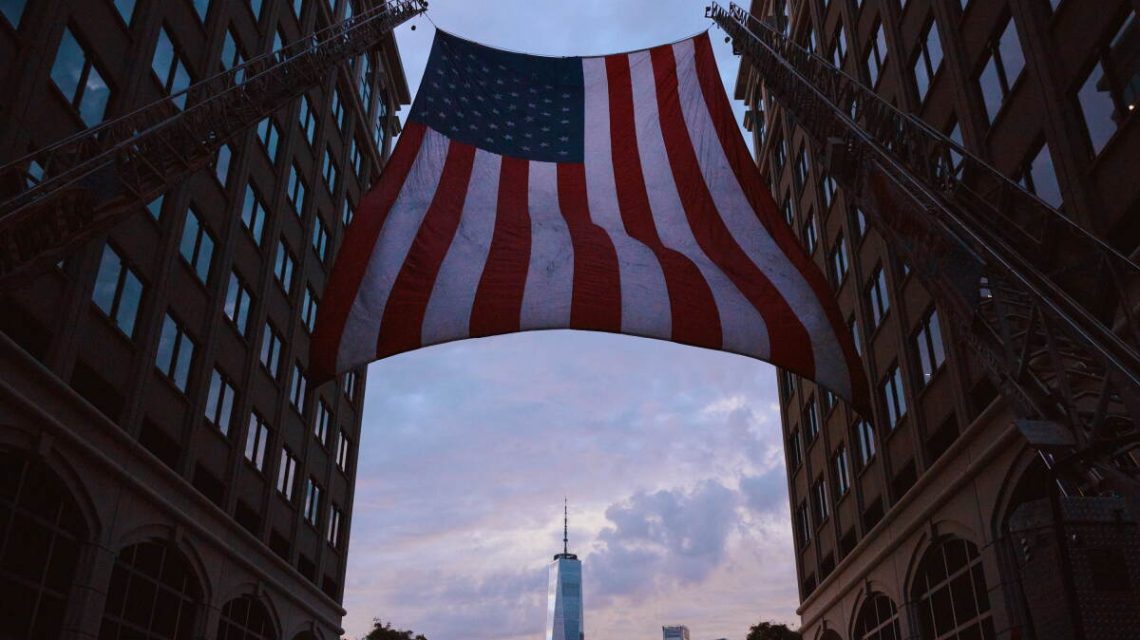
Mark Englert, a business consultant in his thirties from Connecticut, lived near the World Trade Center in Manhattan on September 11, 2001. That morning, under clear skies, he had just returned from a jog when the first plane hit. Though he heard the explosion, he was unaware of its source. Rushing to his apartment window, he observed people on the street gesturing skyward. One of the towers was on fire. There was talk of an airplane.
Seventeen minutes later, another plane flew overhead and crashed into the other tower. Englert recalls falling onto the floor of his sixth-floor apartment, exclaiming in disbelief. Shortly after, he was on the rooftop, witnessing people jumping to escape the fire.
“That’s when I could start to see people jump,” he said, “people who were too close to the fire.”
Mark and I have been friends for decades. I first heard his account hours after the attack as a young reporter at the Hartford Courant, around 100 miles north. I had been trying to contact people in Lower Manhattan. Mark was the first to answer.
Twenty-five years have passed since that day. Recently, we spent a weekend in the desert near Moab, engaging in activities like hiking and off-roading. We didn’t discuss 9/11 during our time together.
When I called Mark on Wednesday morning for this piece, I expected a brief conversation. Instead, his memories unfolded. Recalling the chaos in his building as people panicked, he described the moment the world outside turned dark. An elderly neighbor lived across the hall with her cat. After learning the first tower collapsed from her television, he persuaded her to leave with him.
With wet towels covering their faces, they hurried toward the Hudson River. She lagged, stopping to change her shoes amidst falling ash.
Near the Holocaust Memorial in Battery Park, they encountered a police officer who urged them to flee as the second tower collapsed behind them. As they turned a corner, they witnessed the massive flotilla beginning the largest seaborne evacuation in U.S. history, rescuing around 500,000 people from Lower Manhattan.
Upon reaching New Jersey, he called his mother. Hearing her voice left him speechless. Even when recounting the events to me recently, words failed him.
Trauma and Reflection
Years later, Englert returned to his apartment near Battery Park City, living there for 21 years. Despite passing the 9/11 memorial frequently, he has never visited it, nor has he read books or watched documentaries on the attack. Hearing its mention on the news still unsettles him.
He downplays his proximity to the events when asked, but the memories linger. For Englert, the sound of a low-flying jet is a trigger that brings an urge to seek cover.
 Patrick McEnroe Advocates for Collegiate Athletic Reform
  Push for Reparations Faces Challenges and Calls for Strict Eligibility
  Texas Man Arrested for Threatening State Capitol Attack
  The Key Debate Between Xavier Becerra and Steve Hilton: What You Need to Know
  Physicians Urge Senate to Reject FDA Nominee
  Trump’s Executive Order to Combat Mosquitoes and Ticks in D.C.