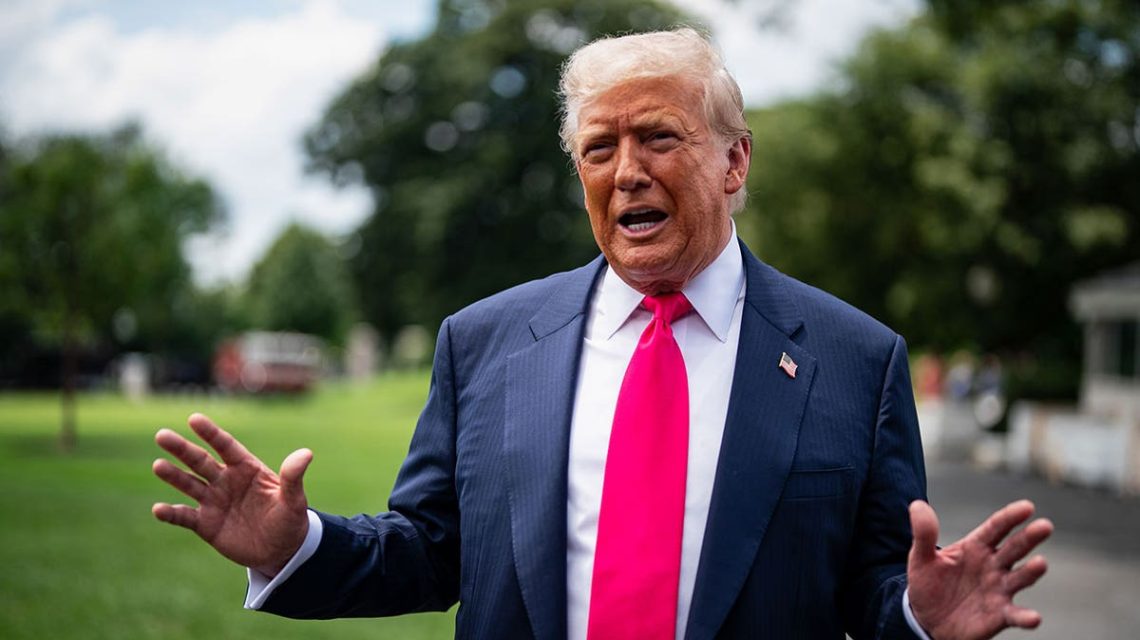
President Donald Trump has dismissed calls for implementing restrictions on artificial intelligence (AI). He emphasized the importance of strong and intelligent leadership over additional constraints on the technology. Several prominent tech executives, including those in Silicon Valley, have expressed concerns about the rapid development of AI capabilities.
According to Trump, the United States requires a president with intelligence and strength. On his Truth Social account, he stated, “The only control or ‘guardrails’ that AI needs is a STRONG AND SMART (High IQ!) PRESIDENT, and the U.S.A. has that, in spades!”
Dario Amodei, CEO of Anthropic, has urged leading AI companies to “pace the frontier.” He warned that advanced systems might surpass human understanding and control.
Despite these warnings, Trump claimed that his administration has taken steps to prevent AI-related issues. He specifically referred to the actions against companies like Anthropic, which had been labeled as supply-chain risks.
The previous month, a federal judge temporarily blocked restrictions against Anthropic. Known for its AI model Claude, Anthropic faced regulatory challenges from the government.
Debate on AI Development and Safety
The debate over AI safeguards gained momentum when Amodei published an essay. He raised alarm over the rapid advancements in AI capabilities. High-profile figures in the tech industry, like OpenAI CEO Sam Altman and Elon Musk, supported the idea of “pacing the frontier.” Google’s Demis Hassabis also backed this approach.
David Sacks, AI and crypto advisor to Trump’s administration, criticized the notion that government intervention is necessary. He argued against the need for permission to slow down AI development.
Amodei’s proposal calls for slowing AI advancements to ensure safety evaluations can keep pace. Anthropic has already allowed third-party assessors to evaluate its safety practices.
Altman mentioned that OpenAI will adopt similar practices. He emphasized the importance of consistent safety standards and independent assessments.
Geopolitical Concerns and Regulatory Challenges
A critical point in Amodei’s argument is the geopolitical landscape, particularly regarding China. Sacks and others acknowledge that China may not comply with international AI agreements, creating potential national security risks.
Altman stressed the importance of immediate action to enhance AI safety, even before legislative measures are enacted. He urged every AI company to operate responsibly, developing robust safety practices.
He stated that OpenAI advocates for industry standards and thorough safety evaluations before major development phases. Altman called for AI companies to set monitoring and evaluation standards to mitigate risks effectively.
 Trump Unveils AI-Powered America.gov Platform
  Trump’s 2024 Campaign Targets Young Men Through Cryptocurrency
  How Modern Windows Improve Home Insulation
  State Department Simplifies Passport Process with Online Applications
  Senate Democrats Block Data Center Bill Over Efficiency Concerns
  Future Cities: Ambitious Projects Aiming for Innovation and Sustainability