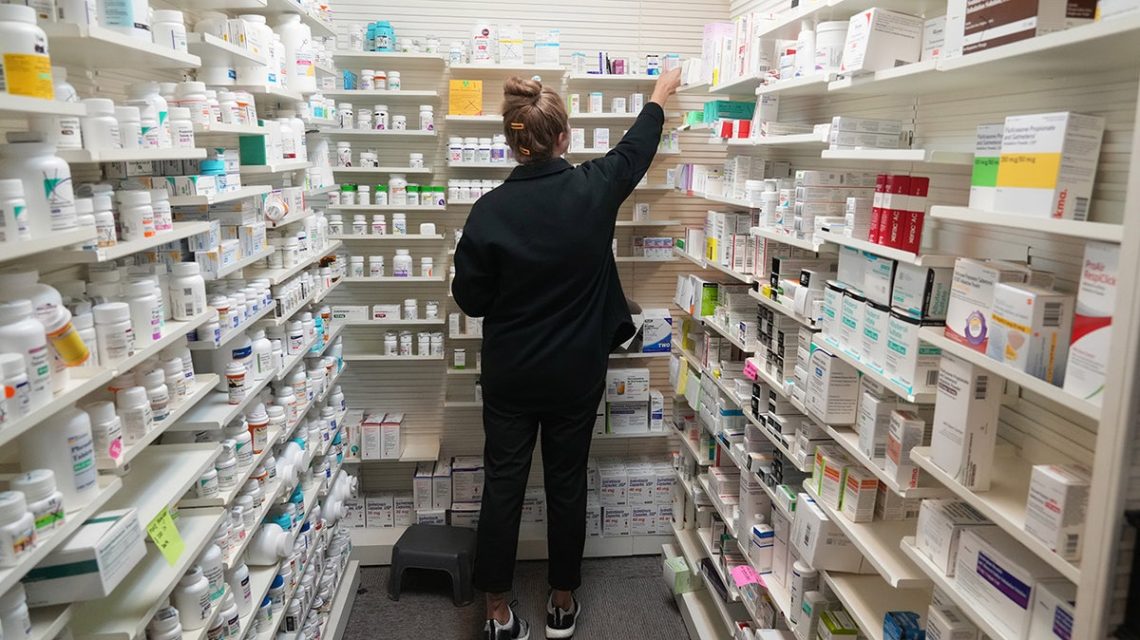
The United States produces around 3% of active pharmaceutical ingredients globally. In contrast, China produces about 45%. A Johns Hopkins study found that over 60% of essential components for antibiotics used by American manufacturers come from China. This situation affects national sovereignty.
Health security for the military, leaders, and citizens depends on an adversary who could potentially weaponize medication availability and safety. Decades of offshoring dismantled the American industrial base, reducing domestic production from 25% of the world’s pharmaceutical ingredients in 1981 to the current state dominated by China.
The Council on Foreign Relations describes this as a pharmaceutical choke point, with dependency spreading from generics to advanced biologics. Beijing has already weaponized supply chains in other sectors, raising concerns over the future treatment of pharmaceuticals.
Research highlights Chinese suppliers linked with Mexican cartels, creating adaptive supply chains for fentanyl. This results in significant public health issues, particularly in Midwestern towns.
In response, Congress enacted the BIOSECURE Act in December 2025, restricting federal procurement from companies tied to foreign adversaries. Actions like these, including previous tariffs, are steps toward change but do not establish infrastructure or create jobs.
Investment in domestic production is crucial. Ohio demonstrates this potential as an emerging hub for semiconductor manufacturing and could similarly become a center for pharmaceuticals. Incentivizing American manufacturing would secure jobs and reduce defense vulnerabilities.
The urgency is clear. Failing to invest in American pharmaceutical capacity may expose the nation to risks if Beijing chooses to manipulate medicine supplies. Strengthening border security against the flow of synthetic opioids and ensuring battlefield antibiotics are produced domestically are essential.
The health of the nation relies on proactive measures to regain pharmaceutical independence, underscoring the need for manufacturing plants and domestic job creation.
Tricia McLaughlin served as Assistant Secretary for Public Affairs at the Department of Homeland Security under the Trump administration.
 Upcoming Congressional Elections: Key Districts to Watch
  President Trump’s Pre-Midterm Interview on Key Issues
  Increased Funding Needed for Psychiatric Hospitals
  Trump’s 2024 Reelection and Evolving Voter Dynamics
  Defense Secretary Emerges as Key Player in the Trump Administration
  Hegseth’s Vision for the Military: Balancing Tradition and Innovation