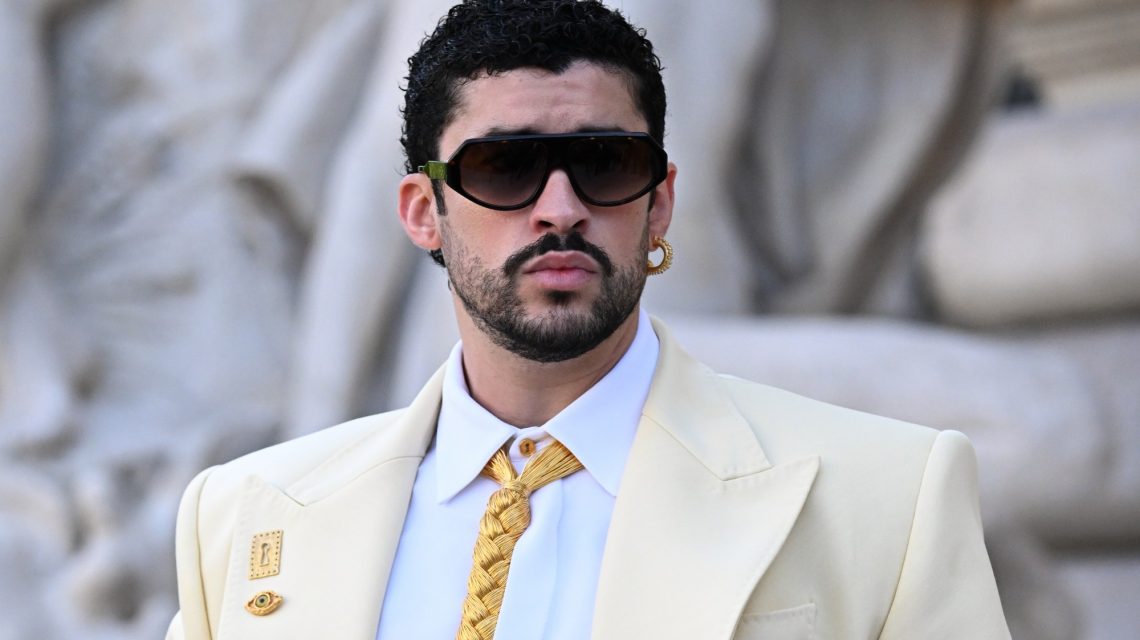
Bad Bunny attended the Schiaparelli Haute Couture Fall/Winter 2026-2027 Women’s collection in Paris on July 6, 2026. A significant issue arose when he encountered a reggaetón song, “Demo 5: Nostalgia,” on TikTok. It featured an artificial clone of his voice alongside fabricated verses by Daddy Yankee and Justin Bieber. Bad Bunny responded sternly, asking fans who enjoyed the imitation to leave his WhatsApp channel.
This situation highlights a growing concern for Latin artists. The timing coincides with the announcement of nominees for the 27th Annual Latin Grammy Awards during National Hispanic Heritage Month. It’s crucial to understand what’s at stake for Latin artists with the rise of AI.
AI’s Influence on Latin Music
An investigation by The Atlantic revealed AI training datasets with around 21.2 million tracks, including some from Bad Bunny, ingested without consent. Major labels like Universal Music Group and Sony Music have filed lawsuits against the AI platform Suno for unauthorized use of their recordings. The datasets incorporate reggaetón rhythms, salsa melodies, and Latin trap vocals, transforming them into machine fodder.
AI-generated music is becoming prevalent, with Deezer reporting that nearly half of its daily uploads are synthetic. This competition affects playlists, royalties, and listener attention, impacting Latin music—currently the world’s most streamed genre.
Economic Implications
In 2025, Latin music revenue in the U.S. exceeded $1 billion, marking its tenth consecutive year of growth. However, a study by the International Confederation of Societies of Authors and Composers predicts generative AI might reduce music creators’ income by nearly a quarter by 2028—a loss of 10 billion euros.
The Latin music community faces potential losses due to AI leveraging their sounds without consent. Historically, Latin music has been undervalued, with Spanish-language records considered niche despite outselling English ones. AI risks separating voices from their creators, potentially leading to a future without fair contracts.
Potential Solutions and Legislative Actions
Two potential futures are emerging. In May, Congress reintroduced the NO FAKES Act, seeking to grant Americans rights to control AI replicas of their voices. Meanwhile, Suno unveiled new models under licensed partnerships with Warner Music Group and BMG to compensate participating artists. These developments show AI companies can choose consent and remuneration over unauthorized use.
The Latin music industry must decide if its AI era will be founded on collaboration or exploitation. Protection starts with addressing AI training in contracts, ensuring metadata tracks every recording, and collective efforts. Latin artists have previously united for fair streaming economics, and can extend this to AI concerns.
Handling AI is a global matter. Latin music spans worldwide, and AI models can clone voices across borders. American laws, like a strong NO FAKES Act, cover only part of the issue. Understanding that recordings might train future AI models is vital, as laws and contracts—not unchecked terms of service—should govern outcomes.
Heritage and Protection
As National Hispanic Heritage Month highlights Latin music’s achievements, the focus should shift to protecting creators from AI exploitation. Celebrating billion-dollar revenues and chart records is insufficient without safeguarding artists. They must own their voices amidst machines copying them flawlessly.
Heritage embodies both memory and resilience. AI’s capability to mimic Spanish music underscores the need for fair compensation for those who shaped its sounds.
José Valentino Ruiz, a University of Florida associate professor, is an award-winning composer and producer actively engaged with the AI for Health Institute. His insights emphasize the significance of ensuring artists receive recognition and payment for AI usage.
 Pete Davidson Criticizes NYC Mayor Zohran Mamdani Over BQE Construction
  Chris Hansen Criticizes Hollywood’s Portrayal in ‘Primetime’
  Monet Mazur’s Home Targeted in Hollywood Hills Burglary Attempt
  Dwayne Johnson Pays Tribute to Late Wrestler Benjamin Satterley
  David Cerda Celebrates 25 Years of Stage Success with ‘Joan Crawford Goes to Hell’
  Adam Levy Steps into the Judiciary Spotlight with ‘Adam’s Law’