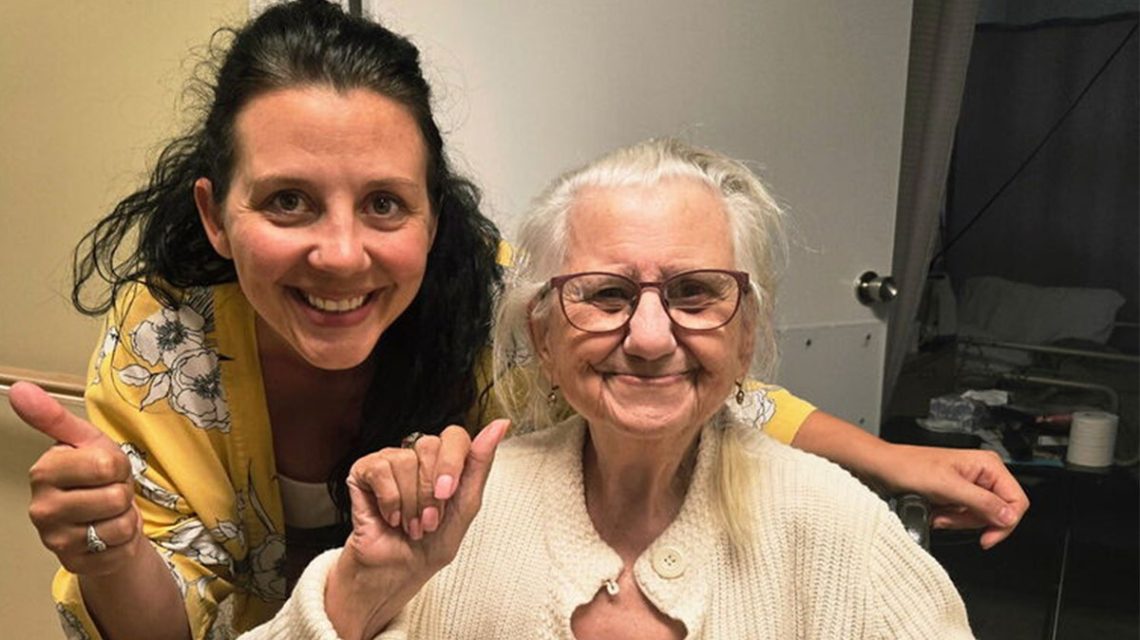
The family of Brigitte Stegemann, an 83-year-old woman from Canada, questions her death under the medical assistance in dying program, citing her cognitive decline and distress over the procedure. The incident has highlighted concerns over Canada’s euthanasia policies.
Stegemann’s granddaughter, Brigitte Kranendonk, acted as her primary caregiver. Due to Stegemann’s declining health, the family admitted her to The Pearl care home in Cannifton. Despite being diagnosed with stomach cancer, Stegemann displayed a healthy appetite and initially declined the idea of assisted dying.
However, while Kranendonk was on a road trip in June, she learned that the care home planned a medical assistance in dying (MAiD) assessment for Stegemann without her grandmother’s prior consent. Upon her return, Kranendonk found that Stegemann had already undergone her first MAID consultation and struggled with cognitive assessments, failing questions about her family.
Kranendonk was present for Stegemann’s second MAID assessment, where she found the process concerning. The doctor explained the procedure without clearly conveying its fatal outcome. Attempts to clarify the intent faced resistance. When Kranendonk asked Stegemann whether she understood the procedure, Stegemann reportedly cried and regretted agreeing to it.
In the end, Kranendonk witnessed the procedure, during which a nurse struggled to administer the IV, resulting in multiple attempts and visible blood loss. The doctor proceeded with the medication as Stegemann lay silent. She died within 10 minutes. Kranendonk expressed regret for not taking legal measures to stop the procedure and noted unawareness of such options at the time.
Moving forward, Kranendonk appeals to the Chief Coroner’s Office in Ontario, the Patient Ombudsman, and Belleville Police to investigate the legality of her grandmother’s euthanasia. The case has escalated public scrutiny of MAID laws, which account for one in every 20 deaths in Canada since its legalization in 2016.
Mira Metter, Director of the film “Broken Country,” emphasized concerns about MAID safeguards, advocating that comprehensive care should be prioritized over death. Laura Echevarria, National Right to Life’s communications director, echoed these sentiments, underscoring the need to protect vulnerable patients.
Further comments were sought from Kranendonk, The Pearl care home, and Belleville Police; however, they have yet to respond.
Rachel del Guidice, a culture reporter for Fox News, covers topics at the intersection of politics, faith, family, and American culture.
 Dutch Review Board’s Euthanasia Ruling and International Debate
  Israeli PM Commends Heroic Actions in Flight Emergency
  Rabbi and Jewish Leaders Criticize Adam Brody for ‘Genocide’ Comment
  Flydubai’s Emergency Landing Highlights Cockpit Security
  Former Israeli PM Naftali Bennett Commends Passengers and Crew for In-Flight Heroism
  Diplomatic Complexities Unfold at U.S. National Archives Visit