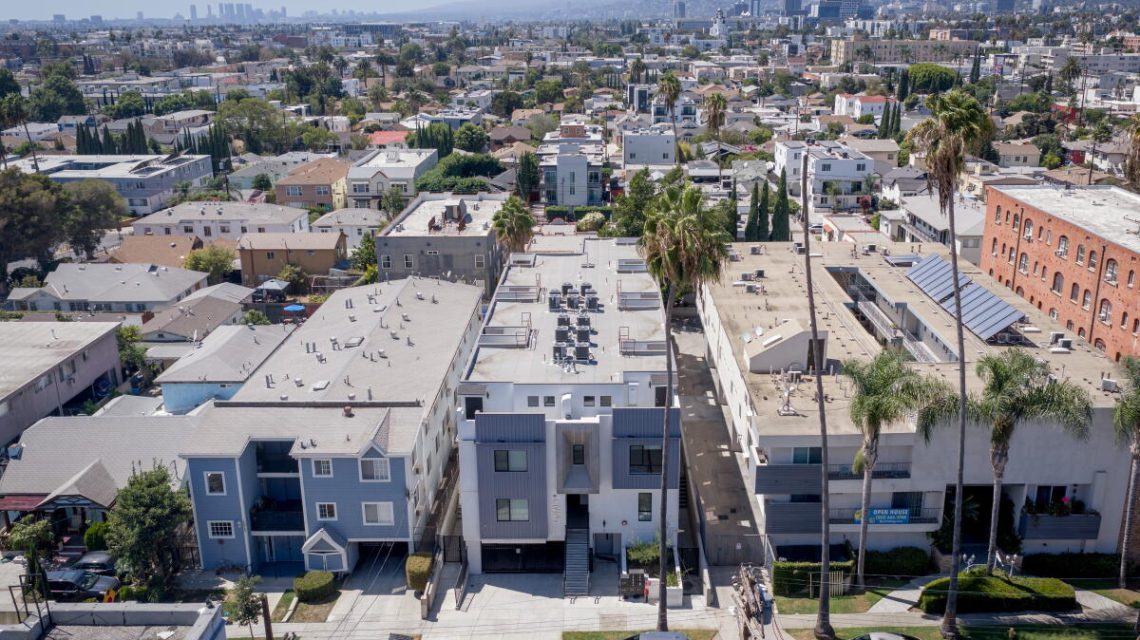
In 2021, developer Paul Schon sold a 14-unit Hollywood apartment building for $6.5 million. Recently, he repurchased the building for $4.75 million, illustrating a significant decrease in property values within Los Angeles’ multifamily market.
The decline in apartment values is evident across the region. In 2022, the median price per unit in such buildings in L.A. County was $397,289, per Kidder Mathews, a real estate firm. Current prices have dropped to $280,591.
Los Angeles faces a housing shortage despite high demand. Mayor Karen Bass has implemented measures to expedite construction permits, but developers like Schon assert that building new units is currently unfeasible. High taxes and project expenses hinder profitability. As a result, developers are opting for smaller projects, such as Accessory Dwelling Units (ADUs) and townhouses.
This situation impacts both developers and tenants, with rent still high despite temporary relief when prices dropped earlier this year. Supply remains insufficient due to historical underbuilding.
Schon noted a general reluctance among developers to initiate new projects in Los Angeles. Construction has slowed down, with Kidder Mathews reporting a 9% decrease in new apartment completions and a 15% reduction in units under construction compared to last year.
“People are scared to build in L.A. right now,” Schon said. “All my developer colleagues and friends are sitting on the sidelines because new development doesn’t make sense.”
Interest rates rising from 2% to 7% significantly impact project viability. Additionally, pandemic-era tenant protections have restricted rent growth and increased eviction cases, affecting developers’ revenues. The introduction of Measure ULA—otherwise known as the mansion tax—levies substantial taxes on property sales over $5.4 million, further complicating investment.
Developers like Yoni Chriqui avoid larger projects to bypass mansion taxes, choosing to build less dense housing to manage costs effectively. Chriqui emphasizes that regulation fees and park fees for multifamily projects continue to rise, posing significant barriers. Despite incentives like density bonuses, the financial feasibility of large projects remains challenging.
California’s SB 79 allows taller developments near transit stops; however, projects under this bill have yet to commence in L.A.
While selling agents and developers observe considerable financial losses across recent transactions, some investors perceive opportunity in dropping values and enter the market cautiously.
“Investors across the country are trying to figure out L.A.,” said Paul Darrow, managing director at Walker & Dunlop.
Some developers remain hopeful despite risks, buying properties with expectations for future improvements in market conditions. Meanwhile, parcels capable of housing numerous residents see minimal development, highlighting the challenges facing L.A.’s housing sector.
 Navigating Los Angeles Real Estate on a Budget
  Mortgage Rates Return Above 7% After Twenty Months
  Inland Empire Grapples with Growing Housing Affordability Concerns
  Jevon Carter Sells Chicago Town Home
  Charming River Forest Home With Custom Features
  Handling Rumors When Selling a Home