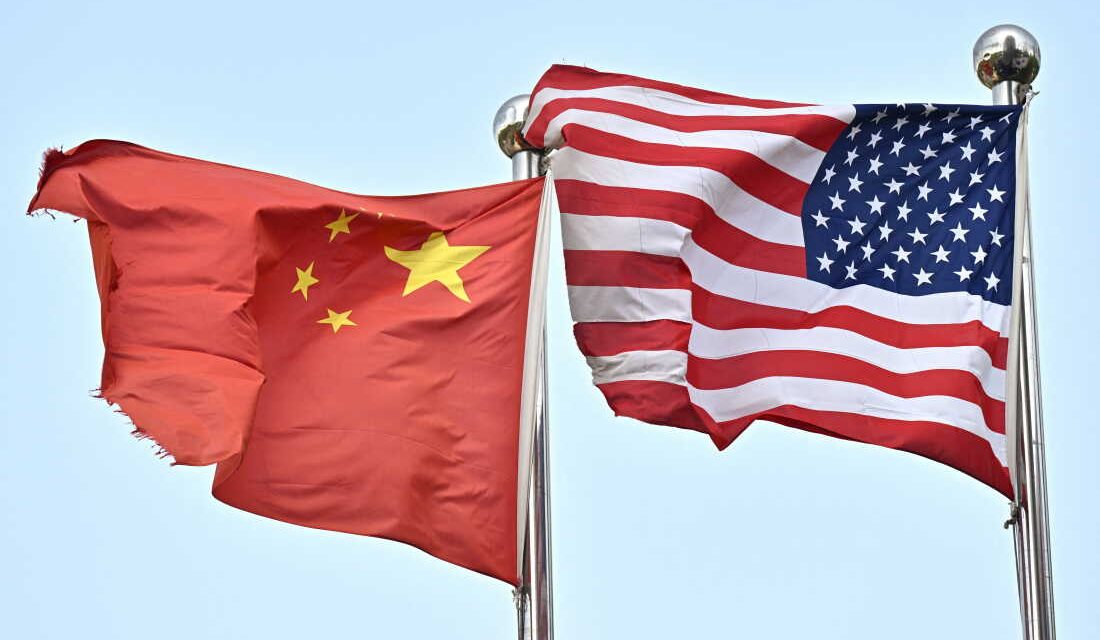
The United States and China are currently embroiled in intense competition and mutual distrust regarding artificial intelligence (AI). Experts believe that the upcoming meeting between President Trump and Chinese leader Xi Jinping in Washington holds slim chances for altering this dynamic.
Recently, the Trump administration has accused Chinese AI firms of intellectual property theft. In response, Beijing has criticized U.S. restrictions on chip exports and alleged that Washington is employing a “Cold War playbook” to suppress Chinese AI development. The possibility of compromise seems remote.
Nevertheless, former officials and policy experts point to an active bilateral dialogue, referred to as “Track Two.” This form of diplomacy involves informal private meetings and conferences, often hosted by think tanks or universities, aimed at fostering understanding and collaboration on critical topics, including AI.
Sarah Beran, an incoming president of the National Committee on U.S.-China Relations, underscores the importance of U.S.-China discussions on AI. She emphasizes that Track Two dialogues, with their relaxed format, can help build understanding and guide policy recommendations. The committee, involved in these discussions since 1972, seeks to facilitate dialogue despite current mistrust.
Beran notes the challenges of discussing AI due to current fears. Both countries are concerned about potential chokepoints and the use of AI as a strategic tool. These challenges make AI a complex subject in diplomatic conversations.
Track Two offers a forum where participants from both nations discuss sensitive topics candidly without immediate pressure for public consensus. Beran provides an instance where Track Two discussions helped revive U.S.-China military communications after direct talks were halted in 2022.
Jack Shanahan, a retired Air Force general, highlights another success achieved through Track Two discussions. A prolonged dialogue eventually led to an agreement between U.S. and Chinese leaders that decisions to use nuclear weapons should remain under human control.
Samm Sacks, an expert at Johns Hopkins, shares her experiences in substantive Track Two dialogues on AI in China. These conversations stress the shared vulnerabilities both nations face due to AI, offering common ground despite governmental conflicts over export controls and intellectual property issues.
Tensions over AI remain high, with differing priorities between the U.S. and China. The U.S. focuses on cyber vulnerabilities, while China emphasizes regime stability and self-reliance in hardware manufacturing. These disparities affect expectations from Track Two discussions.
Scott Kennedy from the Center for Strategic and International Studies highlights how Track Two talks can clarify each side’s decision-making processes and red lines. However, he underscores that these informal avenues require governmental endorsement to be effective.
Sacks warns of the current precarious moment due to U.S.-China disagreements over AI. The successful engagement in Track Twos hinges on both governments’ willingness to signal the need to collaborate on AI safety and risk management.
Sarah Beran and other Track Two participants hope the upcoming Trump-Xi meeting will reinforce the importance of AI discussions, providing a foundation for continued expert engagement. The National Committee plans its next meeting around potential directives from the presidents’ talks.
 Upcoming Congressional Elections: Key Districts to Watch
  President Trump’s Pre-Midterm Interview on Key Issues
  Trump’s 2024 Reelection and Evolving Voter Dynamics
  Defense Secretary Emerges as Key Player in the Trump Administration
  Hegseth’s Vision for the Military: Balancing Tradition and Innovation
  Significant Funding Boosts Ken Paxton’s Texas Senate Campaign Amid Tight Race