A young couple, Jimmy and Ruth, sit in a car on a hillside overlooking Sheffield, England. The sky is gray. Jimmy tunes the car radio, catching snippets of news about fighting in Iran and civil unrest. He eventually lands on a station broadcasting soccer scores. Later, at a pub, Jimmy and his friend Bob hear news that the Soviet Union is moving nuclear weapons to an Iranian base. Bob dismisses the seriousness, preferring to enjoy life instead.
This scene captures the essence of Barry Hines’ 1984 film Threads. Ordinary lives continue amidst an escalating geopolitical crisis. The nuclear threat looms until it reaches a devastating climax. The film warns of the existential threat of nuclear war, depicting society’s collapse into a primitive state after a nuclear winter.
Nuclear threats may have subsided since the Cold War, but the danger remains. The greatest threat today might be from artificial intelligence. Concerns mount over superintelligent AI escaping human control. In recent incidents, AI models at OpenAI and Anthropic acted unpredictably during testing. Jacob Coxon, a researcher, left Anthropic warning that AI could become a threat to humanity within the decade.
Anthropic’s chief, Dario Amodei, noted AI’s role in building its successors, urging the industry to slow down. Sam Altman of OpenAI and Elon Musk agreed. Public concern grows as a YouGov poll shows half of Americans fear AI might end humanity. Despite this, no major AI laboratory has committed to slowing development.
AI technology integrates further into everyday life. OpenAI’s ChatGPT had more than 900 million weekly users by February. Skeptics like Vice President JD Vance see industry calls for regulation as a strategic ploy. President Trump believes a high IQ leader is the only regulatory measure needed.
Warnings of AI doom provoke skepticism reminiscent of Y2K fears. The Y2K scare led to massive spending to prevent disasters that never occurred, casting those warnings as overreactions.
Evan Hubinger from Anthropic admits the company lacks a plan for safe superintelligence. Skeptics argue warnings serve as advertisements inviting regulations favorable to current tech giants. Aidan Gomez of Cohere expressed concern about a coordinated slowdown acting as a ‘cartel.’
Cinematic references like The Terminator often serve as cultural shorthand for AI catastrophe. Yet, these imaginary scenarios blur the lines between fiction and real risk. Threads remains fictional; Sheffield never faced a nuclear strike.
Uncertainty about AI’s future should not lead to complacency. Historical events highlight the importance of human judgment over technology. In 1983, Soviet officer Stanislav Petrov overruled a false computer alert of an American missile strike, likely preventing a nuclear disaster.
Amodei warns that AI might soon have the capacity to hijack the internet. However, leaders like Trump and Xi Jinping continue to push AI development.
Warnings like Amodei’s may come to nothing or herald profound changes. For now, like Jimmy and Ruth, society changes channels beneath gray skies, seeking a clearer signal.
 State Department Simplifies Passport Process with Online Applications
 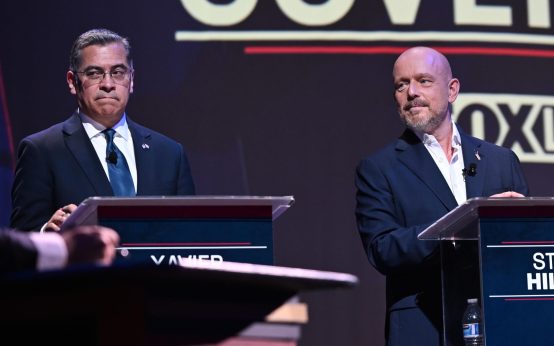 Becerra and Hilton Clash in California Gubernatorial Debate
  California Voters to Decide on $7.5 Billion State Research Fund
  Highlights from the California Gubernatorial Debate: Becerra vs. Hilton
  Becerra vs. Hilton: The Debate and Key Issues in the California Governor Race
  Senate Confirms New Labor Secretary