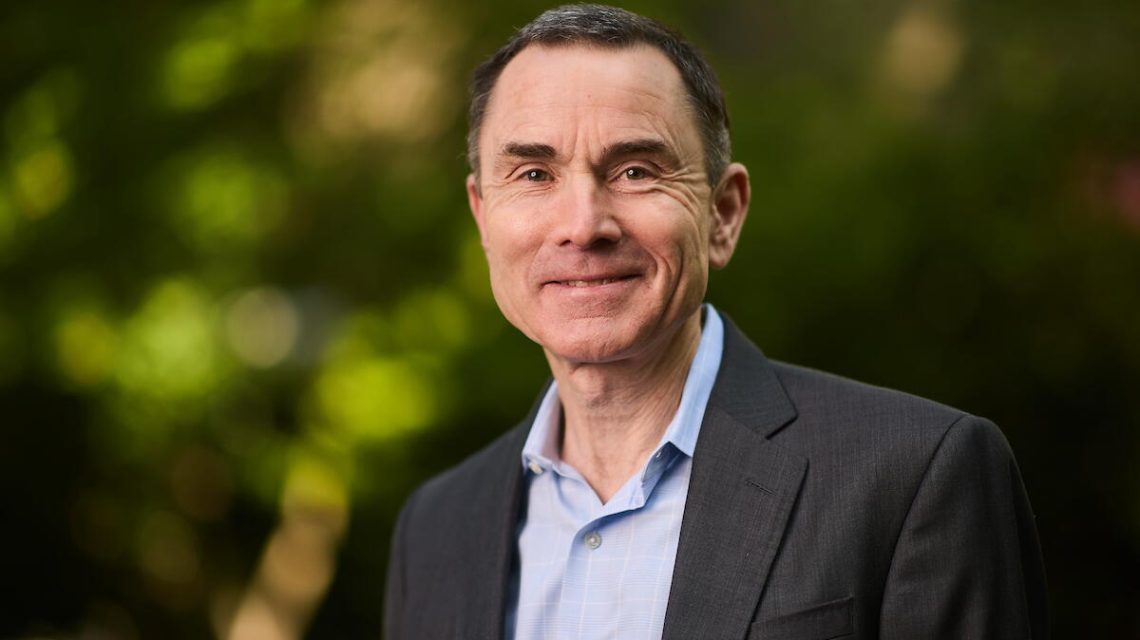
USC has appointed David Madigan, a statistician and former provost at Northeastern University, as its chief academic officer. He aims to make USC a leader in rebuilding American trust in higher education and adapting to the fast-paced developments in artificial intelligence. Madigan, age 63, will take on the roles of provost and executive vice president for academic affairs beginning October 13, as announced by the university on Wednesday. This marks a significant academic appointment under President Beong-Soo Kim’s leadership.
Madigan joins USC as the institution recovers from a financial crisis, contends with a faculty unionization movement, and faces political and funding pressures from the Trump administration. Additionally, USC navigates the evolving impact of artificial intelligence on learning, teaching, and research.
“I really believe in the power of the great American research universities,”
Madigan stated during an interview, acknowledging a drift from their core mission. He highlighted a decline in public trust in universities, a problem rooted in challenges prior to recent federal cuts affecting higher education. He expressed confidence in USC’s capacity to address these issues.
Madigan praised USC’s willingness to embrace change, emphasizing the need for adaptability to reclaim their position and restore public trust. President Kim emphasized Madigan’s experience and leadership as essential to advancing USC’s academic mission and shaping its future.
In his new role, Madigan will oversee 18 schools and academic units, along with student life, libraries, and enrollment services. The university’s budget staff is led by Gregg Goldman, appointed in June as the first executive vice president for finance and operations.
“These are not for-profit corporations. We’re not Goldman Sachs.”
Madigan intends to lead with transparency and authenticity, promising clear communication within the university community about all developments, including financial updates.
USC comes off a lean financial period, attempting to address a deficit of over $200 million. This included a hiring freeze, layoffs affecting approximately 1,000 employees, and the elimination of merit raises. The university also sold unused properties and cut discretionary spending. Some measures, like layoffs at the Viterbi School of Engineering, continue.
Faculty unionization efforts gained traction as about 70% of voting non-tenure-track faculty approved unionizing under United Faculty-UAW. They aim to represent approximately 2,700 USC lecturers, researchers, clinicians, librarians, and pharmacists. However, USC has challenged the result, seeking intervention from the National Labor Relations Board.
USC, similar to UCLA and other research universities, faces challenges from the Trump administration. This includes cuts to research funding and pressure to eliminate diversity programs, strictly enforce protest rules, and restrict international enrollment, all significant at USC, where over a quarter of students hail from abroad.
USC declined to sign a White House “academic compact” limiting international undergraduate enrollment and freezing tuition. The university continues to focus on AI, thanks in part to a $200 million gift from trustee Mark Stevens and his wife, Mary. Viterbi recently introduced USC’s first undergraduate AI degree.
“AI is completely transforming the research process,”
said Madigan, noting advancements in personalized tutoring and the importance of understanding the associated risks and safeguards.
Madigan, originally from Ireland, earned his mathematics and statistics degrees at Trinity College Dublin. His career spans roles in insurance and technology consulting, with research focused on Bayesian statistics and drug safety. He has taught at major institutions, held leadership roles, and managed complex academic operations.
While at Northeastern, Madigan dealt with significant issues, including protest management, and he emphasized the importance of free speech and academic freedom as core principles that must be upheld without crossing into harassment or disruption.
Madigan replaces Andrew Guzman, who will return to teaching at the Gould School of Law. Guzman, a prior law school dean, faced similar challenges at USC regarding protests and free speech. His tenure included efforts towards financial sustainability amidst a challenging period.
On the same day Madigan’s appointment was announced, USC permanently named Megan Jordan as the chief communications officer. Jordan, a USC alumna and faculty member, has contributed to enhancing communications within the president’s office and brings experience from previous roles at various organizations.
 North American Values Institute Questions Pittsburgh Schools’ New Curriculum
  Debate Over Proposed English-Only Rule for Head Start Programs
  Impact of Removing Regents Requirement on Education
  Impact of College Rankings on Lesser-Known Institutions
  Evaluating Accountability in Missouri’s Education System
  Senate Passes Protect College Sports Act: Impact on NCAA and Athletes