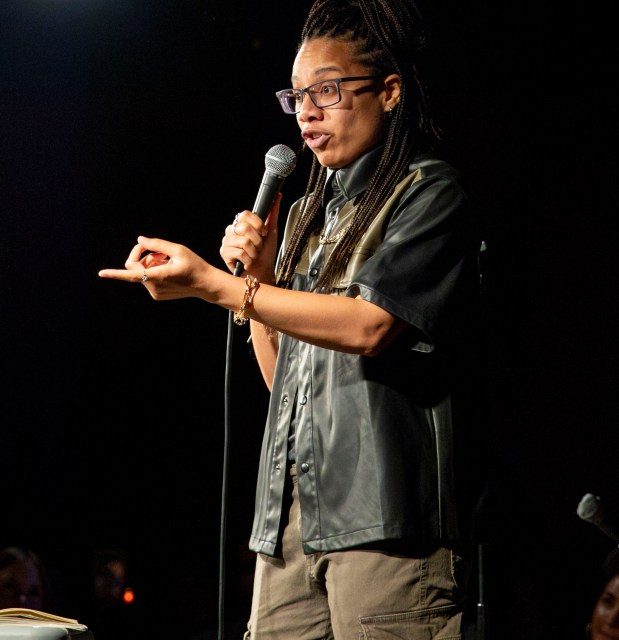
Letonia Copeland-Hardin’s work exemplifies the need for earning an audience’s trust. As a postdoctoral researcher at the University of Chicago, she engages with communities to study how pollutant exposure relates to cancer risks. Additionally, as a stand-up comedian, she builds trust with audiences on stage. She is now merging both skills, sharing them with fellow researchers.
Copeland-Hardin, along with Myeshia Shelby and Kelsie Huff, developed “Reading and Working the Room.” This is a free workshop and curriculum aimed at teaching scientists stage techniques to engage better with their research communities.
Interest in comedy has been present in Copeland-Hardin’s life since childhood. She humorously marked “stand-up comedian” as her future career in her school yearbook at age nine. Yet, it was not until 2019, after a decade in research, that she pursued this passion. “I started comedy to handle stress and isolation from graduate school,” she explained.
The workshop ties her seemingly separate careers together. Copeland-Hardin emphasizes community-engaged research, which treats community members as equal partners. “You work with community, not on communities,” she clarified. Building trust is vital, especially with Chicago communities previously harmed by scientific exploitation.
Performing as LT in the Future of Comedy Showcase, Copeland-Hardin engaged her audience with ease. Her approach involves turning her monologue into a conversation, as demonstrated when she asked about Froot Loops early in her set. She skillfully explained complex scientific topics, keeping the audience interested and receptive.
The curriculum intends to teach similar methods to her peers. It addresses a gap by helping researchers communicate beyond academic circles and rebuild trust with communities, thus collecting better data.
“Reading and Working the Room” is accessible to anyone interested. Available on zenodo.org, it includes downloadable slides and a facilitator’s guide. Initial funding came from Research!America, focusing on improving public engagement in scientific training.
Copeland-Hardin underscores the importance of sharing information publicly, a responsibility scientists hold. Her core motivation is a desire to connect, whether with audiences, communities, or the subject of her research. This curriculum represents another avenue through which she achieves that connection.
 Concerns Over Spouse’s Weight Loss Spending
 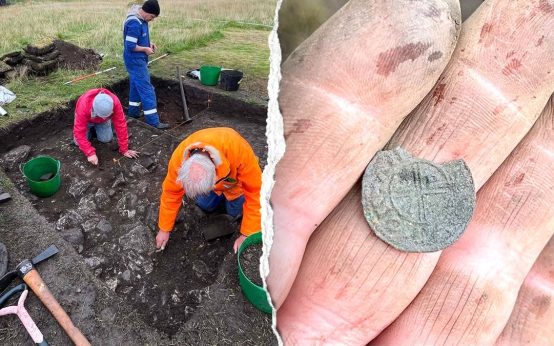 Ancient Anglo-Saxon Coin Discovered in Scotland
  Hurricane Isaias Wreaks Havoc Across Southern U.S.
  Integrity and Culture: A Look at American Amateur Golf
  Exploring Pumpkin’s Versatility in Autumn Dishes
  Concerns Over Russia’s Biological Weapons Program