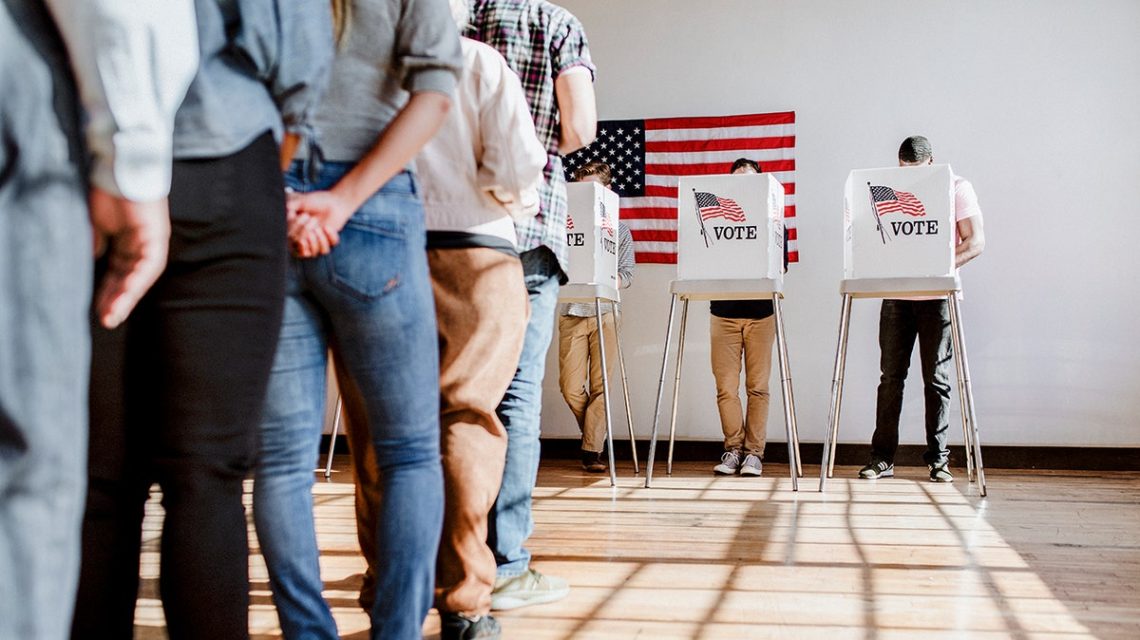
As America approaches the 2026 midterms, the Republican Party should turn its attention to the nation’s small businesses. Recently, the White House has shown its own commitment by launching National Small Business Week, highlighting the impact of small businesses on the economy and employment.
Small businesses play a crucial role in determining electoral outcomes. With over 36.8 million small businesses in the United States that encompass companies with 500 or fewer employees, they represent a significant demographic. These small enterprises employ 46% of the private sector workforce, accounting for approximately 62 million jobs. Remarkably, more than 96% have fewer than ten employees, ranging from grocery stores to professional services like doctors and lawyers. Since 1996, they have created around 20.7 million jobs.
Small businesses are leaders in U.S. innovation, with companies having 5-9 employees often holding more patents per employee than larger entities. They also drive the reindustrialization movement; about 98% of U.S. manufacturers employ fewer than 500 people according to SCORE, a nonprofit that supports small businesses.
However, owning a small business has its challenges. The Tax Foundation reports that taxes consume 20-30% of a small business owner’s income. One-quarter of these entrepreneurs spend over $10,000 annually on tax and regulatory compliance alone. On average, they spend 200 to 300 hours per year, equivalent to 32 full business days, handling compliance tasks.
The tax reforms introduced by former President Trump, including the Section 179 expensing cap increase to $2.5 million and maintaining the 100% bonus depreciation for equipment, have provided significant relief to small businesses. Additionally, the permanence of the 20% Qualified Business Income deduction has prevented potential tax hikes. If Republicans fail to protect these reforms, small businesses could face severe financial impacts under proposed Democratic policies.
Business owners tend to lean toward the Republican Party. A Stanford study shows business owners are 18 percentage points more likely to vote Republican compared to other voters. The experiences of running a business shape their political views, making them responsive to tax relief and reduced regulations.
The Republican Party has a chance to engage a 36-million-strong constituency that constitutes nearly half of the national workforce and has fueled two-thirds of job growth over the past quarter-century. Furthermore, Hispanic entrepreneurs start one out of every four new businesses in the country, presenting an opportunity for Republicans to appeal to this growing demographic.
Republicans can gain electoral success by:
- Launching information campaigns targeted at small business founders, highlighting their benefits from Trump’s tax policies and the risks posed by possible Democratic reversals.
- Expressing support for the American small business tradition and the entrepreneurial mindset.
- Emphasizing that small business interests align with the Republican Party’s modern goals.
The strength of political parties lies in uniting shared interests. For the GOP, small business founders and entrepreneurs across the country represent not only current but future influence in shaping a successful national agenda.
 President Trump’s Pre-Midterm Interview on Key Issues
  Trump’s 2024 Reelection and Evolving Voter Dynamics
  Defense Secretary Emerges as Key Player in the Trump Administration
  Hegseth’s Vision for the Military: Balancing Tradition and Innovation
  Significant Funding Boosts Ken Paxton’s Texas Senate Campaign Amid Tight Race
  U.S. States Extend Gas Tax Waivers Amid Rising Fuel Costs Due to Iran Conflict