Okinawa stands as the final, costliest battle of World War II in the Pacific. Director Peter Berg aims to imprint this memory with his new film, “The Mosquito Bowl.” As Berg states, the movie serves as a reminder to reflect on the sacrifices we demand from our young men and women.
The film draws inspiration from Buzz Bissinger’s book. It’s worth noting that Bissinger also authored “Friday Night Lights,” which was Berg’s breakthrough film. Yet, “The Mosquito Bowl” isn’t about football. “It’s about the price of war, the human price,” Berg clarifies.
The movie recounts the true story of four All-American football players. These athletes enlisted in the Marines post-Pearl Harbor, heading for boot camp at Parris Island, South Carolina. At this location, Berg discussed the film’s background. The football players believed in winning the war as they did their games. However, they encountered a relentless enemy in the Japanese soldiers, instructed to never surrender.
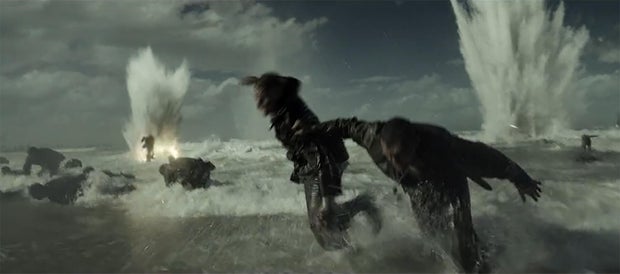
Their first battle experience was at Tarawa, a small coral atoll. This marked the first time the public witnessed the human toll of war through footage of American casualties on the beach. “The Mosquito Bowl” includes a powerful depiction of the Tarawa battle sequence. Berg wanted the scene to convey terror, matching the reality faced by soldiers.
Berg’s filmmaking approach emphasizes immersion. He employed authentic flamethrowers and explosions to capture the intensity. His research process is equally vigorous. For “Friday Night Lights,” he spent an entire season with a high school football team in Texas. For “Lone Survivor,” he joined Navy SEALs in Iraq for a month. Similarly, he wrote most of “The Mosquito Bowl” script at Parris Island, absorbing its essence. Berg prioritizes the spirit and soul of his films over technical aspects such as lighting or costumes.
Parris Island recruits symbolize future wars’ human cost. Berg sees them as a potent, dangerous force and acknowledges his responsibility to depict them accurately.
Understanding Berg also involves recognizing his personal connection; his father, a Korean War Marine, rests in Arlington. Recalling conversations at his father’s grave, Berg expresses regret that his father couldn’t view the film.
The film’s title refers to a football game on Guadalcanal, preceding the Marines’ journey to Okinawa. The game served as a cherished reminder of life’s goodness. Neal McCallum, now 99, was present during the event. At 17, he joined the Marine Corps, eager to contribute. McCallum fondly recounts the Mosquito Bowl, a tie with a 0-0 score. Despite the desire for a rematch, the colonel refused, worried about potential injuries before imminent battle.
Okinawa was the subsequent battle. Berg plays the commanding general in “The Mosquito Bowl,” delivering an ominous pre-battle speech. Filming took place in an Australian quarry to recreate the Okinawa environment, though nothing could fully replicate that 82-day ordeal. McCallum reflects on the unbearable casualties and the sacrifice of young lives.
More than 12,000 Americans perished, including 15 football players from the Mosquito Bowl. The Japanese soldiers and Okinawan civilians also suffered immense loss of life. Berg aspires to make the audience experience the human cost of war vividly. “I want people to say, ‘I felt that,'” he emphasizes.
 In-Flight Altercation on Qatar Airways Leads to Police and FBI Response
 Virginia Residents Sue Over Alleged Immigration Violations
 Jennifer Lopez Discusses Marriage and Humor During 92NY Event
 Teri Hatcher’s Makeup Transformation into Miranda Priestly
 AEW’s Blood and Guts: A Glimpse into the Brutal Spectacle
 Author Discusses Challenges with ‘Children of Blood and Bone’ Film Adaptation