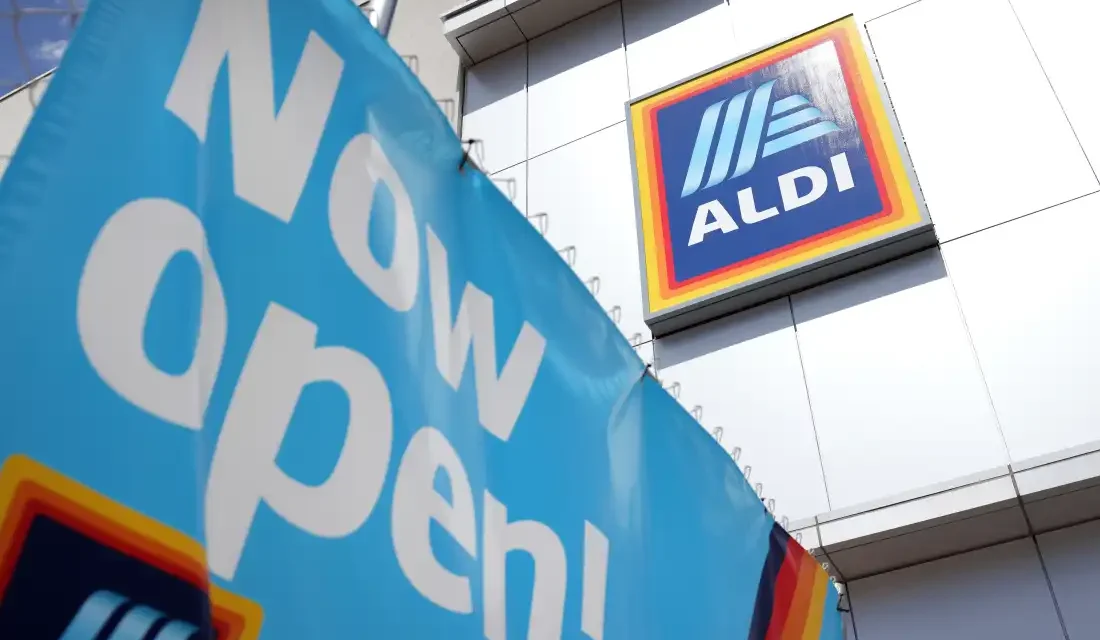
WASHINGTON, DC – May 02, 2025: Aldi, a popular discount grocery chain, plans to expand its footprint in the U.S. by adding over 225 new stores in 2025. This move is part of their ambitious 800-store growth strategy, set to conclude by the end of 2028. Aldi’s low prices have made it a significant player in the American grocery landscape.
Personal Reflections on Aldi: In the summer of 2020, I spent some time in Ithaca, New York, where I encountered Aldi for the first time. Although I appreciated their low prices, I found their product range lacking. However, these characteristics are precisely what have propelled Aldi to become America’s fastest-growing grocery chain.
According to Bloomberg, Aldi aims to operate more than 3,000 locations in the U.S. by 2028, surpassed only by Walmart in its reach. In 2024, Aldi achieved $29 billion in U.S. sales, outpacing Trader Joe’s. The German-based company’s reputation for low prices finds credibility in their consistent competition with chains like Walmart and Lidl.
Aldi’s growth strategy has pressured competitors like Wegmans and Kroger to rethink pricing. An analysis revealed grocery stores reducing markups in Lidl’s presence, showcasing Aldi’s market influence.
Despite this competitiveness, some might wonder how Aldi matches giants like Walmart and Costco, known for their economies of scale. Unlike tech startups that disrupt industries, Aldi’s model thrives on an 80-year-old strategy.
Understanding the Aldi Model: Aldi’s success is partly due to its relentless focus on cost-efficiency. There’s no in-store music or extravagant product displays, reducing unnecessary expenses. Likewise, products remain in their shipping boxes to cut labor costs. This intentional simplicity contributes to lower grocery bills.
However, efficiency alone doesn’t distinguish Aldi. Two standout features are:
- Private Label Products: Aldi offers its own brands as alternatives to name brands, such as Benton’s instead of Oreos. This approach eliminates marked-up prices, passing savings to consumers.
- Limited Selection: Aldi’s strategy of stocking only essentials, and usually just one version, maintains their cost-saving advantage. This model stems from their post-war origins in Germany and continues to define their U.S. operations.
During economic challenges like the Great Recession, Aldi’s affordability became appealing. Beyond discounts, Aldi’s unique offerings—such as rotational middle aisle buys and premium wines—make it an engaging shopping experience.
The Broader Market Perspective: The pandemic raised questions on America’s ability to provide affordable food. While grocery stores alone aren’t entirely to blame, Aldi’s influence in competitive pricing underlines the dynamic nature of the grocery industry.
This situation parallels the ‘bundling and unbundling’ concept found in other industries. Supermarkets once centralized various goods; now, shops like Aldi focus narrowly, with others complementing the shopping experience. Aldi’s strategic positioning near competitors exemplifies effective industry unbundling.
The Aldi phenomenon isn’t isolated but part of a continually evolving market. Where I initially underestimated Aldi’s operation, their approach offers insights into broader economic trends. Aldi, in many ways, exemplifies an 80-year-old strategy adapted to contemporary market challenges.