Netanyahu’s Response Post-Election
Benjamin Netanyahu, struggling to retain his position, addressed supporters in Jerusalem after the polls closed. He emphasized the need to form a strong right-wing government, despite Likud falling short of a majority.
He also discussed opportunities with the U.S. to confront Iran, marking it as a crucial moment for Israel.
Election Misinformation on Social Media
Netanyahu’s posts on X have drawn criticism for spreading anti-Arab sentiments. A contentious photo, reportedly AI-generated, showed Muslim voters, stirring fear about high Arab voter turnout.
Disinformation expert Achiya Schatz commented on Netanyahu’s continued promotion of theories undermining election legitimacy.
Rival Optimism Against Netanyahu
Opposition leader Yair Golan declared the public has dismissed Netanyahu’s governance, advocating for a transformative government.
Golan highlighted the public’s mobilization over four years toward political change.
Initial Counts Favor Opposition
Initial results showed Likud receiving 26.5% of the votes, trailing Eisenkot’s bloc. These preliminary figures are subject to change as counting progresses.
Arab Parties’ Success
Arab parties saw significant progress, celebrating high voter turnout among Palestinian citizens. This was expected to hinder Netanyahu’s coalition.
Eisenkot remained hesitant about forming a coalition with Arab parties, complicating his majority prospects.
Impact of Recent Attacks
The Oct. 7 attacks weighed heavily on Netanyahu’s security image. Issues like cost of living and corruption also influenced the election.
High Voter Turnout
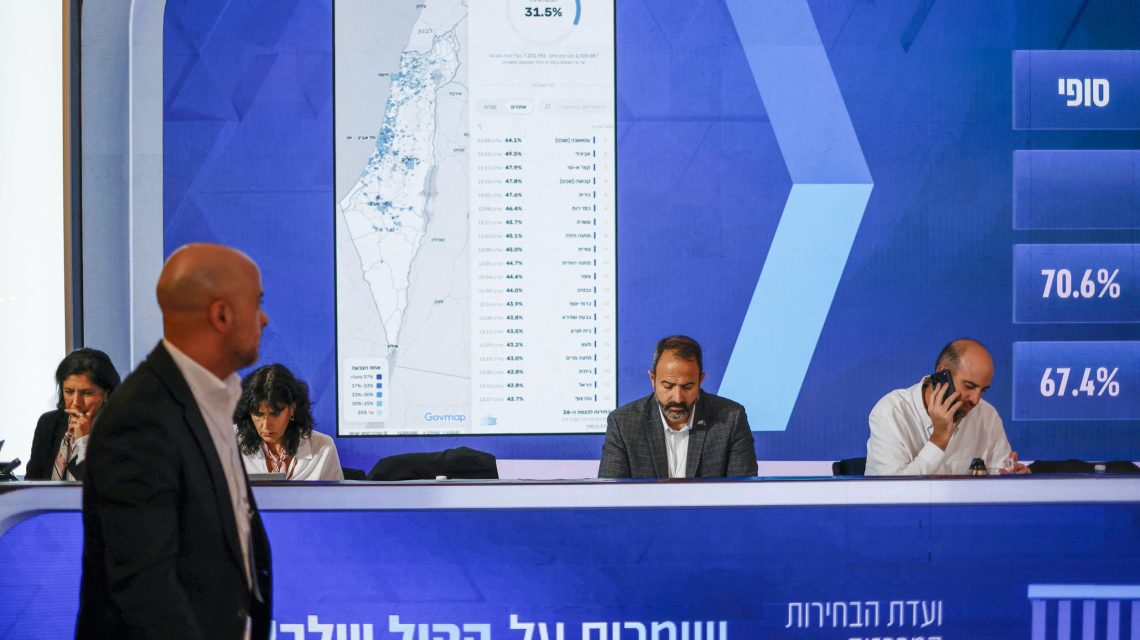
The voter turnout hit 77.7%, breaking records since 1999. The participation rate highlighted public engagement in this pivotal election.
Next Steps in Government Formation
Official results are due within eight days. Parties will engage in negotiations to form a coalition backed by at least 61 Knesset members. If unsuccessful, further elections may be scheduled.
Netanyahu’s Campaign Strategy
Netanyahu leveraged his relationship with Trump, aiming to bolster support from the right-wing. His opponents feared Israel’s isolation from international communities.
Exit Poll Insights
Exit polls suggested a lack of confidence in Netanyahu, showing a narrow lead for Eisenkot. However, these were not official results.
Election Process Details
Polling stations closed as the Central Elections Committee transitioned to vote counting and verification.
Ambassador’s Clarification on Arab Voting
U.S. Ambassador Mike Huckabee clarified remarks on Arab voters, addressing discrepancies in initial comments.
Analyst Comments on Voter Motivation
Analyst Dahlia Scheindlin noted high voter participation, driven by perceived stakes and the impact on Arab communities.
Role of the Haredi Community
Debates continued regarding the Haredi population’s place in military service and within coalitions, spotlighting societal tensions.
Historical Voter Turnout
Voter turnout reached 74.3%, reflecting heightened public interest compared to previous elections.
No Voting Extension Amid High Turnout
Despite high turnout, voting hours weren’t extended, reinforcing commitment to democratic engagement.
 Mayor Mamdani’s Policing Reform Plans
 Gen Z Voter Shifts and Their Impact on the 2026 Midterm Elections
 Disappearance of US Senate Candidate Raises Questions
 DOJ Rule Change Reduces Appeal Time for Immigrants Facing Deportation
 Hakeem Jeffries’ Bid for House Speaker Faces Progressive Hurdles
 Ohio Judge Dismisses Defamation Lawsuit by Rep. Max Miller