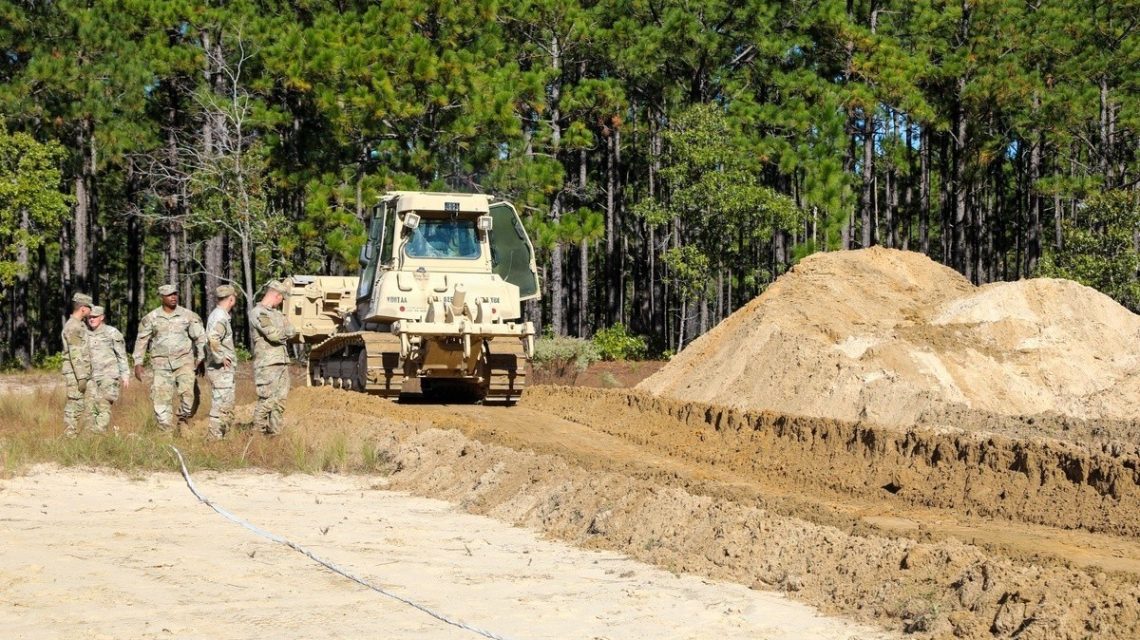
U.S. Army soldiers are training in temporary mass grave digging for the first time in decades. This preparation focuses on responding to high casualty numbers during active conflict.
Troops from the 3rd Corps Sustainment Command and the 20th Engineer Brigade, stationed in Fort Bragg, North Carolina, collaborated with religious support personnel, such as military chaplains. They utilized diggers and excavators to test the preservation of bodies until identification and repatriation to the U.S. becomes possible.
The last large-scale use of this approach by the U.S. Army dates back to the Korean War. During that conflict from 1950 to 1953, nearly 37,000 American deaths were recorded. The Korean peninsula remains divided as a result of this historic war.
In recent decades, primarily in Iraq and Afghanistan, deceased soldiers were promptly returned to the U.S. rather than placed in temporary graves. In scenarios with high casualty rates, individual burials or religious rituals for each soldier become impractical, particularly with ongoing military operations.
U.S. military rules dictate that commanders must manage the remains of deceased personnel, ensuring they can be identified later. A standard temporary internment plot comprises five trenches, with a capacity for 100 casualties. In the North Carolina exercises, soldiers employed bulldozers and various vehicles, completing the burial space setup in approximately one hour and 15 minutes.
The Army calculated that with eight bulldozers and four military excavators, up to 2,400 troops could be temporarily buried within 24 hours.
Sergeant 1st Class Delbert Ruede of the 3rd Corps Sustainment Command stated, “This exercise allowed us to take a critical look at how we respect, honor, and systematically manage our fallen in a high-intensity conflict.”
The drills in Fort Bragg marked the first instance in over 20 years where military chaplains and religious affairs personnel received battlefield training in temporary gravedigging. This training ensures preparedness in future high-casualty scenarios.
 Virginia Residents Sue Over Alleged Immigration Violations
 United Airlines Faces System Outage Amid Banking Disruptions
 MTA Worker Attacked During Subway Dispute
 Home Invasion in California: Elderly Woman’s Struggle with Squatters
 NYC Mayor Disbands Controversial Police Unit
 Travel Chaos and Innovation Amid FAA Ground Stop