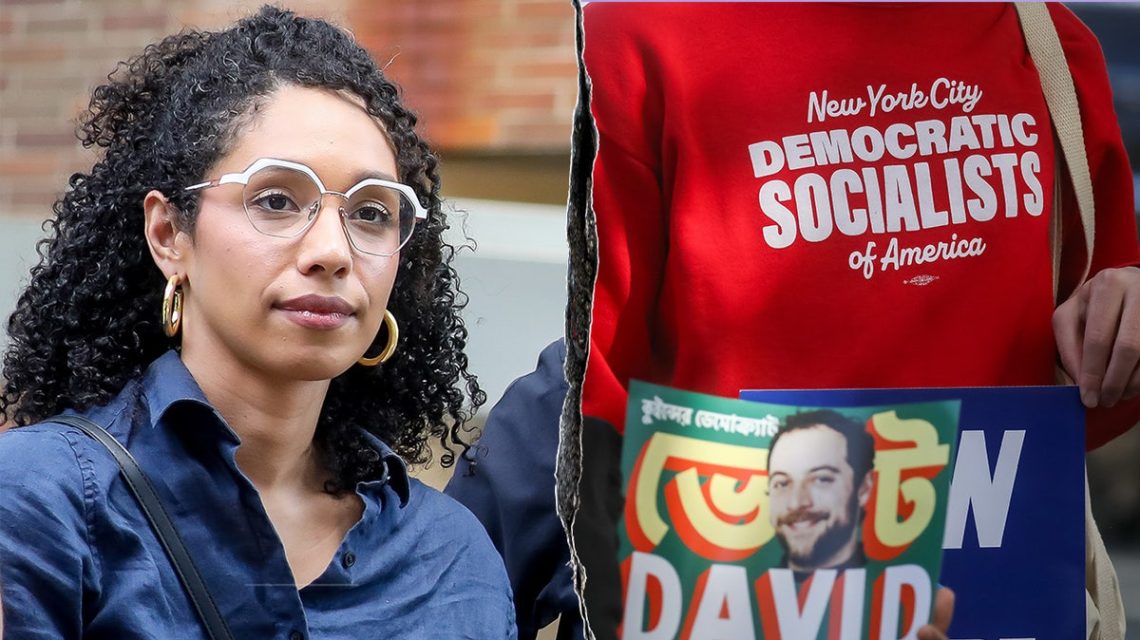
A rarely used congressional maneuver might prevent Democratic Socialists of America (DSA) members from joining the House of Representatives next year, even if they win their elections. Newly elected members must swear an oath to uphold the Constitution to become full House members.
Typically, at the start of a new Congress, all 435 members take this oath together, led by the House speaker. However, some conservative circles argue that any member-elect can challenge another’s right to be sworn in if they have evidence suggesting the latter would not uphold their oath. This would lead to a House-wide debate and a vote on whether the member-elect has the right to take the oath.
For DSA members, the challenge might stem from the group’s platform which includes replacing the current U.S. Constitution with a new one. Several DSA members have already won primaries throughout the country.
Rep. Keith Self, R-Texas, expressed his willingness to consider this maneuver. According to Self, maintaining the integrity of the constitutional oath is crucial, as it signifies genuine commitment and belief. Supporting the Constitution, he argues, means opposing those who wish to dismantle it.
The “Red-Green Alliance,” a term used to describe cooperation between far-left factions and radical Islamic groups, adds to the existing tension.
Rep. Keith Self emphasized that anyone aiming to destroy the Constitution should not be allowed to take the oath. According to the Center for Renewing America, challenging a member-elect’s fitness could lead to the House speaker asking that individual to step aside while the debate unfolds.
The House would then vote on a resolution assessing whether a member-elect aims to dismantle the constitutional order. A passed resolution could prevent the member from being sworn in. This theory has several variables to consider. For instance, the House Speaker, whether Hakeem Jeffries, D-N.Y., or Mike Johnson, R-La., could dismiss the challenge if they choose.
Speaker Mike Johnson has assured that elected Democrats will be seated per the law, calling contrary ideas a “nonsense narrative.” Such actions would challenge the electorate’s decisions and conflict with Supreme Court precedent.
The 1969 Powell v. McCormack ruling stated the House could not exclude an elected candidate from being sworn in if they meet constitutional age, residency, and citizenship requirements.
The case revolved around Adam Clayton Powell Jr., who was refused his oath due to financial scandals, although he was later seated following a Supreme Court decision.
Despite this, some Republicans still consider revisiting such maneuvers. Rep. Tim Burchett, R-Tenn., mentioned potential actions to block Darializa Avila Chevalier from Congress. Although she unseated a senior House Democrat and is likely to win her general election, Burchett plans to declare her ineligible due to a 2019 post about disrespecting the American flag.
The efforts highlight partisan tensions before the formal selection of the new Congress in the upcoming midterms.
 Mayor Mamdani’s Policing Reform Plans
 Gen Z Voter Shifts and Their Impact on the 2026 Midterm Elections
 Disappearance of US Senate Candidate Raises Questions
 DOJ Rule Change Reduces Appeal Time for Immigrants Facing Deportation
 Hakeem Jeffries’ Bid for House Speaker Faces Progressive Hurdles
 Ohio Judge Dismisses Defamation Lawsuit by Rep. Max Miller