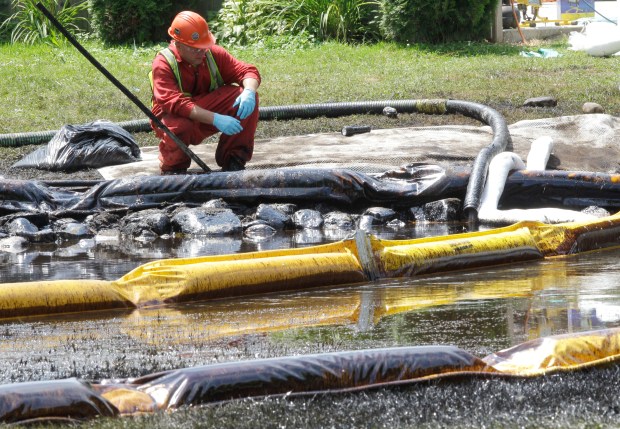
A recent incident involving the spill of 1.3 million gallons of hazardous natural gas liquids in Wisconsin attracted national attention. However, a larger issue remains unnoticed: thousands of small oil spills in the Great Lakes over the past decade.
Study Findings
A study from Lake Superior State University, published in the Journal of Great Lakes Research, highlights the significant number of oil spills. Researchers documented over 6,400 spills across the lakes and connecting waters between 2015 and 2024. Most spills were small, often under 1,000 gallons. Unfortunately, details regarding the quantity or type of oil spilled remain sparse.
Cecilia Heuvel, the study’s lead author, points out that while large ocean spills capture headlines, small spills in freshwater environments receive little attention. Their environmental impact is lesser-known, posing a challenge for scientists.
Lake Michigan experienced about 150 spills each year, marking the highest frequency among the Great Lakes. Data for the study derived from the U.S. Coast Guard’s National Response Center and Ontario’s government records.
“We know that these small spills don’t have immediate dramatic effects but may result in long-term changes we can’t quantify until more research is done,” Heuvel explained.
The Larger Context
A major spill occurred in the Kalamazoo River in 2010 when a pipeline known as Line 6B ruptured, releasing more than 845,000 gallons of oil. Cleanup costs exceeded $767 million, affecting about 320 people, some requiring evacuation due to health issues.
The pipeline, now rebranded as Line 78, continues to transport over 500,000 barrels of crude oil daily. An incident involving Line 5 in Wisconsin resulted in 31,000 barrels of propane and butane being released. These events highlight the risks that pipelines pose to the Great Lakes.
Enbridge, the company managing these pipelines, proposed a tunnel for Line 5. However, the Michigan Supreme Court requested additional environmental assessments before proceeding.
“There are smarter approaches to transporting fossil fuels around the Great Lakes,” said Liz Kirkwood from Flow Water Advocates.
Information Gaps
Documents related to U.S. spills sometimes lack volume data while Canadian records had no such information prior to 2023. Researchers aim to understand the ecological impacts of freshwater oil spills, noting that connecting waterways such as the St. Clair and Detroit rivers reported higher spill densities than the open lakes.
Large ocean spills are known to affect wildlife and potentially increase cancer rates in nearby communities.
Policy and Pipelines
The Environmental Integrity Project reported an increase in pipeline construction, mostly carrying natural gas. President Donald Trump’s administration expedited many projects after declaring a national energy emergency.
However, environmental advocates oppose this declaration, questioning its validity and citing potential environmental harm. Expedited pipeline reviews affected around 25% of proposed projects, including several in Illinois.
Jen Duggan, executive director, criticized the emergency act. The U.S. electric grid has been stable, and exports of oil and gas continue to rise, she noted.
“There is no energy emergency, and there is no justification for risking oil spills,” Duggan stated.
Changes under Trump’s administration led to weakened safety regulations and shorter public comment periods on pipeline projects, some as short as two weeks.
“Public participation is vital, and shortened comment periods undermine this process,” James Hiatt from For a Better Bayou emphasized.
 Trump Defends Time on White House Improvements Amid FAA Issues
 President Trump Addresses Reporters Amid Controversy
 FBI Leads Investigation into Bomb Threat at Ethanol Facility in Peoria
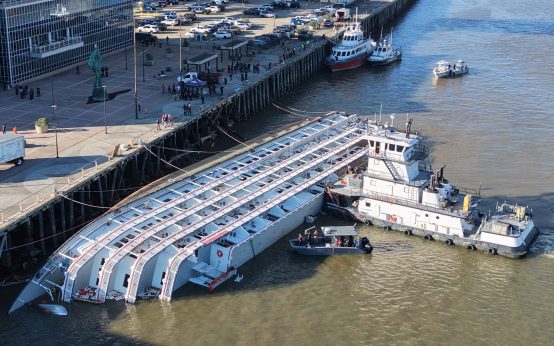 Tanker Steering Malfunction Causes Collision with Cruise Ship in New Orleans
 Longest Ground Stoppage Since 9/11 Ends After Technical Glitch
 Nvidia Founder Jensen Huang’s Potential Return Backed by Tech Leaders