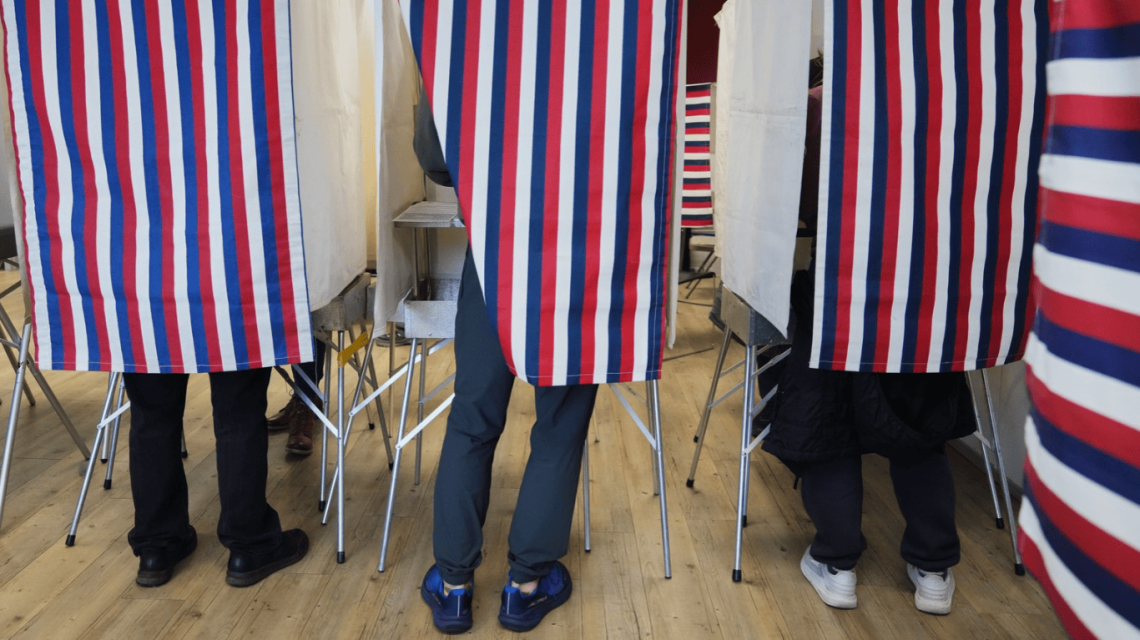
For two decades, Thomas Evans organized voting booths and assisted voters at the community center in Nanwalek, Alaska.
During the 1980s and ’90s, he observed a high voter turnout. However, currently, Nanwalek lacks a regular polling station on Election Day.
There’s no polling place anymore,” Evans told Newsweek. “It has really kind of handicapped our village, not being able to turn in a reliable count for who the people want.”
Nanwalek is among 18 rural Alaskan communities listed in a lawsuit accusing the state of failing to open advertised in-person voting sites.
Most of these communities are Native villages accessible only by air or sea. The legal case is scheduled for a courtroom hearing on Monday morning, just hours before polls open for a tight U.S. Senate race.
The state’s website claims Nanwalek’s absentee in-person voting site has been open since October 19.
However, the lawsuit alleges the site was closed that week, and a crowd-sourced tracker noted the site did not open until October 30.
When questioned, a Division of Elections representative directed Newsweek to the website listing, failing to provide a specific opening date.
If these claims are accurate, Nanwalek voters lacked an in-person voting option for the first 11 days of early voting.
The Lawsuit’s Claims
Filed on October 29, the suit names Lt. Gov. Nancy Dahlstrom, Division of Elections Director Carol Beecher, and the division as defendants. It argues that closing advertised sites without warning infringes on voting rights and due process under the Alaska Constitution.
The case seeks a court mandate to open all listed sites. A hearing is set for 9 a.m. Monday.
In a related action, the Alaska Democratic Party and rural lawmakers filed a similar lawsuit. They assert that the closures may breach a federal consent decree requiring Yup’ik language support.
Alaskans can vote in person during the 15 days preceding an election. For many in rural Alaska, this involves absentee in-person voting. A local official distributes the ballot, the voter encloses it in an envelope, and counting occurs later.
The complaint states at least 18 listed sites were non-operational starting October 19. It names Alakanuk, Chignik Bay, Nanwalek, among others.
Some local officials reportedly didn’t receive ballots or instructions. Others received materials but lacked training. Additional closed sites were reported in the Yukon-Kuskokwim Delta.
The state contests these claims. In a letter on October 26, Director Beecher indicated 12 sites confirmed opening. Three opted not to open, and three sites lacked a response.
Beecher did not specifically identify these sites.
Voting in Nanwalek
Nanwalek is highlighted in the lawsuit, lacking a regular polling place for the 2026 general election. Without its absentee voting site, voters must travel to Tyonek, a village across Cook Inlet.
Sept 22 announcements stated extended absentee voting in Permanent Absentee Voting communities, including Nanwalek, through Election Day.
Despite state records, Nanwalek doesn’t appear in the Division of Elections’ online polling place lookup.
Redistricting in 2021 shifted Nanwalek into House District 37. No Nanwalek precinct appears in the district’s official results for the 2022 general election or the 2024 primary.
The lawsuit and tracker indicate Tyonek is Nanwalek’s Election Day polling place. Evans explains the costly logistics of voting in Tyonek, involving multiple flights.
Evans recalls Nanwalek losing its polling place in the early 2000s. He notes a drop in voter turnout following its closure, leaving residents puzzled.
State records confirm Nanwalek’s former precinct under English Bay had 60 percent voter turnout in the 2000 general election.
In 2022, the Tyonek precinct saw only six percent voter turnout. These figures exclude absentee ballots reported by district.
Today, ballots are mailed to households. However, in this hunting and fishing community, ballots can be neglected. Additionally, mail delivery is unreliable.
In a brief to the U.S. Supreme Court this year, the state noted challenges in mail delivery in remote Alaska.
Upcoming Election Concerns
In most years, closed village sites wouldn’t impact national races. But this election features close Senate competition between Peltola and Sullivan.
Polls show a tight race between Democrat Mary Peltola and Republican Sen. Dan Sullivan, with Peltola slightly ahead.
Alaska has a history of close elections, with few votes often making a difference.
Recently, a federal judge dismissed a lawsuit challenging the Senate result if Sullivan loses.
The Department of Justice plans to appeal the decision.
Current Situation
Newsweek reached out to the Division of Elections for details on 18 sites including Nanwalek’s status. Division spokesperson Steve Kirch did not provide specific answers.
He shared links to early voting sites and Election Day polling places.
Voters have multiple options, including mail, electronic submission, or voting on Election Day, Kirch noted.
The Election Day list does not feature Nanwalek.
Newsweek sought confirmation from Nanwalek residents via Facebook but received no responses.
Judge Matthews will hear the Midnight Sun case at 9 a.m. Monday. Reopened sites will offer villagers limited voting time.
 Mayor Mamdani’s Policing Reform Plans
 Gen Z Voter Shifts and Their Impact on the 2026 Midterm Elections
 Disappearance of US Senate Candidate Raises Questions
 DOJ Rule Change Reduces Appeal Time for Immigrants Facing Deportation
 Hakeem Jeffries’ Bid for House Speaker Faces Progressive Hurdles
 Ohio Judge Dismisses Defamation Lawsuit by Rep. Max Miller