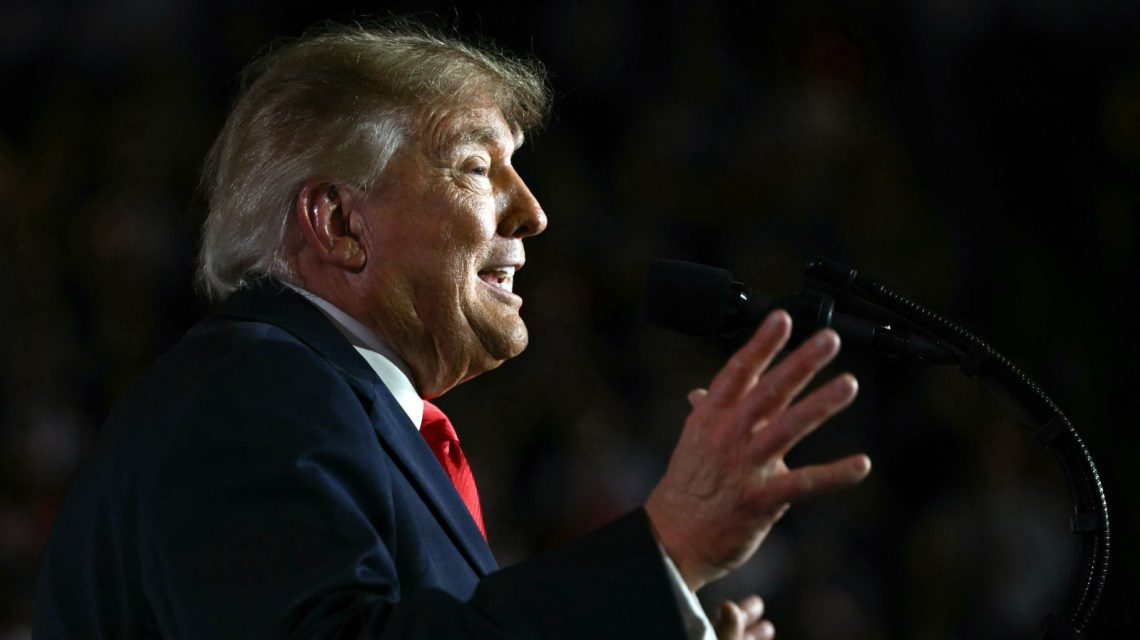
President Donald Trump recently expressed a more conciliatory attitude toward Canada, with plans to resume trade negotiations between the two nations. This development comes amid U.S. economic concerns that are significant in the lead-up to Tuesday’s midterms.
Canadian Prime Minister Mark Carney announced on X that he had discussions with President Trump, aiming to resolve their trade dispute. Officials from both sides are preparing for further negotiations. Trump confirmed this conversation, indicating that an agreement might soon be possible after months of tariffs and disagreements that strained bilateral relations.
The talks hold great importance for President Trump as Americans are voting in record numbers ahead of the November 3 Election Day. With the cost of living as a top concern, Trump’s economic strategies are under scrutiny. His tariffs on Canadian goods, intended to protect U.S. industries, have caused issues for American businesses reliant on cross-border trade.
Carney labeled his discussion with Trump as productive, mentioning that they explored job-supportive, affordability-improving agreements that respect Canada’s sovereignty. “Our teams will now be working in the coming weeks to deliver that outcome,” Carney stated.
In Iowa, Trump echoed optimism about a potentially favorable deal with Canada, suggesting benefits for American farmers and hinting at reviving the Keystone XL oil pipeline, a project halted by former President Joe Biden in 2021. Despite media exchanges, no specifics were announced, with negotiations expected to extend beyond the election.
This open dialogue departs from the earlier confrontations this year between Washington and Ottawa.
The Trade War’s Political Impact
Canada exited talks in August, objecting to U.S. demands. Carney said these demands threatened Canadian sovereignty, language protections, and the car industry. Subsequently, Trump imposed 50 percent tariffs on approximately $20 billion worth of Canadian goods, prompting Canadian retaliatory measures.
This trade dispute affected both nations. American manufacturers and exporters experienced increased costs due to tariffs on Canadian steel, aluminum, and car parts. Canadian duties increased costs for American goods as well. The impact was especially noted in battleground states like Michigan, heavily dependent on cross-border car industry operations.
The trade war became an electoral issue in other northern states such as Maine.
Tariffs and Political Pressure
For Trump, alleviating tariff tensions is timely, politically. A Reuters/Ipsos poll from October 26 reported a 32 percent presidential approval rating, with 73 percent of respondents feeling the cost of living was worsening. The same poll showed Democrats outperforming Republicans by 47 percent to 36 percent among voters pre-midterms.
Inflation figures highlight household pressures, with a 3.7 percent annual rise in consumer prices and a 9.1 percent gasoline price hike in September, reported by the Bureau of Labor Statistics. Consumer confidence also declined, with the University of Michigan’s consumer sentiment index dropping to 48.0 in October from 53.6 the previous year.
Trump maintains that tariffs elevate U.S. manufacturing, protect jobs, and enhance negotiation leverage. However, these policies have raised costs and added uncertainty for companies with supply chains crossing the Canadian border. A deal with Ottawa might have alleviated some pressures, though it’s unclear what concessions might be made.
Despite Trump’s positive tone, Canada is diversifying economic partnerships beyond the U.S. Carney committed to doubling exports from Canada to other countries within the next decade. Still, Canada’s economy remains tightly linked to the U.S., with about 70 percent of exports directed south.
Whether Trump’s approach will result in an agreement is uncertain.
 In-Flight Altercation on Qatar Airways Leads to Police and FBI Response
 Virginia Residents Sue Over Alleged Immigration Violations
 Updates on Key International and Domestic Events
 Pope Leo XIV Completes South American Tour with Farewell Mass in Peru
 President Trump’s Critical Asia Trip: Key Meetings and Implications
 U.S. Plans to Restrict AI Chip Exports Before Trump-Xi Meeting