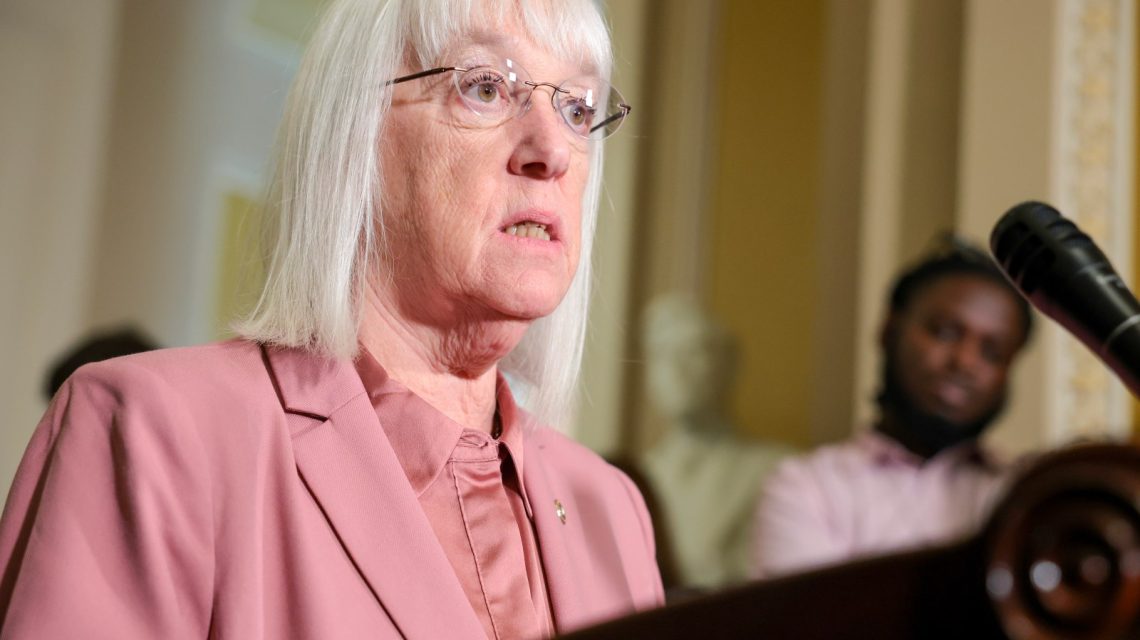
Senator Patty Murray has alerted voters to the potential impact of the upcoming midterm elections on the future of Social Security. She emphasized that the control of Congress could dictate the fate of these benefits.
The Washington Democrat warned that without legislative action, the program might face significant reductions. “Republicans want to cut your benefits. Democrats want billionaires to pay their fair share. THIS is the Social Security election,” Murray stated on social media.
Urgency of Financial Issues
Social Security’s financial issues require urgent attention, independent of which party governs. The 2026 Social Security Trustees Report highlights that the Old-Age and Survivors Insurance (OASI) Trust Fund will maintain full benefit payments only until 2032. Without intervention by Congress, revenue will only support around 78 percent of benefits, resulting in a 22 percent reduction for beneficiaries.
Election Implications
Murray’s comments come as Democrats seek to highlight Social Security in the midterm elections. She suggests addressing the funding gap by increasing contributions from affluent Americans instead of cutting benefits.
In a March Senate Budget Committee hearing, Murray advocated for fair taxation by wealthier Americans, highlighting a need to safeguard retirees from potential benefit reductions. “When the richest people in the country have the smallest effective tax rate—that does not seem to me like a very fair system,” she argued.
Complex Debate
Debating Social Security’s future involves more than just protecting or eliminating it. Lawmakers possess several options to bridge the financial gap, such as raising payroll tax rates, expanding taxable wages, or combining revenue increases with benefit adjustments.
“Trump has said that the federal government cannot afford daycare, Medicare, and Social Security,” remarked Kevin Thompson, CEO of 9i Capital Group, to Newsweek. “He believes military funding is the primary federal priority.”
While Republicans publicly commit to protecting benefits, Democrats highlight GOP comments about need for reforming mandatory spending programs.
Regardless of who controls Congress, a bipartisan resolution is crucial to avoiding a 22 percent cut, experts advised.
“The coming depletion of Social Security’s trust fund stresses the need for timely reform,” Alex Beene, a financial literacy instructor, told Newsweek.
Financial Outcomes
Under trustee projections, the OASI trust fund will be exhausted by 2032, reducing benefits by approximately 22 percent. For example, an average retirement benefit of $2,088 per month would see a cut of around $459.
Both political parties acknowledge the Social Security issue but propose different solutions. Republicans emphasize eliminating waste, while Democrats argue for increased taxation and more funds to ensure benefit sustainability.
Social Security will not vanish when reserves deplete; payroll taxes will still contribute, albeit not enough to honor full benefits. This shortfall poses financial risks for many retirees.
“For retirees, the concern revolves around the integrity of their benefits and the potential impact on financial security,” Thompson noted. “I doubt Social Security’s influence on election results, though its absence cannot be completely ruled out.”
Next Steps
The election outcome will not drastically change the pressure on future Congress sessions to address Social Security’s funding absence as the 2032 deadline nears. However, Beene mentioned that it is improbable for lawmakers to allow funds to deplete.
“Regardless of election results, the chance of beneficiaries facing reductions is quite low,” Beene asserted. “Such voters are consistent, and lawmakers from both parties would avoid risking their future electability by endorsing cuts.”
 Mayor Mamdani’s Policing Reform Plans
 Gen Z Voter Shifts and Their Impact on the 2026 Midterm Elections
 Disappearance of US Senate Candidate Raises Questions
 DOJ Rule Change Reduces Appeal Time for Immigrants Facing Deportation
 Hakeem Jeffries’ Bid for House Speaker Faces Progressive Hurdles
 Ohio Judge Dismisses Defamation Lawsuit by Rep. Max Miller